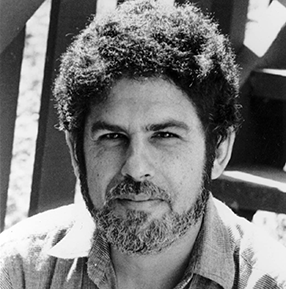
Stephen Mitchell
Poet and translatorWikipedia
30
MENTIONS
15
EPISODES
11
PODCASTS
Search complete. 30 mentions across 15 episodes found for "Stephen Mitchell".
Sep 20, 2026

Artemis NehiHOST
Man, we're already on the third segment? Yes, we're speedrunning this.
Artemis NehiHOST
Now bear with me here, because we have two interpretations of the Tao Te Ching with us, one by Stephen Mitchell and the other by Ursula K.
Artemis NehiHOST
Le Guin.
Artemis NehiHOST
And as usual, we'll be starting off with Stephen Mitchell's translation.
Bartleby NehiHOST
Well, Artemis, maybe you should take a moment to breathe, because you don't want to read these too fast.
Artemis NehiHOST
Oh,
Artemis NehiHOST
No diversions.
Artemis NehiHOST
Oh, man, you're no fun.

Greg DeMarcoHOST
Same.
Andrew BalazHOST
Which, that's why we have Mitchell on the site.
Andrew BalazHOST
Because Mitchell's play-by-play
Greg DeMarcoHOST
is insane.
Greg DeMarcoHOST
He gives you the story.
Greg DeMarcoHOST
He gives you the moves.
Greg DeMarcoHOST
He's just...
Greg DeMarcoHOST
Yeah, he is transcribing the show in a way that if you didn't see it, you could probably take a Stephen Mitchell report, feed it into an AI, and AI could spit out the audio of the broadcast of the show based on what Mitchell, I might try.

Martine SymsGUEST
I, I...
Martine SymsGUEST
There's a translation by an author, Stephen Mitchell, that I've really been enjoying.
Bella FreudHOST
Mm-hmm.
Martine SymsGUEST
But I was really interested in the devil always.
16 MINS LATER
Bella FreudHOST
Mm
Martine SymsGUEST
... which was kind of thinking about, um...
Martine SymsGUEST
Now I'm forgetting the author's name, but there was this mechanical engineer that wrote this book about sort of like how we combat efficiency and how efficiency is tied to, like, you know, the Holocaust and the slave trade and it...
Martine SymsGUEST
but it's this value, and it was about making, like, friction and thickness.

Mirabai StarrGUEST
So it may be the Bhagavad Gita.
Mirabai StarrGUEST
It may be the Tao Te Ching, Stephen Mitchell's translation, or there are others too that I love.
Mirabai StarrGUEST
Ursula K.
Mirabai StarrGUEST
Le Guin did a translation of the Tao Te Ching.
Mirabai StarrGUEST
And so often when the original translations of these great mystical masterworks like Dark Night of the Soul and the Interior Castle by Teresa of Avila, Dark Night by John of the Cross, Showings of Divine Love by Julian of Norwich, their original literal translations are arcane.
Mirabai StarrGUEST
They're very Christian, obviously, and they're very stilted.
Mirabai StarrGUEST
And so early on, you know, with the encouragement, not literally, but just by reading Stephen Mitchell and Coleman Barks and others, I realized that I could be faithful as a translator without being literal so that I could sort of break through to a language that was vibrant, alive, beautiful, and would land in the hearts of people of today who may or may not be Christian.
Mirabai StarrGUEST
or academic.

Buddy CHOST
She doesn't cling to her own effort, thus problems are no problem for her.
Buddy CHOST
Stephen Mitchell.
Buddy CHOST
The monkey did not do that.
DrewGUEST
Yeah, and I noticed at the end of this story, there was a number indicating a footnote.

Kim CookGUEST
That's so true.
Kim CookGUEST
And I will tell you, at the beginning of my book, and I, you know, jumped through hoops to get permission to use this, I put from the Tao Te Ching, the Stephen Mitchell translation, "Do y-," it's chapter 15, "Do you have the patience to wait till the mud settles and the water is clear? Can you remain unmoving till the right action arises by itself?" The master doesn't seek fulfillment.
Kim CookGUEST
Not seeking, not expecting, she is present and can welcome all things.
Stephanie Martinez RiveraHOST
Love that.

Kit MannHOST
Those translations can be everything from very, very eclectic to very scholarly.
Kit MannHOST
The one we're going to use is Stephen Mitchell's, not because I think it's the best, but because I believe it is the most accessible.
Kit MannHOST
It is the one that most people have access to, and it is the one that tends to be taught in colleges and universities first.
Kit MannHOST
First, you do hear and get to learn other translations, but Stephen Mitchell is the one that most people have access to the first time.
Kit MannHOST
So I'm going to read the chapter, and when I do, please remember the chapter translation.
Kit MannHOST
Those are his words, clearly attributed.
Kit MannHOST
I'll read you the chapter, and then I'm going to sort of think out loud about it and try to help you understand what these various little poems mean.
Kit MannHOST
So let's just start right now as we lean into this.
Artemis NehiHOST
Anyways, Bartleby, I think you've gone on long enough, and it's time we break out our two copies of The Doubter Ching.
Artemis NehiHOST
Originally written in 6th century BC, but we have two translations, one by Stephen Mitchell and the other by Ursula K.
Artemis NehiHOST
Le Guin.
Bartleby NehiHOST
Artemis, this doesn't really feel fair.
Artemis NehiHOST
But that's not for this week, Bartleby.
Artemis NehiHOST
For we are reading Chapter 35 in the Tao Te Ching this week.
Artemis NehiHOST
And we will begin with Stephen Mitchell's translation.
Artemis NehiHOST
Oh right, here we are.
Artemis NehiHOST
For we have been going through Lao Tzu's Tao Te Ching, chapter by chapter, the classic 6th century BC Chinese text.
Artemis NehiHOST
And I have with us here two translations, one by Stephen Mitchell and the other by Ursula K.
Artemis NehiHOST
Le Guin.
Bartleby NehiHOST
Hey Artemis.
8 MINS LATER
Bartleby NehiHOST
I don't know if I really like the use of 10,000 things, though, because I think people of today have been forced to know maybe more than 10,000 things, and though it is a strain on their consciousness, most of them are holding it together.
Bartleby NehiHOST
Mostly.
Bartleby NehiHOST
And though I often really like the way Ursula kind of comes through and makes these kind of ephemeral interpretations of these chapters, I think I kind of prefer the way that Stephen Mitchell refers to the 10,000 things as infinite worlds or all things.
Bartleby NehiHOST
All things is a really good way of saying 10,000 things when what you mean by 10,000 things is all things.

Michael CooneyHOST
Yehuda Amichai's poem, The Place Where We Are Right, expresses the tension between the rigidity of conceit and flexibility.
Michael CooneyHOST
Here, I am indebted to Amichai's translator, Stephen Mitchell, for this lovely English rendering of The Place Where We Are Right.
Michael CooneyHOST
From the place where we are right, flowers will never grow in the spring.
Michael CooneyHOST
The place where we are right is hard and trampled like a yard.
5 more episodes mention Stephen Mitchell.
Create an account to see the whole feed, search across every transcript, and follow the entities you care about.