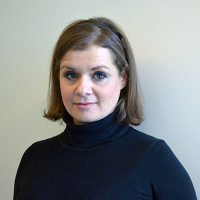
Stephanie Carvin
Canadian political scientist
7
MENTIONS
4
EPISODES
4
PODCASTS
Search complete. 7 mentions across 4 episodes found for "Stephanie Carvin".
Sep 9, 2026

Angela MisriHOST
Over the next 25 years, it would reshape how Canada thinks about security, borders, and terrorism.
Angela MisriHOST
To understand how that day changed Canada, we spoke with national security expert Stephanie Carvin.
Stephanie CarvinGUEST
So I'm Stephanie Carvin.
Stephanie CarvinGUEST
I'm a former national security analyst.
Stephanie CarvinGUEST
I worked on terrorism issues with the government of Canada between 2012 and 2015.

Sarah WillrichNARRATOR
The talks were reportedly going well until they broke down over a set of new conditions requested by the US side, including carve-outs for key goods and limitations on Canada's ability to make trade deals with other countries.
Sarah WillrichNARRATOR
For today's archive, I chose an episode from February 11, 2022, in which Scott R. Anderson spoke with three Canadian national security experts, Amarnath Amarasingam, Stephanie Carvin, and Jessica Davis, about that year's trucker convoy, which blocked major points of entry along the border to the US.
Sarah WillrichNARRATOR
They discussed the protests and its origins, domestic violent extremism in Canada, how it at the time could affect relations with the US, and more.
Jessica DavisGUEST
It's very difficult, and some have argued impossible to get them out, and this is very clear in Ottawa.
Scott R. AndersonHOST
While nominally objecting to Canadian vaccination mandates, particularly as applied to truckers, the convoy movement has at times made even more ambitious demands, including the dissolution of the Trudeau government, and has close ties to far right-wing nationalists and ethno-nationalist organizations both in Canada and the United States.
Scott R. AndersonHOST
And while the convoy movement began in Canada, there are signs it is beginning to spread, with similar efforts appearing in Australia and New Zealand, and intelligence reports suggesting the same may soon happen in the United States.
Scott R. AndersonHOST
To put these recent developments in context, I sat down with three Canadian national security experts who have been following the convoy crisis closely: Amarnath Amarasingam Assistant Professor at Queen's University, Stephanie Carvin, Associate Professor at Carleton University, and Jessica Davis, President of Insight Threat Intelligence.
Scott R. AndersonHOST
We discuss the origins of the convoy movement, its relationship with domestic violent extremism, and what it might mean for both Canada and the rest of the world.

Sarah WilbridgeNARRATOR
The talks were reportedly going well until they broke down over a set of new conditions requested by the US side, including carve-outs for key goods and limitations on Canada's ability to make trade deals with other countries.
Sarah WilbridgeNARRATOR
For today's archive, I chose an episode from February 11, 2022, in which Scott R. Anderson spoke with three Canadian national security experts, Amarnath Amarasingam, Stephanie Carvin, and Jessica Davis, about that year's trucker convoy, which blocked major points of entry along the border to the US.
Sarah WilbridgeNARRATOR
They discussed the protests and its origins, domestic violent extremism in Canada, how it at the time could affect relations with the US, and more.
Jessica DavisGUEST
[gentle music] It's very difficult, and some have argued impossible to get them out, and this is very clear in Ottawa.
Scott R. AndersonHOST
While nominally objecting to Canadian vaccination mandates, particularly as applied to truckers, the convoy movement has at times made even more ambitious demands, including the dissolution of the Trudeau government, and has close ties to far right-wing nationalist and ethno-nationalist organizations both in Canada and the United States.
Scott R. AndersonHOST
And while the convoy movement began in Canada, there are signs it is beginning to spread, with similar efforts appearing in Australia and New Zealand and intelligence reports suggesting the same may soon happen in the United States.
Scott R. AndersonHOST
To put these recent developments in context, I sat down with three Canadian national security experts who have been following the convoy crisis closely, Amarnath Amarasingam, assistant professor at Queen's University, Stephanie Carvin, associate professor at Carleton University, and Jessica Davis, president of Insight Threat Intelligence.
Scott R. AndersonHOST
We discussed the origins of the convoy movement, its relationship with domestic violent extremism, and what it might mean for both Canada and the rest of the world.

Loren DeJonge SchulmanHOST
The military has kept up to the same relationship.
Loren DeJonge SchulmanHOST
And we were like, guys, what is going on? So we decided to ask a lovely friend of the pod, Stephanie Carvin, on to tell us what is happening, how should we be thinking about this.
Loren DeJonge SchulmanHOST
Stephanie is an associate professor at Carleton University and a former national security analyst.
Loren DeJonge SchulmanHOST
She has her own podcast shenanigans that she does on a regular basis that we can talk more about.