Status quo bias
8
MENTIONS
3
EPISODES
3
PODCASTS
Search complete. 8 mentions across 3 episodes found for "Status quo bias".
Oct 17, 2026

Jason DaviesHOST
Now, let's add another psychological effect.
Jason DaviesHOST
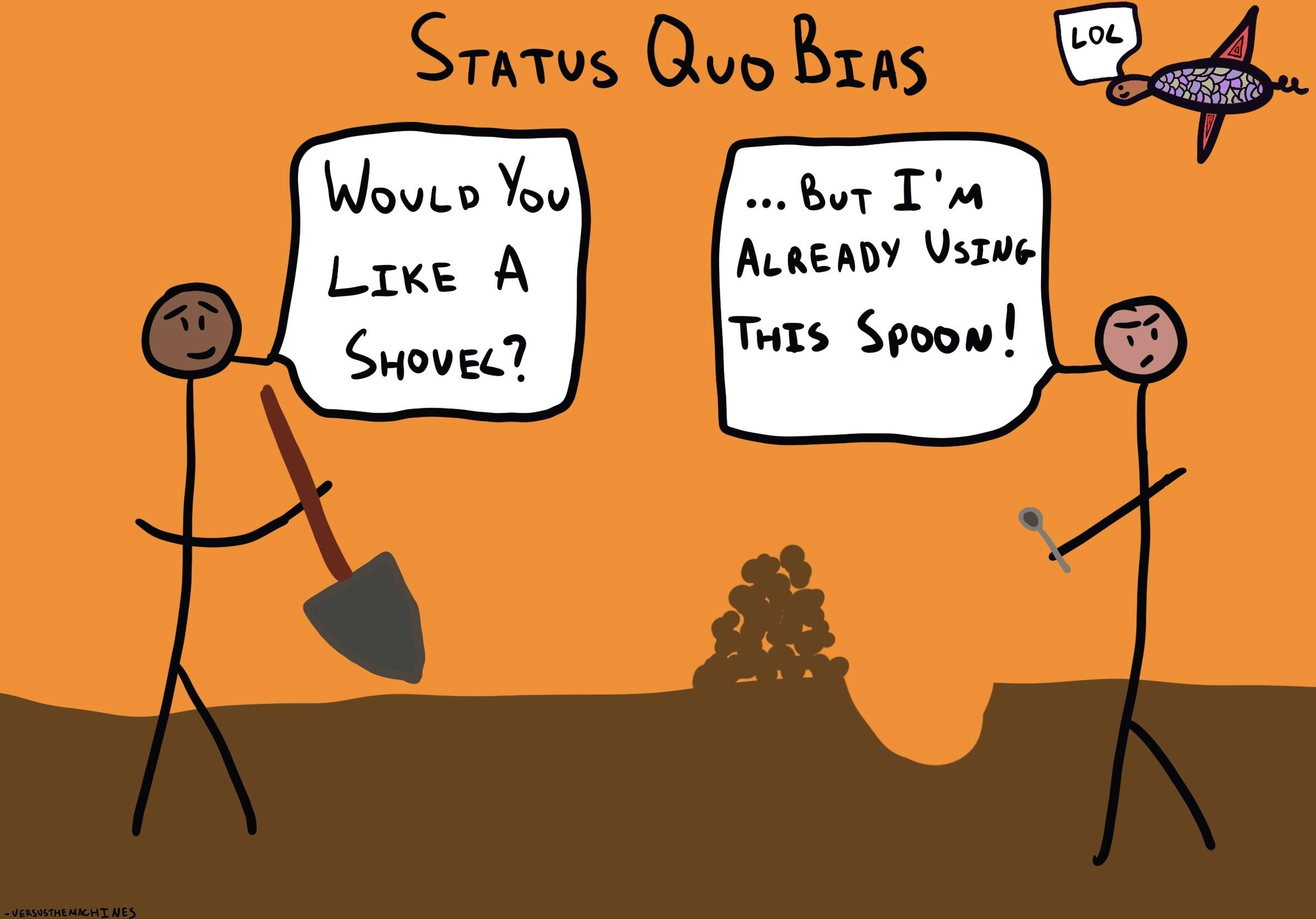
In nineteen eighty-eight, William Samuelson and Richard Zeckhauser published research on what became known as status quo bias.
Jason DaviesHOST
People tend to favor the existing opinion, the familiar opinion, the default, even when other choices may be equally good or better.
Jason DaviesHOST
Think about what that looks like in the trades.
Jason DaviesHOST
But notice what happened.
Jason DaviesHOST
The familiar procedure was given the benefit of the doubt simply because it was familiar.
Jason DaviesHOST
That is status quo bias.
Jason DaviesHOST
The old method feels safer because it is old.

Rosemarie BeltzHOST
It turns out that researchers have been asking versions of the, of this question and situation for decades.
Rosemarie BeltzHOST
For instance, in the '80s, a, a couple of economists published research in the Journal of Risk and Uncertainty examining something called status quo bias.
Rosemarie BeltzHOST
We're all familiar with status quo, but there's status quo bias.
Rosemarie BeltzHOST
Their experiments found that people often showed a preference for maintaining an existing arrangement rather than choosing an alternative, and they also examined real-world decisions involving health plans and retirement programs.
Rosemarie BeltzHOST
Now, this doesn't mean every familiar choice is a bad one.

Melina PalmerGUEST
Within two months they had a 20% decrease in sales, and at that time they went back to the original packaging, but they had a $50 million loss, um, alongside that.
Melina PalmerGUEST
And in this case I give the example of status quo bias, uh, knowing how...
Melina PalmerGUEST
So the talk was why change fails and how you can beat the odds, right? And so in this case, when you don't respect that status quo of what people are already locked into, whether that is a process that they are using at work, um, or, you know, their favorite breakfast juice, um, people have that bias for the status quo.
Melina PalmerGUEST
And if you take it away and say, "Oh, they shouldn't care.
Melina PalmerGUEST
"But maybe we're also gonna have a glass of juice behind it, or we're gonna do something," right? They could look at options to, um, refresh but not change everything.
Melina PalmerGUEST
And so, um, you know, and when it is something, you know, you're having to make a change internally, you're using a new system or process, you're asking people to adopt AI, whatever it is, to just say, "Oh, well, don't worry about what it has been.
Melina PalmerGUEST
It's like new, new, new, exciting, exciting," like, people aren't as excited about that [laughs] as they may say or you would like them to be because of that status quo bias.
Melina PalmerGUEST
So you wanna help understand what they value to get them on board.