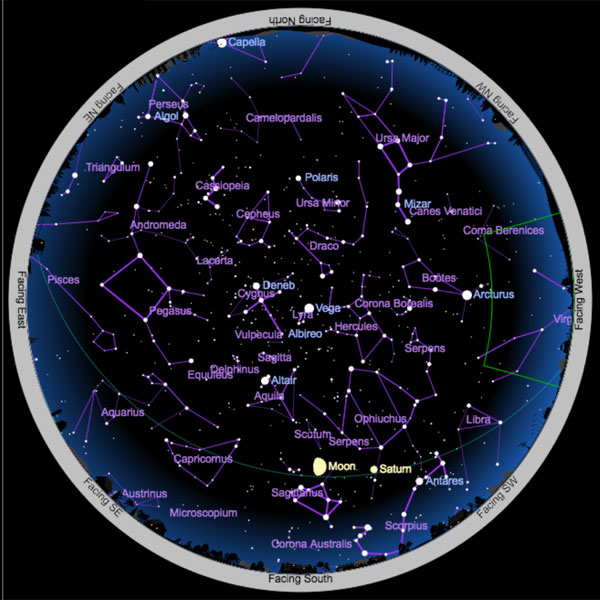
Star chart
9
MENTIONS
4
EPISODES
4
PODCASTS
Search complete. 9 mentions across 4 episodes found for "Star chart".
Sep 16, 2026

Darren MarlarHOST
Typed transcripts are in the UNH collection.
Darren MarlarHOST
Betty drew the star map in 1964 under post-hypnotic suggestion, a scatter of dots with lines connecting some of them.
Darren MarlarHOST
She was candid that she wasn't sure every dot belonged there.
Darren MarlarHOST
In 1968, an elementary school teacher and amateur astronomer in Oak Harbor, Ohio, named Marjorie Fish, read Fuller's book and decided to find the map.
6 MINS LATER
Darren MarlarHOST
In 1987, the folklorist Thomas Bullard published a two-volume study of some 300 abduction accounts and found them falling into an eight-part sequence – capture, examination, conference, tour, journey, theophany, return, and aftermath.
Darren MarlarHOST
It almost never appeared out of order, and he wrote that the Hill case defines the typical abduction and that every other case is measured against it.
Darren MarlarHOST
missing time, the roadside stop, the medical exam with its interest in reproduction, the sample of skin and hair, the telepathic leader, the star map, the memory recovered under hypnosis.
Darren MarlarHOST
Every element the later literature would treat as diagnostic is present in the Hill's account first.

Tim SudanoGUEST
... and I think they only focus on... 'Cause they were abducted, abducted a couple of times.
Tim SudanoGUEST
They go over the first one more in detail, and that's the one also where Betty talks about the star map she sees.
Tim SudanoGUEST
And it's, if you recall...
Tim SudanoGUEST
You know what? Let me, uh, let me, uh, get this over to my whatchamacallit here.
Tim SudanoGUEST
Um, um, so and, uh, they were looking down on them most times 'cause they were on a table.
Tim SudanoGUEST
And, uh, Betty points out, "Oh, what's that?" And it's, it's their travel map.
Tim SudanoGUEST
It's basically a star map.
Tim SudanoGUEST
And they have it up there.

David RenekeGUEST
...
David RenekeGUEST
Star Chart and Sky View.
David RenekeGUEST
S-C-A-R Chart and Sky View.
David RenekeGUEST
Look, planets generally shine with a steady light.

M.F. ThomasHOST
Putting dots on a piece of paper without looking at it, she drew a kind of constellation, the shape of the brightest stars as she could find them in her memory.
M.F. ThomasHOST
The star map she created was included in John Fuller's book, where it caught the attention of an Ohio school teacher and amateur astronomer named Marjorie Fish.
M.F. ThomasHOST
Fish was fascinated by Betty Hill's map and wondered if it could be used to pinpoint the location of the aliens.
M.F. ThomasHOST
She did intensive research using the latest published catalogs of identified stars and their distances from Earth.
M.F. ThomasHOST
Fish presented the results of her studies to NICAP, and they brought it to a magazine which had just launched recently.
M.F. ThomasHOST
Astronomy is a popular magazine among science enthusiasts to this day, and showed off some of the most widely seen pictures of the legendary Voyager space probes, but when it debuted in 1973, it was a question whether or not it would find enough interested readers to stay in circulation.
M.F. ThomasHOST
And maybe it was that pressure to attract readers and that uncertainty about what kind of stories they would cover that led editor Terence Dickinson to personally write an article about Marjorie Fish's star map.
M.F. ThomasHOST
The article could fit in a textbook as an example of confirmation bias, of working backward from the desire to find something to be true.