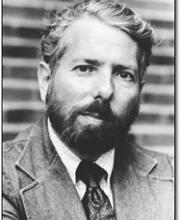
Stanley Milgram
American psychologistWikipedia
145
MENTIONS
56
EPISODES
54
PODCASTS
Search complete. 145 mentions across 56 episodes found for "Stanley Milgram".
Nov 3, 2026

Frank AginHOST
Your job is to start moving through it.
Frank AginHOST
I know this can sound crazy, like totally implausible, but in the 1960s, social psychologist Stanley Milgram and his colleagues conducted what became known as the Small World Experiment.
Frank AginHOST
The basic idea was fascinating.
Frank AginHOST
Could ordinary people get something to a complete stranger hundreds of miles away by passing it to only people they personally knew? One well-known version involved participants in Nebraska attempting to get a folder to a particular target in Massachusetts.
Frank AginHOST
Some chains died.
Frank AginHOST
But among the chains that reached their destination, the number of intermediaries was surprisingly small, helping people inspire the idea of six degrees of separation.
Frank AginHOST
But let's turn Stanley Milgram's experiment around.
Frank AginHOST
Forget the package.

speaker_1VOICE_ACTOR
Yeah.
speaker_2VOICE_ACTOR
Perhaps you'll do psychological studies in the future with Stanley Milgram or one of those chaps.
speaker_1VOICE_ACTOR
I was thinking about just getting people to buy me pints in the pub, but yeah, go on then.
speaker_1VOICE_ACTOR
I'll meet Stan Milligram and we'll do experiments on pints.

Daniel BinusHOST
I'll just kind of go along with it because this is what I'm being told to do.
Daniel BinusHOST
And in that original study, which was done in the 1960s, Yale psychologist Stanley Milgram recruited 40 men ages 20, through 50 through a newspaper or direct mail.
Daniel BinusHOST
And basically each person was paid a flat amount of $4.50 for their participation in the study.
Daniel BinusHOST
And it didn't mean they had to complete the study or they didn't commit to doing everything that the researchers ask or anything like that.

Amy ArthurNARRATOR
Classic evidence for the primacy of the situation has also lost force.
Amy ArthurNARRATOR
Take, for instance, Stanley Milgram's obedience studies, in which participants were asked to administer electric shocks to someone until the victim seemed to be unconscious or dead.
Amy ArthurNARRATOR
These classic studies have been taken as evidence that authority can override individual will.
Amy ArthurNARRATOR
However, subsequent research has found that personal traits associated with diligence and helpfulness predicted an increased willingness to administer the electric shocks.

Sacha Baron CohenGUEST
Um, I think we had about 40 hidden cameras and There was a lot of discussion as to whether we should do this, and it was probably a stupid idea.
Sacha Baron CohenGUEST
But we were trying out a psychological experiment called the Milgram experiment, which for those people who don't know what it is, was after the Holocaust, there was a psychologist called Milgram, I think Stanley Milgram, who wanted to work
Sacha Baron CohenGUEST
out
Sacha Baron CohenGUEST
why sort of intelligent Germans and other European citizens carried out mass murder.
22 MINS LATER
Sacha Baron CohenGUEST
But the issue is there is this acceptance now of political violence and this idea of virtuous violence.
Sacha Baron CohenGUEST
of in order to be, to show my, how virtuous I am, I'm actually gonna hate and I'm going to show my allegiance to the group that I'm trying to impress by perpetrating a horrific act, whether it's online hate speech or bullying or actually in this movie, physical acts.
Sacha Baron CohenGUEST
And that comes back to this idea of the Milgram experiment.
Sacha Baron CohenGUEST
We worked with the leading experts on it now and they said it's really less about conformity and authority figures, which was the initial, what Stanley Milgram thought it was.

Hermina NedelescuGUEST
You might know, Dr.
Hermina NedelescuGUEST
B, you might know the Milgram experiments, which are experiments, obedience to authority.
Hermina NedelescuGUEST
And Stanley Milgram in the 1960s tried to explain why do people do things against their conscience.
Hermina NedelescuGUEST
And it's because of the person in authority.
Hermina NedelescuGUEST
So when there is an individual in authority, and the listeners can look up that experiment, in this case it was a person in a white coat, and the participants were delivering what they thought was deadly levels of shock.
Hermina NedelescuGUEST
What does it look like? Yes, I wrote recently a very short article.
Hermina NedelescuGUEST
It's on our website, on our blog, but also on Substack.
Hermina NedelescuGUEST
It's called Groomed to Obey, and it's rooted in this Milgram study that I explained.

Erik AbrahamssonHOST
Your entrepreneurial success just grew to an 8.
Erik AbrahamssonHOST
One of the most publicized experiments on human psychology was conducted by Stanley Milgram in the 1960s, and it shows the opposite side of the Lollapalooza effect, what happens when multiple factors reinforce each other to cause harm.
Erik AbrahamssonHOST
In this experiment, participants were asked by authoritative figures to send increasingly harmful electrical shocks through other people.
Erik AbrahamssonHOST
The shocks were of course fake, but they seemed real to the participants.

Dorian MinorsGUEST
They say...
ColinHOST
Have you heard about the Milgram experiments before? Stanley Milgram, is it?
Dorian MinorsGUEST
Stanley Milgram, 1960s.
Dorian MinorsGUEST
He did a whole series of experiments, but the famous one, he has a participant come in who's to shock...
Dorian MinorsGUEST
the learner every time they get something wrong on this word association task and each time they get it wrong the shock goes higher and the learner complains more and more and the shock gets higher and higher and eventually the learner starts to complain about their heart they start to say they want to leave the experiment and then they go silent And all along the way, behind the participant, the person delivering the shocks, is a person in a lab coat who says, you have to continue.
Dorian MinorsGUEST
And a lot of what's taught even now in some of the leadership stuff that I've been a part of is that we need to watch out for this obedience bias, this deference to authority in the face of uncertainty.
Dorian MinorsGUEST
What this identity leadership work talks about is that perhaps it's not obedience so much as it's being a part of an identity and following the leader, the identity leader in doing that.
Dorian MinorsGUEST
And they talk about the Milgram experiment specifically and say, what's really interesting about that is the most dropouts happen when the experimenter gave the participant a prompt that had nothing to do with the scientific enterprise, when it was an order.

Philip ZimbardoGUEST
He's one of the early presidents of the United States.
Philip ZimbardoGUEST
And sitting next to me was a little Jewish kid named Stanley Milgram.
Philip ZimbardoGUEST
And Stanley Milgram was the one, as a kid, he was saying, you know, could the Holocaust happen in America? Could me and my family be sent to concentration camp? And other kids say, Stanley, don't be stupid.
Philip ZimbardoGUEST
We're not that kind of people.
Philip ZimbardoGUEST
And I remember in my, I can hear his voice saying, how do you know what you would do until you're in the situation? I'll bet they thought the same thing, you know, when they saw other kids doing bad things.
Philip ZimbardoGUEST
So everybody should quit at least then.
Philip ZimbardoGUEST
And everybody who gets to 350 goes all the way to the end.
Philip ZimbardoGUEST
The most dramatic thing is, before Milgram began his study, he interviewed 40 psychiatrists at Yale Medical School.

Owen CookHOST
You have the OSH experiments.
Owen CookHOST
You have the Milgram experiments.
Owen CookHOST
What do we learn in the OSH experiments? Here's what they do.
Owen CookHOST
They will literally say, we'll have 10, say we had five actors here and that's the real guy.
Owen CookHOST
If you actually believe that your body is all that exists and you don't see a soul, or if you don't have a lot of confidence, you can't even distinguish reality, you're a slave to safety.
Owen CookHOST
But it also relies with ego, social conditioning, addictions, et cetera, et cetera.
Owen CookHOST
Likewise, have you guys ever heard of the Milgram experiment? Yes or no? Yes.
Owen CookHOST
Okay, the Milgram experiment is basically where they bring someone in off the street and a guy in a lab coat gets you to electrocute somebody till they're almost dead.
46 more episodes mention Stanley Milgram.
Create an account to see the whole feed, search across every transcript, and follow the entities you care about.