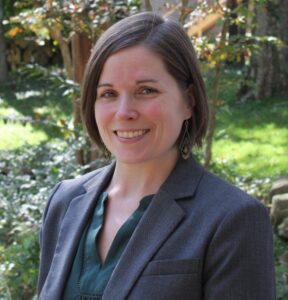
Stacie B. Dusetzina
Researcher
3
APPEARANCES
3
PODCASTS
Jun 24, 2026

2:05

So what were the original goals of the Medicare GLP-1 Bridge Program, and then how have those shifted in recent months?
Stacie DusetzinaGUEST
So originally, CMS and the Center for Medicare and Medicaid Innovation, CMMI, had proposed to put forward a demonstration project called the Balance Model that had intended to cover weight loss medications and provide lifestyle modification, counseling, and behavioral programs in order to test the benefits of making these drugs more widely available for people with different indications that are not currently covered under Medicare Part D.
Stacie DusetzinaGUEST
So this was going to be run as an experiment on expanding the benefit and getting information about potential cost savings.
Stacie DusetzinaGUEST
If we resolve people's health conditions or help them live healthier lives, do we end up saving money downstream and preventing things like heart attacks and strokes and other high-cost conditions? So that was a program called Balance.
Stacie DusetzinaGUEST
Right now, we have seen that CMS has put Balance on hold, in part because it seemed that Part D plan sponsors, the private plans that run the Medicare Part D program, were not interested in participating in this voluntary model.
Stacie DusetzinaGUEST
So in absence of having that program move forward, the administration decided to just make these drugs available through this Bridge program.
Stacie DusetzinaGUEST
Now, the Bridge program had already been conceptualized, but it was originally only supposed to go from July 1st of 2026 through the end of this year, at which point the program would transition into Balance.


David GuraHOST
Stacy knew it was considered the standard of care as first-line treatment for her mom's type of breast cancer, but she also knew there could be a problem.

Stacie DusetzinaGUEST
My entire career leading up to that, I studied the Medicare prescription drug benefit, and I knew, like, the very first time my mom would try to fill that medicine, it would be $3,200 out of pocket.
Stacie DusetzinaGUEST
And we're talking about someone living on a very small amount of retirement and, like, living fine, but no way, like, in no universe is that amount of money gonna be something that, like, she and my dad found to be acceptable.
Stacie DusetzinaGUEST
I was like, "Oh, I would just figure out, like, should I pay for it for her?" And I would be totally happy to do that if, um, it was worth doing.
David GuraHOST
But worst of all, even as a cancer policy expert, she couldn't figure out if the drug would make a difference.
Stacie DusetzinaGUEST
Even someone as knowledgeable as myself, like, studying this for years, I felt like I couldn't get a clear answer on like, okay, well, this is the recommended treatment.


Stephanie SyCORRESPONDENT
What do you think of those potential actions? Could that be enough to scare these drug companies essentially into lowering prices?
Stacie DusetzinaGUEST
Um, it's possible that it could move the needle for some companies and some products, especially for companies that have products that maybe are ending their normal life cycle, so maybe they're facing generic competition, so those companies might be willing to be one of the first to negotiate a favorable deal.
Stacie DusetzinaGUEST
But by and large, many of the policy options that have been put forward under this executive order have been things that have been explored either under the current administration or prior administrations, and they're very difficult to implement.
Stacie DusetzinaGUEST
Um, a lot of those policies rely on things like importing drugs through Canada, which, uh, we've seen over and over Canada is not willing to participate in a drug importation program with the US when thinking about large purchases from the US.
Stacie DusetzinaGUEST
So, I think that these are threats, but, um, whether or not the drug companies think that these are going to be credible threats is something different.