St. Ignace
City in MichiganWikipedia
42
MENTIONS
17
EPISODES
14
PODCASTS
Search complete. 42 mentions across 17 episodes found for "St. Ignace".
Sep 27, 2026

Tom HemingwaySOUNDBITE_SPEAKER
And there's an injured Michigan man, George Huey, who made that tackle.
Tom HemingwaySOUNDBITE_SPEAKER
Barry Pearson, a junior from St. Ignace, coming in for Michigan.
Tom HemingwaySOUNDBITE_SPEAKER
As the officials have called for a timeout to measure for the first down.
Tom HemingwaySOUNDBITE_SPEAKER
And it is...

Ken LundbergHOST
28-year-old Rodain Smith faces a charge of reckless driving.
Ken LundbergHOST
He was arrested Wednesday after police say he exited the toll booth on the St. Ignace side and quickly began driving at a high rate of speed.
Ken LundbergHOST
Bond has said at $100,000, four people were injured in the crash, including two who suffered serious injuries.
Ken LundbergHOST
Speed and alcohol are believed to be factors.

William TomkoNARRATOR
I have obtained from God the favor of being enabled to visit the nations on the Mississippi River, and find myself in the happy necessity of exposing my life for the salvation of all these tribes, especially the Illinois.
William TomkoNARRATOR
Joliet followed the St. Lawrence to Fort Frontenac at the entrance of Lake Ontario, and, with the exception of the portage at the Falls of Niagara, skirted in his canoe the shores of the Great Lakes until he reached the Straits of Mackinac, on the north side of which, at Point St. Ignace, he found the enthusiastic Marquette devotedly laboring for the spiritual welfare of the Hurons and Ottawans there gathered.
William TomkoNARRATOR
The contemplated line of travel was that of Jean Nicolet, an interpreter who had spent many years with the Indian tribes, who was sent in 1638 to bring about a peace between the Hurons and Winnebagos who lived near Green Bay.
William TomkoNARRATOR
After his negotiations, he ascended the Fox River, and, making a portage to the Wisconsin, descended that stream some distance, so that, as he thought, from the designation of the Great Water by the Indian guide to the Mississippi, he was within three days of the South Sea.
William TomkoNARRATOR
Joliet, however, was too practical to trust entirely to tradition or oral description.
William TomkoNARRATOR
He had already carefully charted all that was definitely known of the western lake regions, and now at St. Ignace, with Marquette's invaluable assistance, gathered all possible information from such Indians at the mission as had frequented the unknown country.
William TomkoNARRATOR
This information being duly weighed and considered, Joliet extended his map to cover all the new country, marking thereon the navigable rivers, the names of nations and villages along their proposed route, the course of the Great River, and other useful information.
William TomkoNARRATOR
Their means of subsistence and travel were the simplest imaginable, two canoes and as large quantities of smoked meat and Indian corn as could be conveniently carried.
Tom HemingwaySOUNDBITE_SPEAKER
And there's an injured Michigan man, George Huey, who made that tackle.
Tom HemingwaySOUNDBITE_SPEAKER
Barry Pearson, a junior from St. Ignace, coming in for Michigan.
Tom HemingwaySOUNDBITE_SPEAKER
As the officials have called for a timeout to measure for the first down.
Tom HemingwaySOUNDBITE_SPEAKER
And it is...

Dennis SayersNARRATOR
But the proposed union was not effected.
Dennis SayersNARRATOR
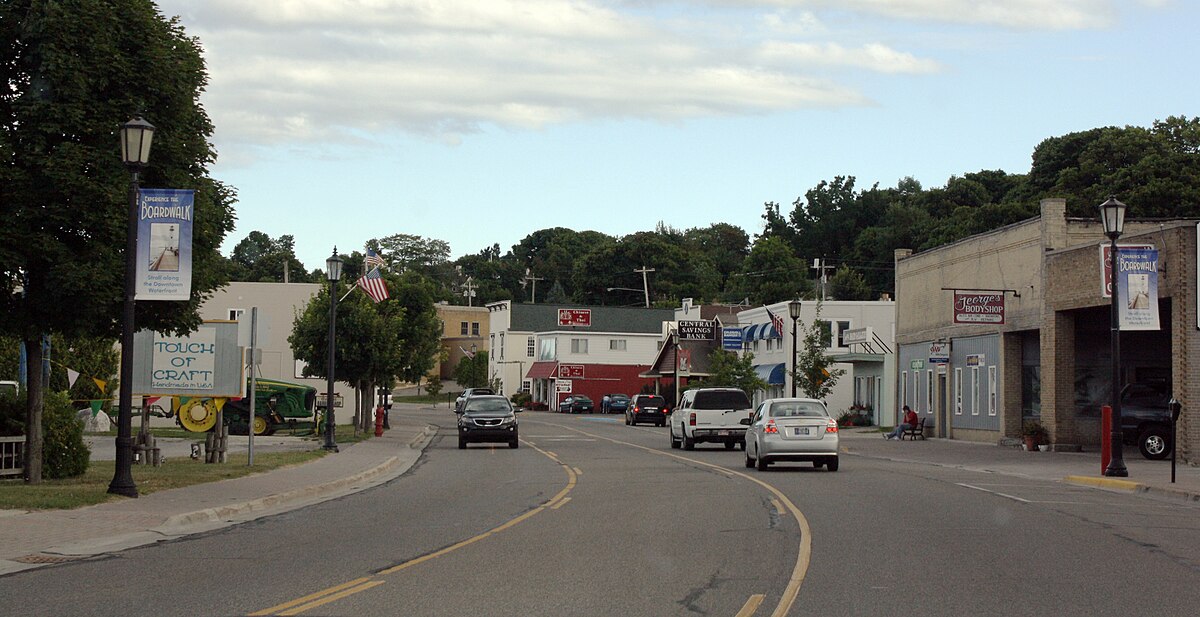
it strikingly illustrates the daring enterprise of the french in the exploration of the interior of our continent when we find the very jesuit missionary who had been the guest of the pilgrim fathers at plymouth now manfully labouring among strange tribes of savages over a thousand miles westward while the english missionaries had not yet ventured more than a hundred miles from the sea at the sault drouillet had been quite successful he was a good physician and had wrought many cures among the indians who accordingly respected his powers all save the scheming medicine-men who were ever the enemies of the black robes for if their people lost faith in witchcraft or no longer worshipped manitous in the olden way and preferred white men's remedies to the fooleries of magic then was the trade of the medicine-man gone and his power in the village departed but the improvement was seldom for long if some one died under the missionary's treatment or some disaster swept over the band the black robe was in his turn discredited and the medicine man again in favour with his nostrums and his noisy incantations to the spirits of earth and sky and water finally leaving the sault the la pointe indians and their teacher with his french assistants descended the winding island studded river of st mary's at its mouth the little fleet divided into two sections the ottawas proceeding eastward to manitoulin island where father louis andr was awaiting them the hurons paddling westward to their old haunts upon the island of michillimackinac upon which as stated in the preceding chapter st ignace mission had already been established It has been held by most historians that St. Ignace Mission was always located upon the mainland to the north of the island, where is now the little city of St. Ignace, Michigan, which contains a monument erected on the supposed site of the old chapel.
Dennis SayersNARRATOR
The Jesuit fathers, in writing their letters from the heart of the American wilderness, were more particular to record conversions and other spiritual experiences than to state the exact localities of their missions.
Dennis SayersNARRATOR
they did not foresee that their often vague geographical allusions would cause dispute two centuries later when antiquarians came to discuss historic sites it is with difficulty that some of the sites of the early jesuit missions in new france can now be established even approximately the location of st ignace has been among these puzzles although not so difficult as some of them that the mission was first upon the island and probably within the present village of mackinac a careful reading of the relations should convince any one that it was afterward moved to the mainland to the st ignace of to-day there can be no reasonable doubt but when and under what circumstances we do not know it is reasonable to suppose that this removal took place in the year after marquette's arrival and there is abundant ground for belief that the st ignace monument which is visited each summer by several thousands of tourists represents the place where stood his little mainland chapel quite likely the island at first resorted to because of its safety from attack by foes was found too small for the villages and fields of the indians who now centred here in large numbers and moreover was found difficult of approach in time of summer storm or when the ice was weak in spring and early winter the long continuance of peace with the iroquois removed for the time all danger from that quarter and events proved that they had made their last attack upon the tribesmen of these far western waters it was probably midsummer when marquette and his hurons after slowly threading their way between the forest-clad islets which stud the north-west shore of lake huron finally arrived at the island of michillimackinac the scene which greeted them is one of the most interesting in north america the two sharp-pointed peninsulas of michigan approach each other from north and south to within somewhat less than four miles between them lie the straits of mackinac the waters of lake michigan rushing through this narrow island cleft passage to join lake huron being increased about forty miles to the eastward by the outflow from lake superior in the centre of the strait towards its eastern end rises michillimackinac a word in our day shortened to mackinac in shape much like a high-backed turtle in allusion to which some scholars suppose that the indians named the island its southern shore is fringed by grassy bluffs enclosing a mile or more of pebbly beach backed by a level fertile strand upon which indians had camped and planted from very early times and upon which to-day rests the tourist resort village of mackinac from the bluffs above is obtainable a commanding view of land and water it is a strategic point of much importance at the junction of three great lakes for the possession of which in the olden days of the fur trade which centred here at mackinac england and america came more than once to blows northward the bluffs gradually descend in graceful undulations and with curious rock protuberances to the water's edge the rocky beach now known as british landing across the intervening four miles of water the cape of st ignace rises a wide beach of sand hemmed in by dreary bluffs which sometimes are pointed by jagged pillars of stone while southward across the strait may be seen the sandy stretch where is now the village of mackinaw city in whose neighbourhood the english built their first fort of logs a hundred years after marquette's arrival mackinac island is a beauty spot to-day even when its bluffs are crowned by rambling hotels and the multifarious summer homes of wealthy citizens of chicago st louis and detroit when the island is traversed by dusty macadamized drives when in summer the wharves are lined with noisy bulky steam craft from ports all the way from buffalo to duluth when in winter ice crushing ferry-boats transfer railway trains between st ignace and mackinaw city and garish souvenir shops and bawling guides and cabmen ply their trade among thousands of summer tourists who do the island sights while their steamers replenish stores but in the days of good father marquette michillimackinac was indeed an earthly paradise the sky hereabouts was unusually clear light breezes wafting over the wide waters brought relief in the warmest days the air was sprayed with the odour of the balsam the island was heavily wooded chiefly with cedars beeches oaks and maples presenting a pleasing variety of form and colour when seen from the highest bluffs which rising over three hundred feet above the straits gave to the missionary a far-reaching view of land and water almost incomparable eastward but over the edge of the horizon his ottawa friends were encamped upon great manitoulin island with father andr as their priestly counsellor north-eastward a long and tortuous journey by canoe but only fifty miles away in a bee-line over the tops of the trees he could from his vantage-point almost see the sault where he had lately left father drouillette at his hopeless but beloved task but to the west no doubt his eyes most often wandered over the waters of lake michigan he saw in fancy rise the land of the winnebagoes the pottawatomies and the maskootins the land where father alloways whom he had succeeded at la pointe was still labouring for the salvation of forest clans the land whence flowed the mississippi upon whose banks he hoped to discover new nations to whom might be told the fruitful story of the
21 MINS LATER
speaker_14ADVERTISER
by law twenty one plus terms and conditions apply
Dennis SayersNARRATOR
they state further that all along that great river are various tribes of different nations of dissimilar languages and customs and all at war with one another jolliet himself during his years in the lake superior country hungrily sought every morsel of information concerning the south flowing waterway about which he and marquette must often have speculated when they dwelt together in the jesuit house in quebec when jolliet was returning with a french companion to the lower st lawrence in the early autumn of sixteen sixty nine he accidentally met near the head of lake ontario a party of frenchmen headed by la salle who were seeking the mississippi the iroquois of new york state had told la salle of this waterway and disliking the jesuits he had associated with him two sulpician missionaries from montreal dolier de casson and rene de galinet who were desirous of seeking new tribes of indians among whom to labor la salle wished to proceed by way of the ohio river but jolliet drawing a map of such of the upper country as he knew sought to convince his countrymen that it would be best to proceed by way of the great lakes the new route which he had followed in his journey home it has already been explained that until sixteen sixty nine the french were obliged to follow the ottawa route exclusively because the iroquois shut them out of lake erie thereafter until the close of the century both routes were followed between the st lawrence and the upper lakes after the establishment of a fort at detroit the lake route was sufficiently safe to cause its general adoption the the missionaries took kindly to his suggestions but la salle was not to be moved unwilling to offend his sulpician friends he pretended that illness would compel him to return to montreal parting company he proceeded with his servants to the ohio which he explored as far down as the falls where louisville is now situated the missionaries eager to reach the pottawatomies of wisconsin who jolliet told them were in sore need of spiritual instruction pushed on to lake erie upon whose stormy shores they passed a dreary winter in the spring they completed the tour of lake erie and proceeded in their frail birch canoes up the length of lake huron a long and dangerous journey until on the twenty fifth of may sixteen seventy they landed at sault de sainte marie here at the jesuit mission enclosed with other rude houses in a square fort of cedar palisades surrounded by cultivated fields were found de blanc and marquette the latter was here upon a visit from la hospitality was the rule of the wilderness and gallinet in his journal gives us an appreciative account of their reception but the jesuits were in control of the ottawa missionary field and the fathers at the sault did not conceal their dislike of rivalry on the part of the sulpicians after a visit of but three days the montreal visitors escorted by a french guide turned southward through st mary's river entered georgian bay and returned home by the now familiar route of the ottawa river the descent of jolliet to quebec with his maps and his reports of the upper country renewed popular and official interest in the discovery of the mississippi this interest was further strengthened by the return the following year of gallinet and casson to montreal the attempt of the sulpicians to enter upon the mission ground of the jesuits no doubt served to quicken the zeal of the black robes who at this time were in high favor with the authorities of new france a considerable body of distorted information had already been gathered concerning the river but no one had thus far published any account of it which was the result of personal observation radisson's journal written in english was not discovered until long after and remained unpublished until eighteen eighty six it must be remembered that birch-bark canoes were as yet the only means of transportation that it cost considerable money to fit out exploring expeditions perils from storms accidents famine and the hostility of fanatical savages beset the way the traveller of our generation who seeks to penetrate the forbidden lands of central africa is in no greater danger than the explorer who in the seventeenth century ventured far into the interior of the then dark continent of north america jean talon had for several years served at quebec as the king's intendant the officer in charge of the financial police and judicial affairs of the province next to the governor the most important person in canada a man of lofty ambitions talon had done much to develop the commerce and industries of new france he had sent father albanel to hudson bay to oppose english fur-trade encroachments there and st lucan to sault de saint-marie to extend the king's domain into the north-west he now sought to hasten the discovery of the mississippi and to that end brought influence to bear upon the home government in france he was successful in obtaining from the king's minister a note dated june fourth sixteen seventy two giving him the necessary authority since for the increase of the colony wrote the paris official there is nothing more important for the colony than the discovery of a passage to the south sea his majesty wishes you to give it your attention armed with this explicit direction talon at once sought the man for the expedition his choice naturally fell upon joliet talon's health failing him he returned to france that autumn but recommended joliet to count frontenac the newly-arrived governor in november after joliet had left for the then far west frontenac in his turn wrote to colbert prime minister of france at paris i have deemed it expedient for the service to send the sieur joliet to discover the south sea by the mascoutan's country and the great river mississippi which is believed to empty into the california sea he is a man of experience in this kind of discovery and has already been nearer the great river of which he promises to see the mouth in seeking knowledge of the vast interior of the american continent and making treaties with the indians the french were actuated by several motives the national thirst for territory that which to-day we call imperialism was one then there was the hope to hem in the english colonists to the atlantic slope by arraying against them the western barrier of french forts and french-loving indians a desire to extend the fur trade and to discover mines of gold silver copper and lead was a prominent factor and not least in their thoughts was a wish to spread the christian religion among heathen nations that is why every important exploring party must needs be accompanied by a priest we have seen that la salle who hated the jesuits took sulpicians in his party but the government of new france being friendly to the jesuits whose missions were scattered all the way from labrador to wisconsin naturally turned to father de blanc as superior general of the order himself one of the best authorities upon the western country to select one of his missionaries as a companion for joliet it was well known that marquette had at la pointe studied the illinois dialects and his letters in the annual relations not only gave information which he had gathered regarding the mississippi but expressed his longings to carry the gospel to tribes upon the great river of the south he had indeed while still at la pointe been promised the privilege of opening a mission among the illinois indians and now at the straits of mackinac the gateway thither was but biding his time the hour had at last come to jolliet's hands were entrusted de blanc's instructions to marquette to accompany the expedition which count frontenac was despatching to the unknown regions of the south-west and the historian of the catholic church in america john gilmary shea believes that bishop laval to accredit marquette to the spanish authorities whom he might encounter made him vicar-general for the lands into which they were to penetrate slowly did the young sieur jolyer apparently alone ascend in his birch canoe the turbulent ottawa and its tributary the matawan with weary limbs follow the well-trodden portage path to lake nipissing and finally emerging from its tangle of forested islands now gay with autumnal foliage rapidly descend french river into the broad isle strewn expanse of georgian bay of lake huron weeks must have elapsed before at last in his tiny craft he could thread the length of that gloomy archipelago genial autumn was succeeded by the chilling air of november for winter early seeks the region of the upper lakes the burning glow of maples and sumac was followed by the shrivelled brown of frost nipped oak leaves each morning the traveller in awakening beneath his shelter of boughs upon island or mainland beach found the damp mosses crisp underfoot and the neighbouring rivulet skimmed with ice fitful winds laden with snowflakes scurried the leaves into ever-shifting wind-rows and whistled mournfully in the tree-tops travellers by canoe must needs be patient when upon great waters but it was important that joliet should reach mackinac before ice blocked his passage thither so that the expedition might start for the west as soon as the straits were open in the coming spring and thus have a full season for its voyage To secure this result he must frequently have taken risks in his journey.
Dennis SayersNARRATOR
As it was, he came dangerously near not reaching his goal before winter barred him out, for it was the 8th of December, when no doubt ice-floes were forming in the straits, before the intrepid explorer beached his craft upon the strand of Point St. Ignace, and embracing his priestly friend, placed within his eager hands the fateful message which was to link their names upon a page of history.
speaker_4NARRATOR
End of chapter 12 chapter

Tyler KeenanHOST
The wrecking steamer Favorite was also ordered out.
Tyler KeenanHOST
She was at St. Ignace and began moving toward the scene, passing Mackinaw on the way.
Tyler KeenanHOST
There was concern that she might not reach the Hannah before darkness.
Tyler KeenanHOST
That meant an enormous overturned freighter could remain somewhere near the shipping route while the light faded.

Cathy GibbonsSOUNDBITE_SPEAKER
[laughs]
Ronia KabansagCORRESPONDENT
Mr. and Mrs. Lehto have since passed away, but Kathy connected with the family members who took over the St. Ignace location.
Cathy GibbonsSOUNDBITE_SPEAKER
They're, it's a couple from Traverse City, and I knew them.
Cathy GibbonsSOUNDBITE_SPEAKER
A couple years ago, I had a deli.
Cathy GibbonsSOUNDBITE_SPEAKER
My husband and I had a deli for a couple years, and there were several times when the, the wife, Lori, uh, came into our deli and brought me pasties, and I t- we traded for deli sandwiches, and I always felt I got the better end [laughs] of that deal.
Ronia KabansagCORRESPONDENT
Do you know if I send the St. Ignace location $5 today, they would give me the recipe? [laughs]
Cathy GibbonsSOUNDBITE_SPEAKER
No, they said they don't sell it anymore.
Ronia KabansagCORRESPONDENT
[laughs] Thanks so much to Kathy Gibbons for sharing that story.

BobHOST
Uh-huh.
BradHOST
St. Ignace.
BobHOST
Yeah.
BradHOST
And, uh, Trish says, yeah, when we were up there.

William TomkoNARRATOR
I have obtained from God the favor of being enabled to visit the nations on the Mississippi River, and find myself in the happy necessity of exposing my life for the salvation of all these tribes, especially the Illinois.
William TomkoNARRATOR
Joliet followed the St. Lawrence to Fort Frontenac at the entrance of Lake Ontario, and with the exception of the portage at the Falls of Niagara, skirted in his canoe the shores of the Great Lakes until he reached the Straits of Mackinac, on the north side of which, at Point St. Ignace, he found the enthusiastic Marquette devotedly laboring for the spiritual welfare of the Hurons and Ottawans there gathered.
William TomkoNARRATOR
The contemplated line of travel was that of Jean Nicolet, an interpreter who had spent many years with the Indian tribes, who was sent in 1638 to bring about a peace between the Hurons and Winnebagos who lived near Green Bay.
William TomkoNARRATOR
After his negotiations, he ascended the Fox River, and making a portage to the Wisconsin, descended that stream some distance, so that, as he thought, from the designation of the Great Water by the Indian guide to the Mississippi, he was within three days of the South Sea.
William TomkoNARRATOR
Joliet, however, was too practical to trust entirely to tradition or oral description.
William TomkoNARRATOR
He had already carefully charted all that was definitely known of the Western Lake regions, and now at St. Ignace, with Marquette's invaluable assistance, gathered all possible information from such Indians at the mission as had frequented the unknown country.
William TomkoNARRATOR
This information being duly weighed and considered, Joliet extended his map to cover all the new country, marking thereon the navigable rivers, the names of nations and villages along their proposed route, the course of the Great River, and other useful information.
William TomkoNARRATOR
Their means of subsistence and travel were the simplest imaginable, two canoes and as large quantities of smoked meat and Indian corn as could be conveniently carried.

Kevin DietzHOST
It was a beautiful day for it, making the five-mile walk Across the Mighty Mac, attendance was up slightly from last year when about 33,000 people participated.
Kevin DietzHOST
The bridge was closed to vehicle traffic early Monday morning as walkers started from both Mackinac City and St. Ignace before reopening at noon.
Kevin DietzHOST
The Labor Day tradition dates all the way back to 1958 and has been held every year since except 2020. when it was canceled because of the COVID-19 pandemic.
Kevin DietzHOST
The Mackinac Bridge stretches nearly five miles and remains one of Michigan's most recognizable landmarks.
7 more episodes mention St. Ignace.
Create an account to see the whole feed, search across every transcript, and follow the entities you care about.