Śruti
Religious textWikipedia
31
MENTIONS
9
EPISODES
5
PODCASTS
Search complete. 31 mentions across 9 episodes found for "Śruti".
Sep 16, 2026

Alok PandeyHOST
If we want to follow one book which gives us the protocol, then it is the Gita.
Alok PandeyHOST
Patanjali's Yoga Sutra is not regarded as most authentic or in the line of Shrutis.
Alok PandeyHOST
We should be very very clear about these things.
Alok PandeyHOST
The Upanishads are Shrutis.
Alok PandeyHOST
The Vedas are Shruti and the Gita is also regarded as Shruti.
Alok PandeyHOST
Patanjali's Yoga Sutras are neither Shruti nor Smriti.

Satyanarayana DasaHOST
So he says that there are four means of knowledge.
Satyanarayana DasaHOST
One is Shruti, the Agama or the scripture.
Satyanarayana DasaHOST
Prataksha is direct perception.
Satyanarayana DasaHOST
Ayatiya is words of Aaptapursha.
Satyanarayana DasaHOST
And by knowing this, one becomes free from the duality of this material world or this conditioning and becomes more fixed on path of bhakti.
Satyanarayana DasaHOST
Sri Vishnachakurthi says, After speaking about knowledge and renunciation, knowledge and experience, he talks about vairagya or detachment.
Satyanarayana DasaHOST
So first is Shruti.
Satyanarayana DasaHOST
Shruti is the Vedic statements.
Satyanarayana DasaHOST
If he does it by the Swabhava because he has practiced, that is fine, but he should not do it because the Vidhi is saying it means he is no more under the control of any Vidhi at that time.
Satyanarayana DasaHOST
So he is explaining the meaning of the word Vidya because yo vidya sruti sampanna.
Satyanarayana DasaHOST
So Sruti there is the theoretical knowledge.
Satyanarayana DasaHOST
Therefore, he says that , that he has studied the Shastra, which are establishing the knowledge of Sankhya, Yoga, Tapasya, Viragya, et cetera.
Satyanarayana DasaHOST
And the word Vidya means, that knowledge which has dispelled the Avidya.
Alok PandeyHOST
So he speaks about it.
Alok PandeyHOST
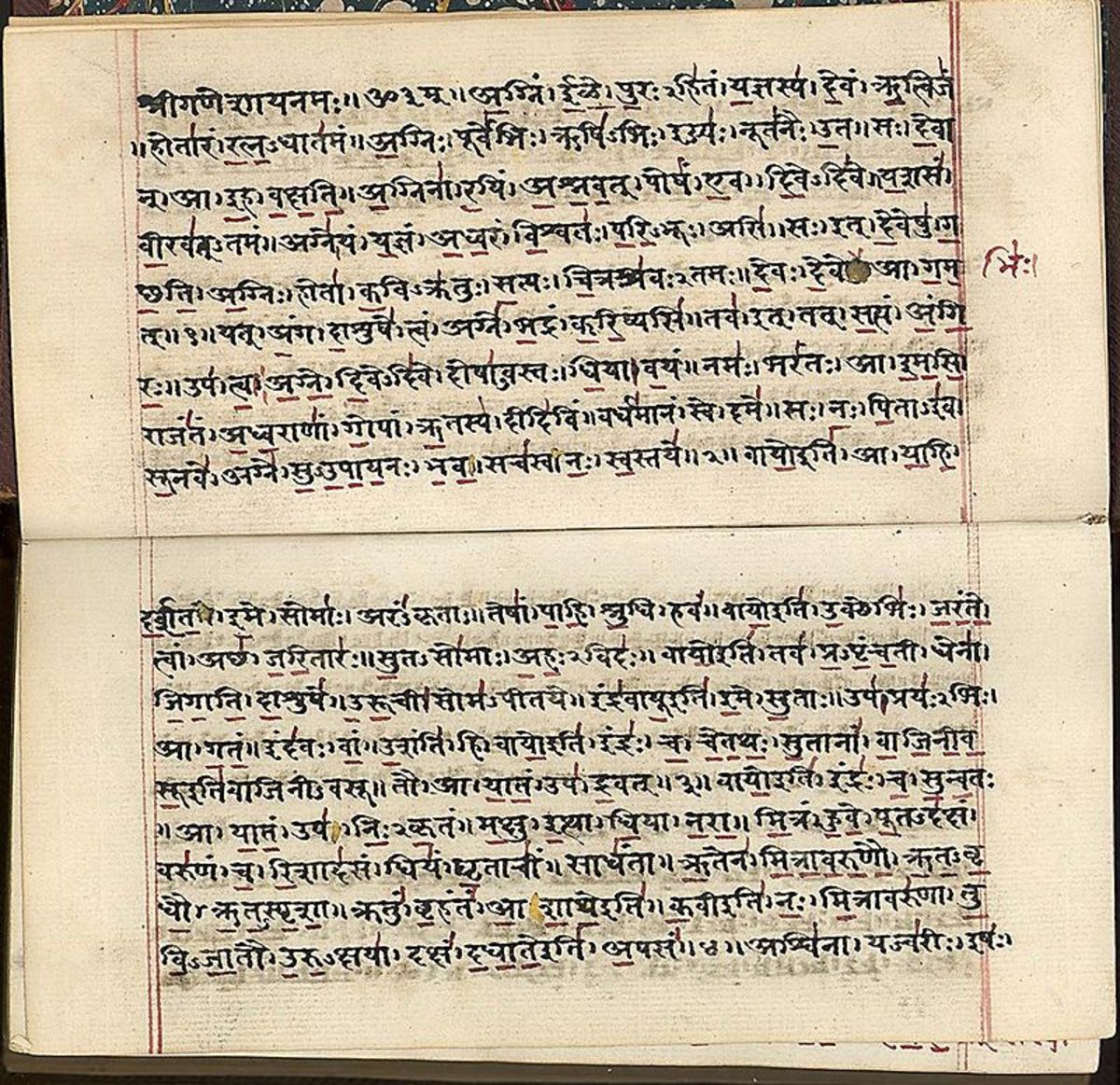
The Veda itself describes them as Kavya, Satya Shruta, seers who are hearers of the truth and the Veda itself was called Shruti.
Alok PandeyHOST
A word which came to mean revealed scripture.
Alok PandeyHOST
So we have in Indian thought Shruti and Smriti.
Alok PandeyHOST
Wherever there is a conflict, Shruti is the authoritative scripture.
Alok PandeyHOST
Shruti is primarily the Vedas and the Upanishads which are part of the Vedas.
Alok PandeyHOST
Of course, new Upanishads have come but primarily the most important Upanishads are part of the Vedas regarded as Jnana Khanda.
Alok PandeyHOST
So basically they are giving us the understanding of the wisdom, the knowledge part.
Satyanarayana DasaHOST
So cha munir aamnaataani cha naigamai.
Satyanarayana DasaHOST
So as he was doing before, puruvat means in the house, family life, as they have been described in the Nigama, the Sruti, Srauti yajnas, they should do that.
Satyanarayana DasaHOST
So munir vanasthasya naigamai vedaikyair aamnaataani vidhaan.
Satyanarayana DasaHOST
So muni here refers to the person who is, uh, living in the forest, vanaprastha.

Swami SarvapriyanandaHOST
Shrotriya, Brahmanishtha, Akamahata.
Swami SarvapriyanandaHOST
So Shrotriya means that guru must be-- Literally, Shrotriya means well-versed in the Shruti, Vedanta.
Swami SarvapriyanandaHOST
Shruti means Vedanta.
Swami SarvapriyanandaHOST
But you can expand it more and say that person must be an authentic member of a teaching lineage, not a fly-by-night operator.
Swami SarvapriyanandaHOST
Mm-hmm.

Swami SarvapriyanandaHOST
Shrotriya, Brahmanishtha, Akamahata.
Swami SarvapriyanandaHOST
So Shrotriya means that guru must be-- Literally, Shrotriya means well-versed in the Shruti, Vedanta.
Swami SarvapriyanandaHOST
Shruti means Vedanta.
Swami SarvapriyanandaHOST
But you can expand it more and say that person must be an authentic member of a teaching lineage, not a fly-by-night operator.
Swami SarvapriyanandaHOST
Mm-hmm.
Swami SarvapriyanandaHOST
He said, "Till now, we have all heard in Vedanta, the study of Vedanta, the foundation of Vedanta, the textual foundation of Vedanta is threefold.
Swami SarvapriyanandaHOST
The Upanishads, called the Shruti prasthana, which literally means the Vedic foundation of Vedanta.
Swami SarvapriyanandaHOST
This is the source texts of Vedanta.
Swami SarvapriyanandaHOST
Second, the Bhagavad Gita.
Swami SarvapriyanandaHOST
Uh, it is technically called the Smriti prasthana, which means the Smriti foundation.
Swami SarvapriyanandaHOST
The Smritis are more like applications.
Swami SarvapriyanandaHOST
The Shruti is revelation.
Swami SarvapriyanandaHOST
The highest truths which were seen by sages, they put it down in the Upanishads.

Michael JamesGUEST
Yes.
SandraHOST
It has been asked by Vivek Kumar: Is the ultimate authority Shruti itself or the direct recognition of Brahman to which Shruti points?
Michael JamesGUEST
Um-
SandraHOST
Would you please start with explaining what Shruti is? Because I don't know.
Michael JamesGUEST
Okay.
SandraHOST
Yeah.
Michael JamesGUEST
Shruti means, um...
Michael JamesGUEST
Shruti basically means the Vedas.