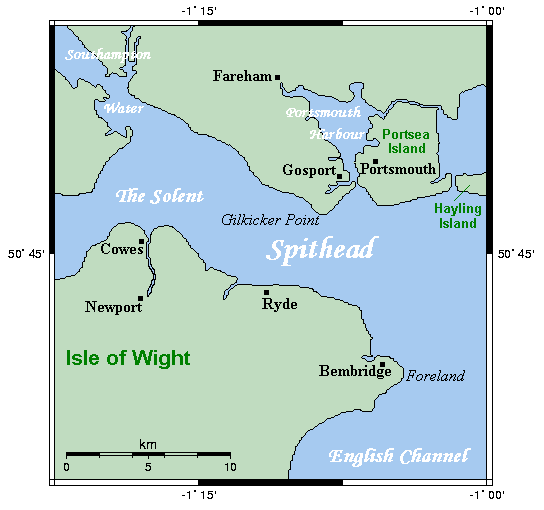
Spithead
26
MENTIONS
18
EPISODES
18
PODCASTS
Search complete. 26 mentions across 18 episodes found for "Spithead".
Oct 21, 2026

Sam WillisHOST
The letter reproduced here is one such document.
Sam WillisHOST
It was written aboard Victory at Spithead on 3 December 1805 by David Johns of Kidwelly, Carmarthenshire.
Sam WillisHOST
It offers a rare glimpse of Trafalgar through the eyes of a common sailor.
Sam WillisHOST
Written just six weeks after the battle, while memories were still vivid and before the event had settled into legend, it captures both the immediacy of combat and the way ordinary participants understood what they'd just experienced.
Sam WillisHOST
It reminds us that history's greatest events were experienced not just by legends like Nelson, but by people.
Sam WillisHOST
The first voice you will hear will be David Johns's.
Sam WillisHOST
He's reading his letter to himself, perhaps on a mess table on the gloomy decks of Victory, a tin lantern casting flickering shadows across his page, before sending it on its way from Spithead to Kidwelly.
Sam WillisHOST
The second pair of voices will be myself and David Davis, a historian of the Age of Sail and a historian of Wales and an author of naval fiction.

speaker_2NARRATOR
But this rash step, especially as it was not the first liberty of the kind I had taken, highly displeased him, and lost me his favor, which I never recovered.
speaker_2NARRATOR
At length we sailed from Spithead with a very large fleet.
speaker_2NARRATOR
We put into Torbay with a change of wind, but at returning fair again, we sailed the next day.
speaker_2NARRATOR
Several of our fleet were lost in attempting to leave that place, but the following night the whole fleet was greatly endangered upon the coast of Cornwall by a storm from the southward.

Michael TaylorGUEST
And we have what looks like an atheistic, democratic, egalitarian republic waging ideological warfare on Europe, and Western Europe is on fire.
Michael TaylorGUEST
Uh, in Britain itself, uh, there is fear not only of the ideological contagion of the revolution, uh, but they think there might also be practical consequences to it, because in 1797, there are naval mutinies, uh, at, uh, Spithead and the Nore, and the next year there is, uh, a revolution in Ireland with the United Irishmen seeking on roughly Jacobin lines to establish their own republic.
Michael TaylorGUEST
So people begin to look around for explanations as to what the hell has gone on.
Michael TaylorGUEST
Who could possibly have affected such ghastly and awful changes in the most powerful nation in the world at that time?

Michael TaylorGUEST
In Britain itself, there is fear not only of the ideological contagion of the revolution, but they think there might also be practical consequences to it.
Michael TaylorGUEST
Because in 1797, there are naval mutinies at Spithead and the Noor.
Michael TaylorGUEST
And the next year, there is a revolution in Ireland with the United Irishmen seeking on roughly Jacobin lines to establish their own republic.
Michael TaylorGUEST
So people begin to look around for explanations as to what the hell has gone on.

Michael TaylorGUEST
In Britain itself, there is fear not only of the ideological contagion of the revolution, but they think there might also be practical consequences to it.
Michael TaylorGUEST
Because in 1797, there are naval mutinies at Spithead and the Noor.
Michael TaylorGUEST
And the next year, there is a revolution in Ireland with the United Irishmen seeking on roughly Jacobin lines to establish their own republic.
Michael TaylorGUEST
So people begin to look around for explanations as to what the hell has gone on.

speaker_3NARRATOR
The father of the child was present, and watched the vessel until she seemed to die away in the glory of the setting sun.
speaker_3NARRATOR
innumerable doubtless now are the kind words and looks which are recalled by morning friends as so many fond souvenirs of that last parting at gravesend or at plymouth the sun was going down and tinging with lustre the kentish hills wintry though the weather was when the london left gravesend behind and went on her way to plymouth this very night however she encountered weather that compelled her to bring up at the nore where she anchored and remained during the whole of sunday on monday morning the first of january at daybreak the anchor was weighed and the ship steamed down the channel still against a head wind but making fair way while passing outside the isle of wight the wind increased to half a gale and captain martin deemed it prudent to put back and lay to for the night in st helen's road on tuesday morning the second the london proceeded through the needles into the open channel the wind being still ahead but light On the Wednesday the weather became so boisterous and the indications of the barometer so threatening that, at about two o'clock p.m., the Trinity House pilot, under whose care she was, decided on taking her to Spithead for shelter.
speaker_3NARRATOR
She anchored on the mother-bank at four p.m. and lay there until daylight of the fourth, when she steamed out through the Needles Passage, the wind being then southwesterly.
speaker_3NARRATOR
She arrived off Plymouth at daylight of the fifth.

Elizabeth GraceHOST
William, her brother, the so long absent and dearly loved brother, was in England again.
Elizabeth GraceHOST
She had a letter from him herself, a few hurried, happy lines, written as the ship came up the Channel, and sent into Portsmouth with the first boat that left the Antwerp anchor at Spithead; and when Crawford walked up with the newspaper in his hand which he had hoped would bring the first tidings, he found her trembling with joy over this letter, and listening with a glowing, grateful countenance to the kind invitation which her uncle was most collectedly dictating in reply.
Elizabeth GraceHOST
It was but the day before that Crawford had made himself thoroughly master of the subject, or had in fact become at all aware of her having such a brother, or his being in such a ship But the interest then excited had been very properly lively, determining him on his return to town to apply for information as to the probable period of the Antwerp's return from the Mediterranean, etc.
Elizabeth GraceHOST
And the good luck which attended his early examination of ship news the next morning seemed the reward of his ingenuity in finding out such a method of pleasing her, as well as of his dutiful attention to the Admiral in having for many years taken in the paper esteemed to have the earliest naval intelligence.

CaveatNARRATOR
John Evelyn, in his diary, says, "The evening concluded with illuminations and fireworks of great expense." The display cost £12,000.
CaveatNARRATOR
There seem to have been no fireworks in London at the coronation of either Anne or the first two Georges, although on the former occasion, rockets appear to have been fired from the fleet at Spithead.
CaveatNARRATOR
The peace rejoicings of 1713 were the occasion of another display on the Thames off Whitehall, the erection being about 400 feet long on barges chained together in the stream.
CaveatNARRATOR
A feature of this display was the water fireworks, described as 1,500 small and large water rockets, five large water pyramids, four water fountains, 13 pumps, 21 standing rockets with lights, all swimming on the water, 84 of the called bugards, large and small bee swarms, half of which were set with lights to swim on the water.
29 MINS LATER
Bob BodieNARRATOR
Louis Napoleon, like his uncle, being fond of fireworks, or it may be considering them a good means of gaining popularity, made any public event an excuse for pyrotechnic displays.
Bob BodieNARRATOR
Notable occasions were the military fetes, eighteen fifty-two, the fete of the Emperor, eighteen fifty-three, the visit of Queen Victoria to the Paris Exhibition of eighteen fifty-five, in honor of which a most elaborate display was given at Versailles, the baptismal fetes in eighteen fifty-six, the triumphal entry and the Emperor's birthday, eighteen fifty-nine, and the visit of the King Consort of Spain in eighteen sixty-four.
Bob BodieNARRATOR
The Entente Cordiale movement in eighteen sixty-eight was responsible for displays in the fleets on both sides of the Channel, those in France taking place in Cherbourg, those in England at Spithead.
Bob BodieNARRATOR
A previous event which had been celebrated pyrotechnically on a large scale in both countries was the peace rejoicing at the conclusion of the Crimean War.

speaker_1HOST
The Royal George would join it from an anchorage close to home, where the greatest danger appeared to lie far beyond the horizon.
speaker_1HOST
In late August 1782, Spithead was a gathering place for ships preparing to carry Britain's war effort south.
speaker_1HOST
Between Portsmouth and the Isle of Wight, this sheltered anchorage offered space for warships, transports and merchant vessels to assemble before venturing into the Channel.
speaker_1HOST
For the Royal George, it was the starting point of another demanding voyage.

Carla ArnellNARRATOR
From here the New England ships went home, and Walker sailed for England.
Carla ArnellNARRATOR
At Spithead the Edgar, the flagship, blew up, and all on board perished.
Carla ArnellNARRATOR
Walker was on shore at the time.
Carla ArnellNARRATOR
So far was he from being disgraced that he was given a new command.
8 more episodes mention Spithead.
Create an account to see the whole feed, search across every transcript, and follow the entities you care about.