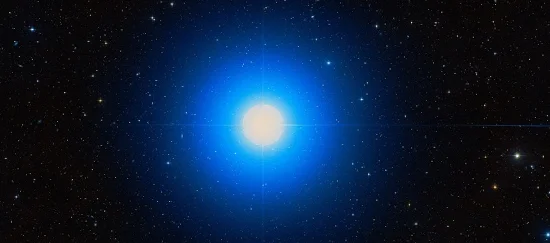
Spica
Star systemWikipedia
60
MENTIONS
13
EPISODES
12
PODCASTS
Search complete. 60 mentions across 13 episodes found for "Spica".
Sep 18, 2026

Jay DyerHOST
It was more fanciful and incorporated a lot of these mystical ideas.
Jay DyerHOST
The star Spica...
Jay DyerHOST
What does that mean? I have a note here.
Jay DyerHOST
Star Spica, also known as Arista, which is a record company, sheaf of wheat and a cornucopia.
Jay DyerHOST
So this must go along with Virgo.
Jay DyerHOST
So Spica is going to...
Lady LuckADVERTISER
Hey guys, Lady Luck here.
Lady LuckADVERTISER
I just love the fall season.

Grace AllardyceHOST
So it could be an interesting date or moment to pay attention to.
Grace AllardyceHOST
And I think another potential... important presence in this retrograde story is the fixed star Spica and Spica is a fixed star that's located at 24 degrees of Libra in the tropical zodiac again I'm not doing a full play-by-play of every single aspect Venus is making during this retrograde period the whole internet will be doing that probably over the course of October so no need for that here But the fixed star Spica, we'll quote fixed, Spica is the brightest star in the actual constellation of Virgo.
Grace AllardyceHOST
And it's located in the sheaf of wheat held by the Virgin.
Grace AllardyceHOST
And Bernadette Brady describes Spica as, you know, considered a symbol of the gifts of the harvest, of bounty, gifts to mankind.
Grace AllardyceHOST
We think of gifts of knowledge and bringing this level of like brilliance to whatever it is.
Grace AllardyceHOST
And I like to describe Spica as like this generosity of the gods towards humanity, really giving us these gifts of invention and brilliance and really true interstellar creativity.
Grace AllardyceHOST
And humanity experiences those gifts as nourishment and provision and ways that kind of tangibly improve our lives.
Grace AllardyceHOST
Just think about how, if we're using this symbol or this representation of wheat, even just that, just think about how much human history, how much human survival, flourishing, fertility, etc., has been shaped by the gift.

Cassandra TyndallHOST
And so, in so many of the, uh, descriptions and the images of Virgo is a usually a younger woman carrying, um, a sheath of wheat.
Cassandra TyndallHOST
Now, that wheat is also, uh, representative of the star of Spica, which is in the constellation of Virgo.
Cassandra TyndallHOST
Spica just means spike, which also represents the grain.
Cassandra TyndallHOST
So in a whole variety of cultures, of traditions, periods of time, regions of the world, that sheath of wheat will be somewhat dependent on what grain is prominent in that culture or in that region.
Cassandra TyndallHOST
Some of the symbols of Virgo, you see there's also a palm frond, and so that is also a very spiritual and quite religious, uh, representation as well.

speaker_3HOST
Here in the northern hemisphere where I live, the constellation is most prominent in the evening sky during spring and into summer, rather than during Virgo season itself.
speaker_3HOST
One of the most recognizable features is the brilliant star Spica, traditionally pictured as the wheat held in the maiden's hand.
speaker_3HOST
Its name comes from the Latin for an ear of grain, another beautiful little piece of the constellation's harvest symbolism.
speaker_3HOST
Spica is also one of the brightest stars visible from Earth.
speaker_3HOST
It's around, I think, the 15th brightest in the night sky.
speaker_3HOST
So that grain of wheat the maiden carries is literally marked by the brightest point in the constellation.

Julia BalazHOST
Arcturians can handle stuff.
Julia BalazHOST
And then Spica feels more like the sacred channel, just emanating the frequency that needs to be established here and inspiring it that way.
Julia BalazHOST
Manifestation of beauty and abundance without the need for a weapon or for, you know, harsh action.
Julia BalazHOST
Spica's protection come from solitude, refinement rather than force.
Julia BalazHOST
And They influence the world through artistry, high frequency presence, simply being.
Julia BalazHOST
And that's such an important reminder.
Julia BalazHOST
It's so powerful.
Julia BalazHOST
Just being, if you are emanating the sacred, holy frequency.

Mark BreenHOST
September arrives with a much quieter astronomy schedule compared to that of August, what with meteor showers, a lunar eclipse, and a collection of planets in the morning skies.
Mark BreenHOST
Yet, the month opens with a close encounter, quite low in the west-southwest tonight and tomorrow night, a celestial rendezvous with the planet Venus and the star Spica.
Mark BreenHOST
If you have a good level low view to the west and southwest, Venus arrives on the scene shortly after sunset, near 745, getting easier to see from 8 to 815 as it eases lower into the failing twilight.
Mark BreenHOST
That's when you should take a close look just above Venus, where a much fainter object appears, the star Spica.
Mark BreenHOST
This conjunction is transitory, as the Earth's orbit shifts our view of the distant star and the much closer Venus.
Mark BreenHOST
This causes Venus to remain close to the same place, while Spica drops lower each evening, out of view by next week, while Venus lingers until month's end.
Mark BreenHOST
On Wednesday, Venus' plans for the upcoming months on Night Sky.
Mark BreenHOST
Night Sky is a production of Vermont Public and the Fairbanks Museum and Planetarium.

Donny LimGUEST
The good news is that it will pass over certain very pronounced fixed stars, sorry, there's more than one, three times.
Donny LimGUEST
And that's Spica and Arcturus.
speaker_2UNKNOWN
They happen
Donny LimGUEST
at around 24 to 26 Libra.
6 MINS LATER
Donny LimGUEST
It won't be until the late 2030s, unfortunately.
Donny LimGUEST
Because the star point in Scorpio will phase out.
Donny LimGUEST
And by the time we hit the late 2030s, we will have a star point on, again, Arcturus and Spica around there.
Donny LimGUEST
I guess that will bring some kind of divine resolution regarding this.

Pete LawrenceHOST
Okay, so that's the planets covered, and they are coming back in force now, so we're sort of entering planet season again.
Pete LawrenceHOST
So what's happen- happening in terms of special events going on? Well, if you want to have a bit of a challenge, on the 1st of September, it's incredibly low and very poorly [laughs] placed for the UK, but if you can catch a view of Venus after sunset, as we've mentioned, that's the best time to grab it, at the beginning of the month, um, magnitude plus 1.0 Spica, that's Alpha Virginis, is located just one and a half degrees above it.
Pete LawrenceHOST
Um, so see if you can catch that pair together.
Paul AbelHOST
On the 4th of September, um, we have the 12th magnitude Comet 161P/Hartley IRAS can be found approximately 0.25 degrees north of magnitude 4.

DrewHOST
It blazes low in the west-southwest after sunset.
DrewHOST
Around September 1st and 2nd, Venus passes very close to Spica, the brightest star in Virgo.
DrewHOST
You'll need a clear horizon, and binoculars may help pick pale blue Spica out of the twilight beside the much brighter planet.
DrewHOST
Wait until the sun is fully below the horizon before sweeping that area with binoculars.
DrewHOST
Saturn is now becoming a convenient late evening target, rising in the east-southeast and climbing higher as the night goes on.

Sky CarambaHOST
Skycaramba! August 30th through September 5th, 2026.
Sky CarambaHOST
This week, the Moon passes by Saturn, Venus passes by Spica, Venus is at Aphelion, and the Moon reaches its farthest north.
Sky CarambaHOST
After sunset, as darkness begins early this week, you can already see Venus close to Spica, the bright star in Virgo.
Sky CarambaHOST
The planet will pass just 1.5 degrees below it on Wednesday.
Sky CarambaHOST
Then it'll keep going.
Sky CarambaHOST
Slightly north of west means azimuth 275 degrees.
Sky CarambaHOST
From that latitude, due west is 270.
Sky CarambaHOST
With Venus passing by Spica this week, let's talk about that bright star.
3 more episodes mention Spica.
Create an account to see the whole feed, search across every transcript, and follow the entities you care about.