special drawing rights
CurrencyWikipedia
15
MENTIONS
5
EPISODES
3
PODCASTS
Search complete. 15 mentions across 5 episodes found for "special drawing rights".
Nov 17, 2026

Jerry WilliamsGUEST
Right now they're designing a new world currency.
Jerry WilliamsGUEST
SDRs.
Jerry WilliamsGUEST
It's called a special drawing right, SDR.
Jerry WilliamsGUEST
I think the dollar would be one of the components of that new currency, like the Chinese yuan.
Robert KiyosakiHOST
Yeah, they're just going to crank the printing press in a different direction.
Robert KiyosakiHOST
What do you think about that, Brian, SDRs and IMF?
Brien LundinGUEST
Yeah, I agree with Jerry.
Brien LundinGUEST
The dollar may lose some of its reserve currency status, but as far as internally, it's not going to get replaced permanently.
James RickardsGUEST
Fuel dock in Singapore, and you say, fill her up.
James RickardsGUEST
And the operator says, fine, pay me in SDRs.
James RickardsGUEST
Those SDRs are special drawing rights.
James RickardsGUEST
This is world money.
James RickardsGUEST
It's not complicated.
MelissaUNKNOWN
Favorite book, Rich Dad, Poor Dad.
MelissaUNKNOWN
Says, do you see the formal acceptance of China into the IMF special drawing rights basket of currencies accelerating the decline of the US dollar? Is the best way to protect your wealth through gold and precious metals?
Robert KiyosakiHOST
My opinion is, but it's a very sophisticated question that you can't just say yes or no to.
Robert KiyosakiHOST
Right, Jerry?
Kim KiyosakiHOST
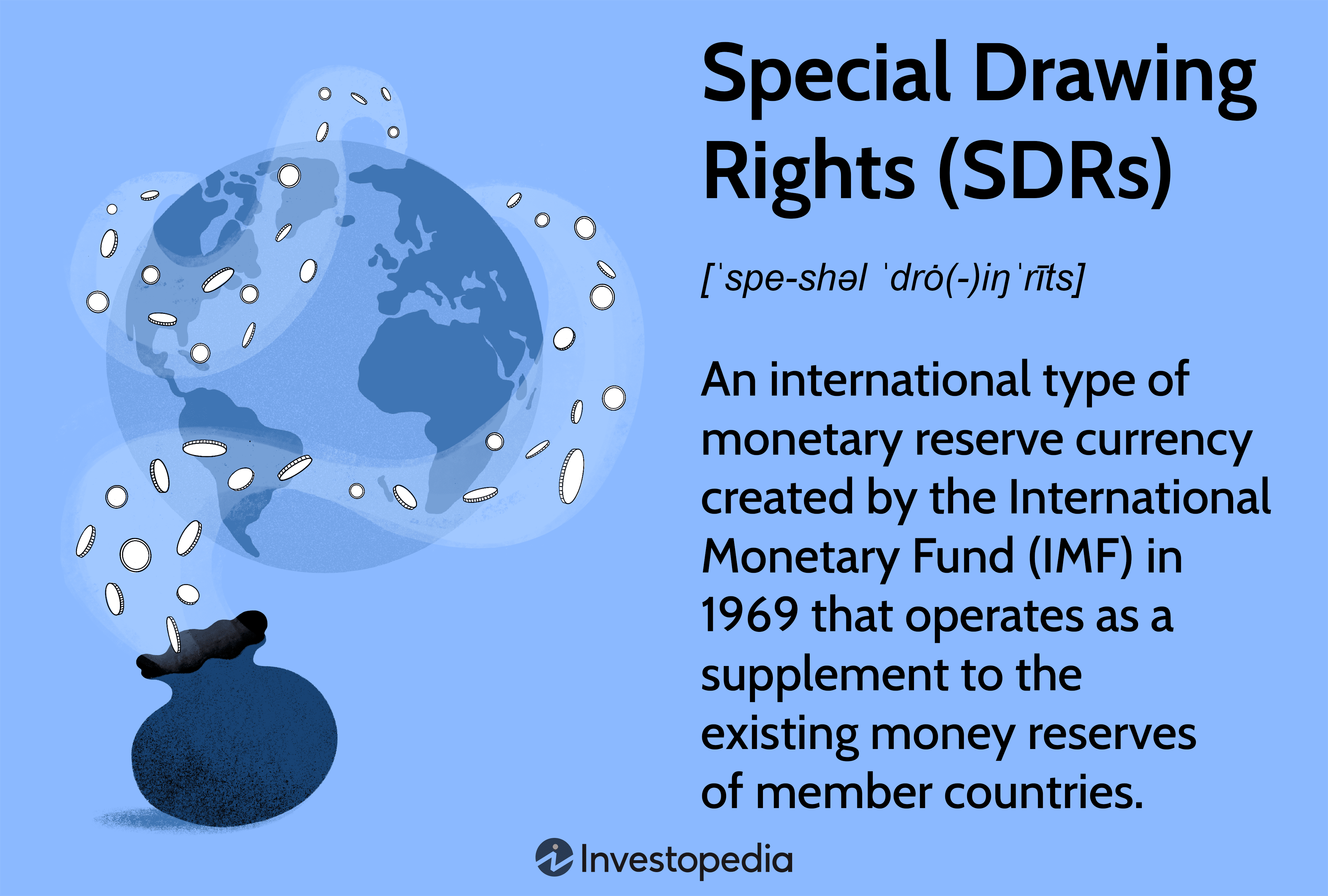
Can you explain first what special drawing rights are?
Robert KiyosakiHOST
Oh, SDR.
Robert KiyosakiHOST
It means…
Jerry WilliamsGUEST
And the question that, you know, China being admitted into the International Monetary Fund is huge.

Jayati GhoshGUEST
No, it's entirely about making sure large capital and the rich get better and better off.
Jayati GhoshGUEST
But globally, if we had even the most minutely rational system, the most obvious thing to do in a pandemic would have been a dramatic increase in the allocation of special drawing rights of the IMF, the SDRs.
Jayati GhoshGUEST
And there were demands for this from the very beginning.
Jayati GhoshGUEST
They did have an
Jayati GhoshGUEST
Okay.
Jayati GhoshGUEST
And What it's supposed to do is it's the IMF's what money creation, if you like.
Jayati GhoshGUEST
Now, when the IMF creates more SDRs, all it does is put SDRs into everybody's IMF account.
Jayati GhoshGUEST
Okay.

Beatrice di PaduaGUEST
That could mean, for example, making the tax system fairer, bringing more workers into formal employment, or redirecting public money that are currently spent on things like military subsidies or fossil fuels.
Beatrice di PaduaGUEST
And other options involve international support, such as redirecting aid towards social protection or changing how debt-related payments are used or making use of the so-called special drawing rights, which are international reserve assets created by
Jo SharpHOST
the International Monetary Fund.
Beatrice di PaduaGUEST
One important thing to highlight is that the calculator doesn't tell you that there is one solution.
Lara MerlingGUEST
So why don't we do that for countries as well? So that's something that in the calculator we can see immediately and the choices and how much of a difference that would make, even if we can't really capture the longer term benefits and the multiplier effect in that kind of tool.
Jo SharpHOST
So, Paulina, Moldova is one of the five case studies that the RTUC has looked at, and it's an interesting case.
Jo SharpHOST
That analysis estimated the additional cost of achieving universal social protection in Moldova at around 2.49% of GDP per year, of which reoccurring domestic measures like progressive tax reform, reallocation of fossil fuel subsidies and military spending, along with gradual labour market formalisations, could mobilise a significant portion, about 1.8% of GDP, and then external and one-off sources, including reoriented official development assistance, debt service redirection and special drawing rights, could contribute further.
Jo SharpHOST
Taken together, the calculator identifies enough potential or perhaps hypothetical financing to just about close that 2.49% of GDP gap.