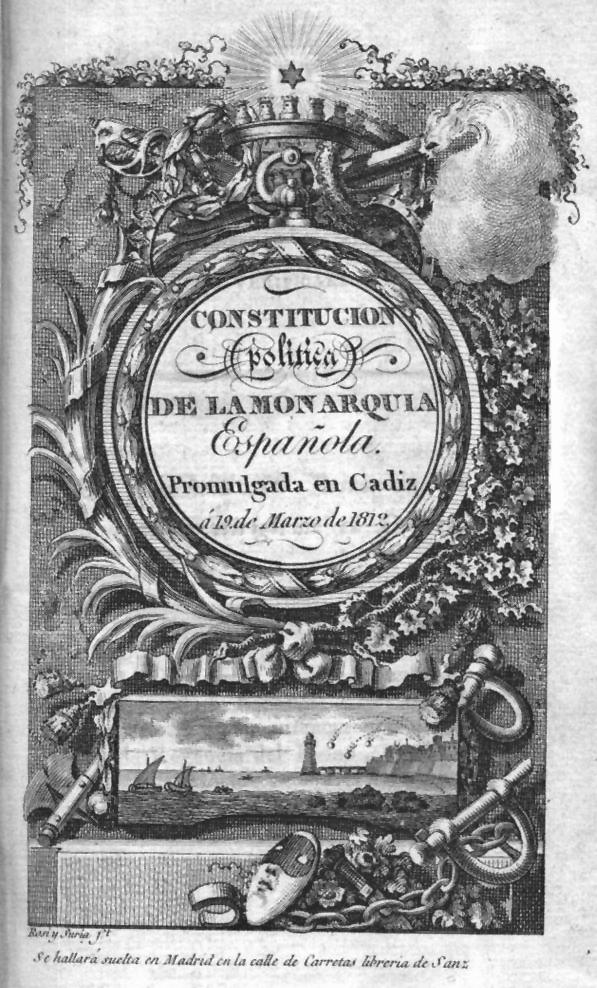
Spanish Constitution of 1812
ConstitutionWikipedia
10
MENTIONS
4
EPISODES
4
PODCASTS
Search complete. 10 mentions across 4 episodes found for "Spanish Constitution of 1812".
Oct 10, 2026

Pamela NagamiNARRATOR
And while the brutality of the government offended the humanity, its inefficiency galled the pride and patriotism of the Spanish race.
Pamela NagamiNARRATOR
As might have been expected, Ferdinand's first act was to abolish the constitution of 1812, the loss of which was in itself no great evil, since it was utterly alien to the traditions of the people, and would probably in any case have proved to be unworkable.
Pamela NagamiNARRATOR
Even the revival of the Inquisition and the immunities of classes was not altogether unpopular.
Pamela NagamiNARRATOR
But the complete restoration of the former government system bred discontent.
Pamela NagamiNARRATOR
But just when all seemed lost, the simultaneous outbreak of revolt at Caruna and Barcelona, and indeed throughout the kingdom, turned the scale.
Pamela NagamiNARRATOR
Ferdinand, who was certainly under no illusions as to the extent of his popularity, was thoroughly frightened and decided to give way.
Pamela NagamiNARRATOR
He swore to the Constitution of 1812, for which the mobs had vaguely clamored, and promised to convene a Cortes.
Pamela NagamiNARRATOR
The Riego entering Madrid was hailed as a popular hero and as the savior of his country.

Pamela NagamiNARRATOR
And while the brutality of the government offended the humanity, its inefficiency galled the pride and patriotism of the Spanish race.
Pamela NagamiNARRATOR
As might have been expected, Ferdinand's first act was to abolish the constitution of 1812, the loss of which was in itself no great evil, since it was utterly alien to the traditions of the people, and would probably in any case have proved to be unworkable.
Pamela NagamiNARRATOR
Even the revival of the Inquisition and the immunities of classes was not altogether unpopular.
Pamela NagamiNARRATOR
But the complete restoration of the former government system bred discontent.
Pamela NagamiNARRATOR
But just when all seemed lost, the simultaneous outbreak of revolt at Caruna and Barcelona, and indeed throughout the kingdom, turned the scale.
Pamela NagamiNARRATOR
Ferdinand, who was certainly under no illusions as to the extent of his popularity, was thoroughly frightened and decided to give way.
Pamela NagamiNARRATOR
He swore to the Constitution of 1812, for which the mobs had vaguely clamoured, and promised to convene a Cortes.
Pamela NagamiNARRATOR
Riego, entering Madrid, was hailed as a popular hero and as the saviour of his country.

Doris SalcedoGUEST
Eh, deciden, deciden declararlo inocente, pero fue muy humillante para él estar en estos tribunales que se llamaban tribunales de purificación además, ¿no? Entonces, e-en este momento ya, cuando ya ha regresado Fernando VII, Goya decide hacer estos grabados enfáticos en los que muestra a-- él era un, era radicalmente anticlerical, eh, y muestra, eh, eh, a los clérigos como monstruosos con, con orejas de murciélago, eh, arrodillados frente a animales, eh, que les es, eh, teniéndole el tintero a animales que escriben, eh, cosas contra la humanidad, eh, los muestra defecando, los muestra en condiciones, eh, los muestra perdidos.
Doris SalcedoGUEST
Los-- porque, porque la Constitución de Cádiz ha promulgado, eh, que deben salir de los conventos todos estos frailes.
Doris SalcedoGUEST
Hay que comprender que España tenía doscientos mil frailes.
Doris SalcedoGUEST
Eran un 3 % de la población y, sin embargo, recibían un 30 % de las rentas.
10 MINS LATER
Doris SalcedoGUEST
Entonces, Goya presenta efectivamente a Fernando VII, le pone la mesa, la corona, el cetro, pero el león no es un león, es un bicho asqueroso, es un, es un, es un animal horrible, como con unas cadenas rotas.
Doris SalcedoGUEST
Eso no es un león.
Doris SalcedoGUEST
Y cuando presenta, hace la representación de España, es muy, muy bella, porque él ya en, en estos grabados, vamos a ver, ya había representado a la Constitución de Cádiz de 1814.
Doris SalcedoGUEST
Entonces, en vez de presentar a España, presenta la Constitución.

Edwin OrtizHOST
Se nos dice que Puerto Rico no tenía una verdadera vida política antes de mil ochocientos noventa y ocho, que nuestro pueblo carecía de experiencia para gobernarse y que España simplemente entregó una colonia subdesarrollada al terminar una guerra.
Edwin OrtizHOST
Pero ¿qué sucede cuando abrimos el expediente histórico? ¿Qué descubrimos al examinar los gobiernos municipales que existían desde siglos atrás y la representación de Puerto Rico en las cortes españolas? ¿Qué encontramos al estudiar la Constitución de Cádiz de mil ochocientos doce, los funcionarios electos que gobernaron nuestros pueblos, los movimientos reformistas del siglo XIX, la Carta Autonómica de mil ochocientos noventa y siete y las elecciones celebradas en toda la isla el veintisiete de marzo de mil ochocientos noventa y ocho? Para explorar esta historia me acompaña José G.
Edwin OrtizHOST
Poventud, activista comunitario puertorriqueño, veterano de la Marina de Estados Unidos y técnico en electrónica de larga trayectoria.
Edwin OrtizHOST
José ha aplicado a la investigación de la historia puertorriqueña la misma disciplina y determinación que caracterizaron su carrera técnica, convirtiéndose en investigador independiente y defensor de la recuperación de nuestra historia política anterior a mil ochocientos noventa y ocho.
7 MINS LATER
José G. PoventudGUEST
Ponce ofrece un buen ejemplo.
José G. PoventudGUEST
Sus listas históricas identifican a Francisco Ortiz de la Renta como alcalde en 1766.
José G. PoventudGUEST
Décadas después, José Ortiz de la Renta se convirtió en el primer alcalde constitucional de Ponce bajo el sistema relacionado con la Constitución de Cádiz de 1812.
José G. PoventudGUEST
Estos nombres son importantes porque demuestran continuidad entre la antigua participación municipal y las reformas constitucionales del siglo XIX.