Soviet
Governmental bodyWikipedia
406
MENTIONS
63
EPISODES
47
PODCASTS
Search complete. 406 mentions across 63 episodes found for "Soviet".
Oct 27, 2026

NickHOST
Right.
NickHOST
But then the Soviets denied it for forever until the Soviet Union collapsed.
NickHOST
Then they admitted that they were involved, even though everyone knew they were.
MirandaHOST
Yeah.
8 MINS LATER
ChristyHOST
Well, kind of.
ChristyHOST
It wasn't on purpose.
ChristyHOST
They just forgot to switch the autopilot and the Soviets took advantage.
NickHOST
Yeah.

Matthew Raphael JohnsonGUEST
This is a, this is a very Jewish government despite-- And, and it's, it's, it's a very Jewish government even though they were, they were trying to hide that fact, that they were aware, they were subjectively aware that we have to hide, uh, the Jewish nature of this government.
Pete QuiñonesHOST
At the August government conference dedicated to the disturbing situation in the country, apart from the representatives of Soviets, parties, and guilds, a separate representation was granted to the ethnic groups of Russia, with Jews represented by eight delegates, including G. Sliusberg, M. Lieber, M-N. Friedman, G. Landau, and O. Gru-Gruzenberg.
Pete QuiñonesHOST
The favorite slogan of 1917 was "Expand the revolution." All socialist parties worked to implement it.
Pete QuiñonesHOST
I.O. Levin writes, quote, "There is no doubt that Jewish representation in the Bolshevik and other parties which facilitated expanding the revolution, Menshevik, socialist revolutionaries, et cetera, with great respects to both general Jewish membership and Jewish presence among the leaders, greatly exceeds the Jewish share in the population of Russia.
6 MINS LATER
Matthew Raphael JohnsonGUEST
And anyone who wanted to vote had a choice among different shades of Jewish socialism.
Pete QuiñonesHOST
But most of these persons were gone with the October coup, and it was not they who shaped the subsequent developments in Russia.
Pete QuiñonesHOST
It would become the lot of those who now occupied much lower posts, mostly in the Soviets.
Pete QuiñonesHOST
They were numerous and spread all over the country.

Mark SchaussHOST
And they also had to work within a collective.
Mark SchaussHOST
Now, this would come into a greater view when the Soviets took over in 1917.
Mark SchaussHOST
But this is where it started.
Mark SchaussHOST
Now, according to Sidney Hargrave, in his history of the 1905 revolution, quote, their earnings were often so small that they could neither buy the food they needed nor keep up the payment of taxes and redemption dues they owed the government for their land allotments.

Carlton KingHOST
Britain fought with the Empire, right? Understand that.
Carlton KingHOST
So British Empire and then Americans, 450,000. and that's americans of all sorts all colors all shades whatever right again understand that so now we come to the soviet union and again this is the soviet union of all colors all shades all peoples in the soviet union not just russia the problem is we mix this thing up and we call the soviet union russia it's not there were basically 16 republics include Russia, so 15 in addition to Russia.
Carlton KingHOST
And those republics were from the biggest one, which was Russia, to smaller ones in the end that tend to be Estonians and Latvians and all those sort of places in the end of the Soviet Union come to that by the end of the Soviet Union falls so the death rates of these people in Tajikistan Uzbekistan and in Belarus Ukraine you know you can go on and on and on with these 15 republics and it's pointless naming them all but the point I'm making is all of them were fighting in the second world war for the soviet union and the losses of all of these people is something around 27 million not thousand million not 450 000 27 million right now this is another thing this is said to be a law estimation Because at the time of the war, did the Soviets want their people to know that they were losing masses of people like that? No, they didn't.
Carlton KingHOST
So they cut the numbers down.
Carlton KingHOST
Originally, it was 20 million, even at the end of the war.
Carlton KingHOST
But this is what you've got to take into account.
Carlton KingHOST
So we're talking about 27 million.
Carlton KingHOST
Now you'll have people who turn around and say, yeah, but without us providing them with tanks, I question the tank figure, but definitely with trucks and Jeeps and munitions and small arms and bullets and etc they wouldn't have been able to win the war and so therefore it wasn't them it was the fact that we provided them well you could say exactly the same for us the British because the Americans provided us with Sherman tanks they provided us with a whole mass of trucks they provided us with aircraft it's in addition to obviously them fighting with their own gear and us fighting with our own gear we provided en masse with gear no Brit turns around and says oh the Americans won it because they provided us with equipment no and ships etc nobody does that so why are we saying it for the soviet union you know the country that does the dying is a country that wins and and the biggest point of all of this is actually the numbers of germans who lost their lives due to fighting the soviet union that's another thing you have to look at now why is all that of interest when we talk about the ukraine Because I hear too many people turn around and say a nonsense like, well, if the Ukraine kept its nuclear weapons and didn't give them away, Russia would have never invaded it.

Matilda FayGUEST
They've been important tools of struggle in countless revolutions.
Matilda FayGUEST
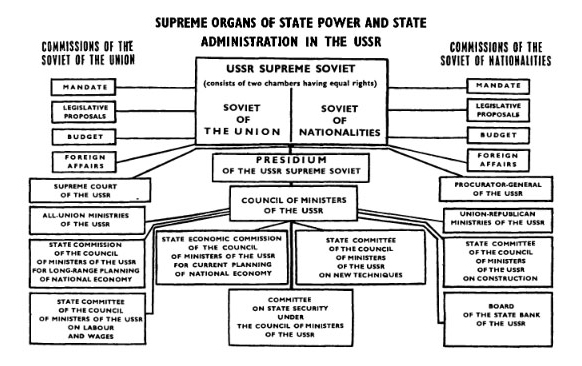
And people might know the name Soviets referred to workers' councils became the name of the Soviet Union.
Matilda FayGUEST
So we can see, though, that that regime of Russia at the time was clearly not one of bottom-up workers' power.
Matilda FayGUEST
There was a Stalinist counterrevolution in which the workers' councils were replaced with a bureaucratic state apparatus.
14 MINS LATER
Matilda FayGUEST
And I was watching this BBC documentary, Cry Hungry, which is about events at the time.
Matilda FayGUEST
It's obviously from a very like pro-Western perspective, but it's also like really powerful seeing the people's accounts of that time, talking about the incredible joy that people felt, having the freedom to politically organize and to politically talk to each other and discuss what kind of society they wanted.
Matilda FayGUEST
Also, there's accounts from people in that who are saying through the Soviets they were, or through the workers' councils, they were already running society, right? So they were not just having the ability to talk about politics, but to be doing politics and seeing how you make a society function.
Matilda FayGUEST
And I think that brings me to one of the important questions about any revolutionary situation, which is where is the power at that point? yeah, they had the freedom to join parties and many did join those parties, but you had a situation where these were the old parties from 10 years ago and they were still talking about the ideas of the system 10 years ago.

speaker_0NARRATOR
On 22 October 1921, workers at the Castle Connell Fisheries in Ireland went on strike after their boss repeatedly failed to attend arbitration meetings to address the workers' demands.
speaker_0NARRATOR
When he failed to make concessions, workers escalated their tactics by occupying fisheries and declaring a Soviet, or workers' council.
speaker_0NARRATOR
The Doyle cabinet instructed police and volunteers to evict the strikers, but the workers held out until 22 December, when they agreed to leave for a final arbitration session, which sided very much with the workers.
speaker_0NARRATOR
For sources, maps, and all of our anniversaries each day, check out the On This Day section of our Stories app at stories.workingclasshistory.com. And if you value our work, support us at patreon.com slash workingclasshistory.

KenHOST
Bill destroys it with a rocket, and the survivors board a sailboat and set sail for Haven.
KenHOST
Two days later, the machines go silent when a UFO hiding in the comet's tail, destroyed by a Soviet space platform disguised as a weather satellite, equipped with nuclear missiles and a laser cannon.
KenHOST
Six days later, the Earth passes out of the comet's tail, and the survivors are still alive.
KenHOST
Roll credits.
6 MINS LATER
JohnHOST
Yeah, it kind of threw me for a loop.
JohnHOST
Again, it just felt like, okay, so Stephen King got to the end of the movie and he just went, you know, I don't know where to go from here.
JohnHOST
So let's just say a Soviet weather satellite destroyed a UFO hiding in the comet and that fixed everything.
JohnHOST
Oh, I don't think it was King.

TomHOST
Now for their part, the anarchists moralistically demand the immediate abolition of all forms of state in the abstract.
TomHOST
Second, Marxists seek to smash the bourgeois state and replace it with a worker's state that's modeled on the Paris Commune or the Soviets that emerged during the Russian revolutions.
TomHOST
And this is necessary, this worker state is necessary to defend the gains of the revolution while beginning the process of its withering away.
TomHOST
And the anarchists reject even this transitional revolutionary state.
12 MINS LATER
TomHOST
And we sincerely believe that this is possible, at least in theory.
TomHOST
I mean, we explained that if the labor leaders moved decisively to prepare an indefinite, all-out political general strike, including the broadest layers of the working class, that capitalist society could be brought to a standstill.
TomHOST
The military would divide along class lines, and the working class could assume power through organs of workers' control, workers' power, rather, like the Soviets.
TomHOST
But we're also not naive.

Max BlissGUEST
I've done so much research on this.
Max BlissGUEST
When I was looking at the Soviets and what the Soviets did, so you had the Russian Revolution, and within two years of, sorry, 1919, they opened up a laboratory in Leningrad specifically for weather modification.
Max BlissGUEST
And it began... cloud seeding experiments and experiments in the laboratory on how to make it rain.
Max BlissGUEST
It's in 1919.
Max BlissGUEST
You know, it's absolutely incredible.
Max BlissGUEST
You had things going on in America.
Max BlissGUEST
You had them spraying electrified sand particles, which they also, the Soviets did as well.
Max BlissGUEST
So this is happening everywhere around the planet.
53 more episodes mention Soviet.
Create an account to see the whole feed, search across every transcript, and follow the entities you care about.