Lipid-based nanoparticle
15
MENTIONS
5
EPISODES
4
PODCASTS
Search complete. 15 mentions across 5 episodes found for "Lipid-based nanoparticle".
Sep 4, 2026

Chantelle MooreHOST
Anna Blakeney is an Assistant Professor in the School of Biomedical Engineering and Michael Smith Laboratories at UBC and Canada Research Chair in Nucleic Acid Bioengineering.
Chantelle MooreHOST
Welcome Peter and Anna! we're seeing the rise of RNA therapeutics that rely on LNPs, a drug delivery technology pioneered by Peter.
Chantelle MooreHOST
In this episode, we'll explore why Canada's RNA innovation matters globally, what our country needs to build sovereignty and sustain leadership in this exciting space, and how these advances could transform patient care.
Chantelle MooreHOST
So we are experiencing a true paradigm shift with RNA LNP therapeutics, Peter, could you tell us how far this technology could go?

FrejaHOST
You see, massive competitors like Pfizer and Alnalam, they love lifelong chronic treatments, right? Daily pills or monthly injections that essentially guarantee them subscription revenue for the rest of a patient's life.
FrejaHOST
But Intelia? Their absolute moat is their proprietary lipid nanoparticle, or LNP, delivery system.
FrejaHOST
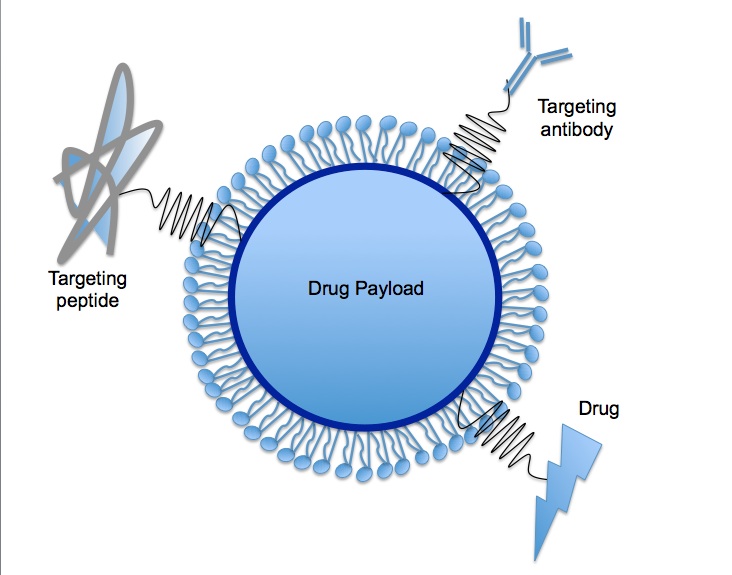
Think of an LNP like a microscopic, highly targeted delivery truck.
FrejaHOST
It allows Intelia to deliver a permanent one and done genetic edit directly inside the patient's liver.
FrejaHOST
And here's the kicker.

Jitendra KumarGUEST
And one of the thing which I try to address in my current role is also, I will say that one of the key challenges is that particle size.
Jitendra KumarGUEST
So when you are delivering any of the LNP particles or any nanoparticle, it has to travel within the body, and that travel depends on the diffusion rate.
Jitendra KumarGUEST
And the diffusion also depends on the size of the particle.
Jitendra KumarGUEST
So if you can make a smaller particle, it's going to be much more faster.
Jitender KumarGUEST
It interact with the cell membranes, allow our particles to fuse.
Jitender KumarGUEST
A particle itself becomes a part of the cell membrane, and the cargo directly go to the cytosol, which is different from the LNPs where it mostly end up endosomes, and then you have a endosomal escape, which is not the case in our part of delivery.
David BrühlmannHOST
[upbeat music] Gene therapy only works if the cargo reaches the right cells intact.
David BrühlmannHOST
AAV and lipid nanoparticles have carried the field this far.
David BrühlmannHOST
To get us started, let's start with this perhaps a bit controversial question.
David BrühlmannHOST
Share something that you believe about bioprocess development that most people disagree with.
Jitender KumarGUEST
In my opinion, bioprocess development is basically coming with the new technologies where like LNPs and AAV are.
Jitender KumarGUEST
It's very complex, and it involves a lot of structural biology informations as well, which is a background about the development of these technology.

speaker_3HOST
To achieve a massive immune response, you have to deliver a massive payload of mRNA, which requires a large dose of lipid nanoparticles.
speaker_2HOST
And those LNPs are inherently reactogenic.
speaker_3HOST
Highly.
speaker_3HOST
They cause systemic inflammation.
speaker_3HOST
When you inject lipid nanoparticles intravenously- They are rapidly opsonized by serum proteins
speaker_2HOST
Specifically apolipoprotein E, according to the research
speaker_3HOST
Yes, which directs the vast majority of the LNPs straight to the liver for clearance
speaker_2HOST
Now, if you are trying to treat liver cancer, that natural tropism is great