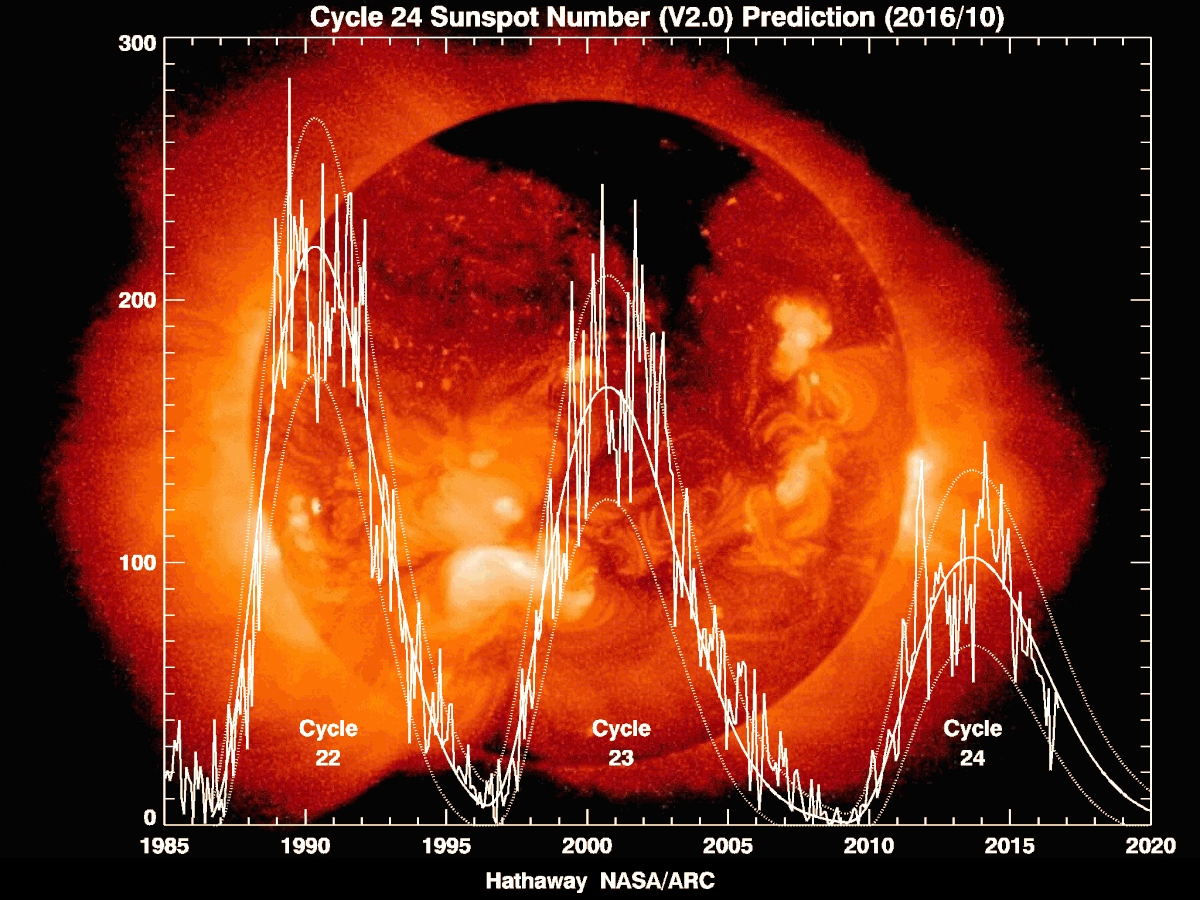
Solar cycle
8
MENTIONS
4
EPISODES
4
PODCASTS
Search complete. 8 mentions across 4 episodes found for "Solar cycle".
Nov 7, 2026

Aaron KuhnHOST
It's like, no, you're going to be...
Aaron KuhnHOST
i mean there's solar activity these like these x-class solar flares and all this stuff those are solar flashes those like a like you could say there's a whole bunch of them happening but they're not that right they're just like these kind of like bumping up in consciousness and kind of like empowering things at an internal level more right right
Vanessa WidergrenGUEST
yeah interestingly enough reina says we have a higher dimensional second son
Aaron KuhnHOST
I heard, I believe.

JamesHOST
And this is where Maurice Cotterell becomes important, because he was looking at the sun, not Nibiru.
JamesHOST
Cotterell was a British engineer and writer who became interested in solar cycles, the Maya calendar, and long period changes in the sun's magnetic behavior.
JamesHOST
In books such as The Mayan Prophecies, published in the 1990s, he argued that the sun's magnetic field undergoes a much larger cycle, built out of the familiar sunspot rhythm and the different rotational behavior of the solar atmosphere.
speaker_0ADVERTISER
This episode is brought to you by PayPal.
1 HR 25 MINS LATER
JamesHOST
The number was not invented to support Nibiru.
JamesHOST
Forsteman was working on the Dresden Codex long before Sitchin was born, and Brinton was publishing it in the 19th century.
JamesHOST
Then, much later, Maurice Cotterell highlighted the same great Mayan number while working on long solar cycles, and Gary Gilligan noticed how close Cotterell's figure came to the longer Nibiru period.
JamesHOST
Lloyd then put that beside his own calculation from the proposed 3760 BC passage to the Messianic

Nikkiana JonesHOST
Well, that's
Alexis RoseGUEST
kind of what I've been telling everybody like, okay, well the solar cycle 25 is going to be peaking on, Say those years again, like that's exactly when.
Alexis RoseGUEST
So when we're supposed to be peaking.
Alexis RoseGUEST
So will it peak and just like peak and just keep just like expanding into some magenta color? chakra, like I'm up for it.
Alexis RoseGUEST
Like magenta, you say, like weird and huge, too.
Alexis RoseGUEST
Like when the when the stars do lose some of their energy.
Alexis RoseGUEST
gravity or whatever they do expand in size so that's a maturity thing I think when the like core starts to break down its strength and they've been trying to tell us it's losing its strength the sun I feel like and so I was wondering about the solar cycle like if the sun's losing strength it'll be less powerful than last solar cycle peak which was around 2017-18 I think so we'll see but it might just be it like that might just be it We might just be enjoying a few more Zoom calls just for funsies before 2024 comes around.
Alexis RoseGUEST
So enjoy 2023, everybody.

Marianne SpiegelNARRATOR
One thing is in the highest degree probable, namely, that electricity is largely concerned.
Marianne SpiegelNARRATOR
Going back to the question of sunspots, regarded in their possible or probable association with the corona, the present position of matters appears to be this, that there is a real connection between the general form of the corona and disturbances on the sun, taking sunspots as an indication of solar activity.
Marianne SpiegelNARRATOR
When sunspots are at or near their maximum, the corona has generally been somewhat symmetrical, with synclinal groups of rays making angles of 45 degrees with its general axis.
Marianne SpiegelNARRATOR
On the other hand, at the epochs of minimum sunspots, the corona shows polar rifts much more widely open, with synclinal zones making larger angles with the axis, and being, therefore, more depressed towards the equatorial regions, in which, moreover, there is usually a very marked extension of coronal matter in the form of elongated streamers reaching to several diameters of the sun.
Marianne SpiegelNARRATOR
This generalization is well borne out by the maximum epoch coronas of 1870 and 1871, and the minimum epoch coronas of 1867, 1874, 1875, 1878, and perhaps 1887 and certainly 1889.
Marianne SpiegelNARRATOR
On the other hand, the eclipses of 1883, 1885, and 1886 do not strikingly confirm this theory.
Marianne SpiegelNARRATOR
The eclipse of 1883 was at a time of rapidly decreasing solar activity, yet the corona had the features of a sunspot maximum.
Marianne SpiegelNARRATOR
The same, though in a somewhat less degree, may be said of the eclipses of 1885 and 1886.