Snowball Earth
32
MENTIONS
7
EPISODES
5
PODCASTS
Search complete. 32 mentions across 7 episodes found for "Snowball Earth".
Sep 23, 2026

speaker_2NARRATOR
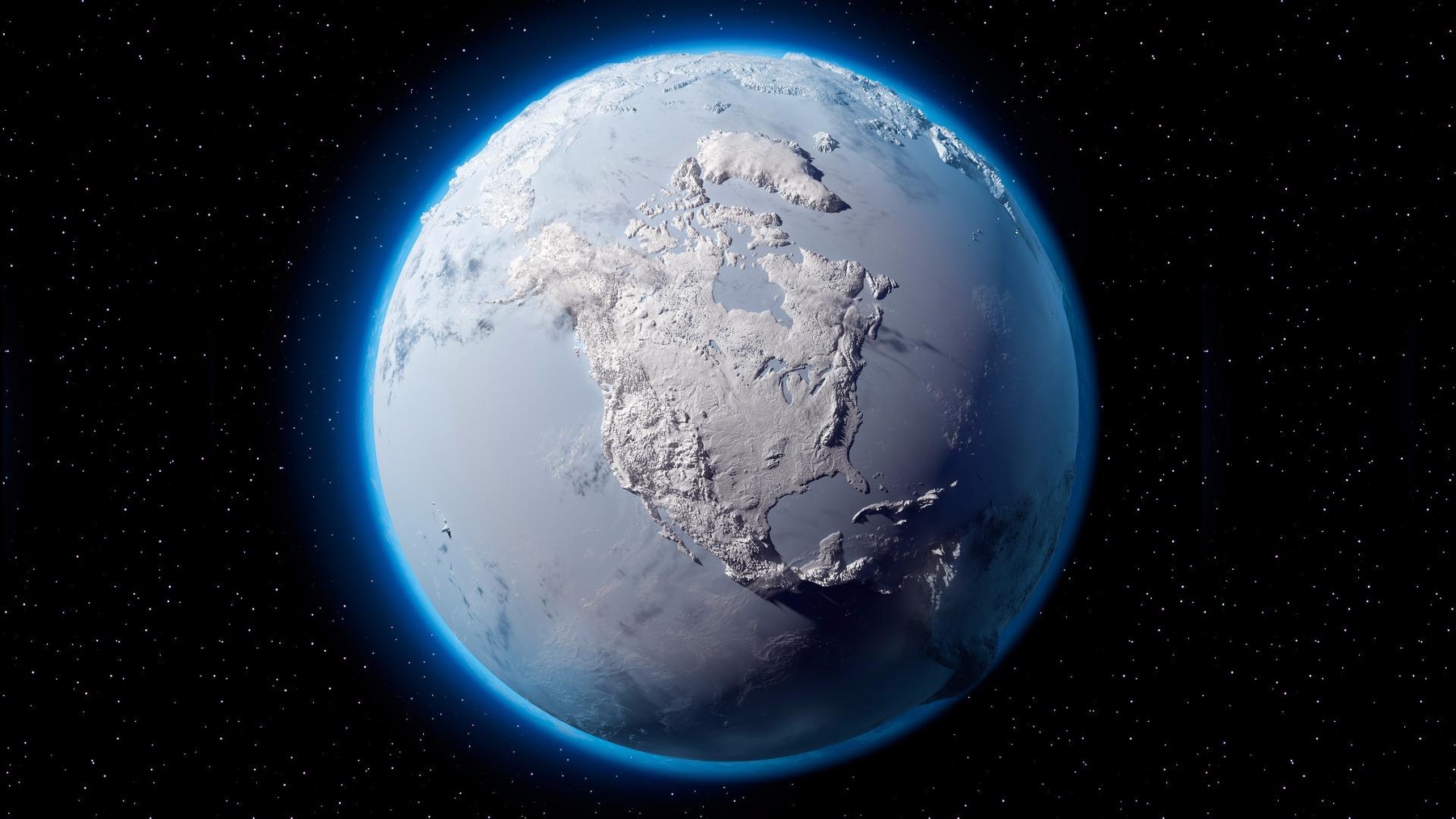
Snow has been falling on Earth for billions of years, ever since the planet’s atmosphere became cool enough and moist enough to produce it.
speaker_2NARRATOR
During the Snowball Earth events, roughly seven hundred million years ago, glaciers may have extended all the way to the equator, covering nearly the entire planet in ice and snow.
speaker_2NARRATOR
These extreme glaciations lasted millions of years and are among the most dramatic climate events in Earth’s history.
speaker_2NARRATOR
Seen from space, the planet would have been a white sphere with little or no open ocean.
speaker_2NARRATOR
Life survived these Snowball Earth events in refugia, including near volcanic hot springs and possibly in pools of liquid water beneath the ice.
speaker_2NARRATOR
The end of each Snowball Earth event is thought to have been caused by the gradual buildup of volcanic carbon dioxide in the atmosphere, which eventually produced enough greenhouse warming to trigger a rapid global thaw.
speaker_2NARRATOR
With the oceans sealed under ice, there was nothing to absorb the gas, and it accumulated over millions of years until the balance tipped.
speaker_2NARRATOR
The fact that life not only survived but eventually diversified dramatically after these events suggests a remarkable resilience in the history of life on Earth.

Bill CollinsGUEST
But they all extend back until 500, 550 million years ago, and that's what the Siberian neodymium isotopic composition tells us, that they all come from this material, which is about the age of what we thought Gondwana was when it formed.
Stuart GaryHOST
The link between Greater Gondwana and ending Snowball Earth.
Stuart GaryHOST
Snowball Earth was 717 million years ago.
Stuart GaryHOST
I know that because I just did a story on it.
Bill CollinsGUEST
Went for over 100 million years.
Bill CollinsGUEST
It was a very, very long period of time that Snowball Earth existed.
Bill CollinsGUEST
And the, the thing about Snowball Earth, it defines that, that all the continents were covered in ice, and it didn't matter whether or not they were at the poles or at the equator.
Bill CollinsGUEST
Snowball Earth actually continued for at least 100 million years, up to maybe 580.

Bill CollinsGUEST
But they all extend back until 500, 550 million years ago, and that's what the samarium-neodymium isotopic composition tells us, that they all come from this material, which is about the age of what we thought Gondwana was when it formed.
Stuart GaryHOST
The link between greater Gondwana and ending Snowball Earth.
Stuart GaryHOST
Snowball Earth was 717 million years ago.
Stuart GaryHOST
I know that 'cause I just did a story on it.
Bill CollinsGUEST
Went for over 100 million years.
Bill CollinsGUEST
It was a very, very long period of time that Snowball Earth existed.
Bill CollinsGUEST
And the, the thing about Snowball Earth, it defines that, that all the continents were covered in ice, and it didn't matter whether or not they were at the poles or at the equator.
Bill CollinsGUEST
Snowball Earth actually continued for at least 100 million years, up to maybe 580.
speaker_3NARRATOR
Snow has been falling on Earth for billions of years, ever since the planet's atmosphere became cool enough and moist enough to produce it.
speaker_3NARRATOR
During the Snowball Earth events, roughly 700 million years ago, glaciers may have extended all the way to the equator, covering nearly the entire planet in ice and snow.
speaker_3NARRATOR
These extreme glaciations lasted millions of years and are among the most dramatic climate events in Earth's history.
speaker_3NARRATOR
Seen from space, the planet would have been a white sphere with little or no open ocean.
speaker_3NARRATOR
Life survived these snowball Earth.
speaker_3NARRATOR
Events in refugia, including near volcanic hot springs and possibly in pools of liquid water beneath the ice, The end of each snowball earth event is thought to have been caused by the gradual build-up of volcanic carbon dioxide in the atmosphere, which eventually produced enough greenhouse warming to trigger a rapid global thaw.
speaker_3NARRATOR
With the oceans sealed under ice, there was nothing to absorb the gas, and it accumulated over millions of years until the balance tipped.
speaker_3NARRATOR
The fact that life not only survived but eventually diversified dramatically after these events suggests a remarkable resilience in the history of life on Earth.

Bonner CohenGUEST
For instance, at one point in our distant past, long before humans came along, and long before any kind of life on Earth that we would consider to be life on Earth came along, the entire Earth was covered with snow and ice.
Bonner CohenGUEST
It was called Snowball Earth.
Bonner CohenGUEST
The areas that we today consider the tropics were buried under snow and ice, and they were so for millions of years.
Bonner CohenGUEST
Well, along came volcanic activity.
Stuart GaryHOST
This is Space Time, series 29, episode 110, for broadcast on the 14th of September 2026.
Stuart GaryHOST
Coming up on Space Time, the lunar far side rocks which are rewriting history, the crystals that may have made Snowball Earth even worse, and a meteor strike reported off the Western Australian coast.
Stuart GaryHOST
All that and more coming up on Space Time.
speaker_3NARRATOR
Welcome to Space Time with Stuart Gary.
14 MINS LATER
Fred JourdanSOUNDBITE_SPEAKER
Uh, but, and that is the nail in the coffin if you want.
Stuart GaryHOST
That's Dr. Fred Jourdan from Curtin University, and this is Space Time.
Stuart GaryHOST
Still to come, the crystals that may have made Snowball Earth worse, and a meteor strike reported off the Western Australian coast.
Stuart GaryHOST
All that and more still to come on Space Time.

DavidHOST
A bit later than that in the Neoproterozoic, there is a pair of glaciation events, the Sturtian and the Marinoan, both of which occurred during a time period called the Cryogenian between about 720 and 630 million years ago.
DavidHOST
These are very famous because these are the two glacial events that are most commonly proposed to have been snowball earth-
WillHOST
Yeah
DavidHOST
... ice ages, where there are records of glacial deposits in the tropics.
57 MINS LATER
DavidHOST
This episode, this is one of those episodes where I was looking through my notes and I realized, oh, there's a lot of places that I can just kind of skim because we've done other episodes on this.
WillHOST
Yes.
DavidHOST
We did Snowball Earth, we did Antarctica, we did paleoclimate.
DavidHOST
So go check out those episodes.