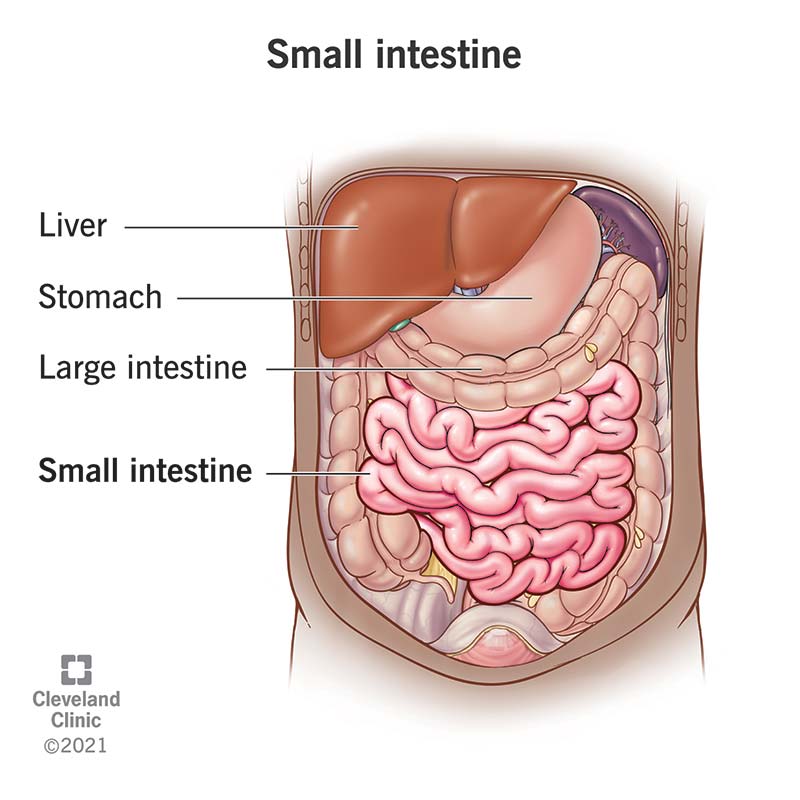
small intestine
53
MENTIONS
7
EPISODES
7
PODCASTS
Search complete. 53 mentions across 7 episodes found for "small intestine".
Sep 27, 2026

Eric BergHOST
It's involved in enzymes.
Eric BergHOST
Then you have the small intestine, and you have the large intestine.
Eric BergHOST
So let's start with the stomach.
Eric BergHOST
What enzymes does the stomach produce? Well, primarily one called pepsin, and pepsin has everything to do with digesting protein.
Eric BergHOST
But if you're not digesting protein, okay, because you don't have enough acid, you're gonna have all sorts of things that are going to occur lower in the digestive tract.
Eric BergHOST
For example, um, that acid is also necessary to activate the gallbladder to release bile, and if you don't have that activation, then we don't have enough bile, and then we don't get the necessary detergent to help extract the fat-soluble nutrients from the fat that you eat.
Eric BergHOST
And then we have undigested protein material that ends up in the small intestine.
Eric BergHOST
And now, uh, both the pancreas and the small intestine have to overcompensate, and they have to produce more enzymes to help break down this material.

Eshaan BuddhisagarHOST
Fun fact, your stomach acid is so strong that it could actually dissolve a metal spoon.
Eshaan BuddhisagarHOST
After a few hours in the stomach, that soup made of food moves into the small intestine, which is a long, coiled tube about 20 feet long.
Eshaan BuddhisagarHOST
This is where most of the magic happens.
Eshaan BuddhisagarHOST
Tiny finger-like bumps called villi soak up all the nutrients from the food into your blood.
Eshaan BuddhisagarHOST
Your blood is kind of like a delivery system.
Eshaan BuddhisagarHOST
Trucks, or blood cells, carry oxygen and nutrients into all the different cells in your body.
Eshaan BuddhisagarHOST
The trucks get resupplied at the lungs for oxygen and in the small intestine for nutrients.
Eshaan BuddhisagarHOST
You can learn more about the bloodstream by listening to our episode all about blood.

Georgina WilliamsGUEST
But your tummy is making noise most of the time.
Georgina WilliamsGUEST
[gurgling] The next stage of digestion happens in the small intestine.
speaker_0SOUNDBITE_SPEAKER
The intestine.
speaker_0SOUNDBITE_SPEAKER
It's a squiggly tube.
OllieSOUNDBITE_SPEAKER
The small intestine isn't so small.
Georgina WilliamsGUEST
That's right.
Georgina WilliamsGUEST
Even though it's called the small intestine, it's actually really long.
Georgina WilliamsGUEST
In grown-ups, about seven meters long.

Hank GreenHOST
Well, our digestive system works in much the same way.
Hank GreenHOST
Most of the absorption of nutrients happens in our small intestines, and the length of the average human adult's small intestine is about seven meters.
Hank GreenHOST
Plus, inside our small intestines, there are a bunch of little folds and little absorbing fibers with absorbing fibers on them.
Hank GreenHOST
And no, I didn't misspeak.
Hank GreenHOST
The fibers have fibers.
Hank GreenHOST
That's how hard our intestines work to increase their surface area.
speaker_2SOUNDBITE_SPEAKER
Last episode, I was all
Hank GreenHOST
impressed that lungs have a total surface area of 75 square meters, while the small intestine has a surface area of 250 square meters.

Anna HartmanHOST
Blood flow gets backed up between the colon and the portal vein and the liver gets congested or vice versa.
Anna HartmanHOST
That portal vein, mesenteric vein gets backed up because the liver is congested and can't handle that influx of fluid.
Anna HartmanHOST
The colon and the mesentery, right, the mesenteric vein within the mesentery or within the mesocolon down in the small intestines and the large intestines around that area.
Anna HartmanHOST
get distended.
Anna HartmanHOST
And when they get distended, it mechanically irritates the lumbosacral trunk and the nerves that are inside the pelvic bowl before they've exited it.
Anna HartmanHOST
So if our sciatic symptoms are more in the foot and the lower leg on that lateral side, then the lateral side of the foot is more associated with the intestines.
Anna HartmanHOST
So we can look to the intestines.
Anna HartmanHOST
the ascending colon, the descending colon, or the small intestines, and the duodenum tends to be like the biggest drivers there.