Sleep tracking
22
MENTIONS
7
EPISODES
7
PODCASTS
Search complete. 22 mentions across 7 episodes found for "Sleep tracking".
Sep 14, 2026

Nicole GoodmanHOST
Yep, so stay tuned for that.
Lauren MishconHOST
Guy tells us why sleep trackers can actually be very harmful.
Nicole GoodmanHOST
You love that.
Lauren MishconHOST
I do.
25 MINS LATER
Lauren MishconHOST
Mm-hmm.
Guy LeschzinerGUEST
And this is specific to insomnia.
Guy LeschzinerGUEST
The first is sleep trackers-
Lauren MishconHOST
Ah, okay

Emily CaseyHOST
Aura, who is one of the main players who has taken over the market in the last few years, there's been hype around a potential IPO, valuing them at about US $16 billion.
Emily CaseyHOST
But they've also been faced with an alleged class action or potential class action about the accuracy of their sleep tracking, which is what was the push for their rise to fame.
Emily CaseyHOST
What do we think about aura and the hypothetical sleep tracking? I know we've all looked at a lot of the data and there's so many different numbers running around, but what do we think of the sleep tracking capability? Well,
Joey ManGUEST
sleep tracking requires scientifically EEG, eye movement and muscle movement.
Joey ManGUEST
I just don't see how a ring can measure EEG.
Joey ManGUEST
And so while it can interpret sleep staging through movement and maybe temperature and maybe breathing, which is already a stretch for me, I just don't see how it can capture EEG to give clinically valid with tight error range of data that can inform sleep staging.
Joey ManGUEST
We looked at sleep in Alzheimer's and dementia patients.
Michael LamprechtGUEST
Well, sleep drugs are certainly going to be an interesting space moving forward.

Matt GibberdHOST
It's perfectly normal to wake up in the middle of the night, and we shouldn't worry about that too much.
Matt GibberdHOST
He's not a fan of sleep trackers, so they often do more harm than good.
Matt GibberdHOST
And this is a really big one.
Matt GibberdHOST
Screen time before bed, he's not worried about it, so I was quite pleased about that.

Steve StavsHOST
Dr. Breus lectures all over the world and serves as an expert resource for ma- most major publications, doing more than 250 interviews per year.
Steve StavsHOST
Join us as we explore an amazing in-depth journey through the sleep cycles, sleep stages, sleep drive, sleep trackers, and how that relates to your health and wellbeing.
Steve StavsHOST
Whether it is more important to go to bed at the same time every day or wake up at the same time every day.
Steve StavsHOST
While sleeping in on the weekends is far more detrimental to your health than you can imagine.
7 MINS LATER
Michael BreusGUEST
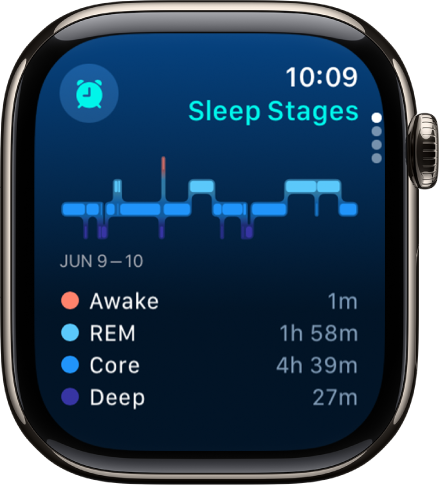
Stage two, however, is the biggie.
Michael BreusGUEST
It represents sometimes 45, sometimes 50% of your night.
Michael BreusGUEST
Most of the sleep trackers that we see out there combine stage one and stage two, and they call it light sleep, which is not a bad definition, to be fair, right? It is kind of lighter stages-
Steve StavsHOST
Yeah

Daniel BaughnHOST
And more importantly, what the science kind of really tells us about what the devices can and cannot do.
Daniel BaughnHOST
And so stay with us because towards then we're going to give you Kind of one simple rule for using sleep trackers without letting your sleep score start controlling your sleep.
Michelle ZetoonyHOST
All right, Dan, let me first explain to you and to the other people that haven't listened to early versions of it about what we're actually trying to measure clinically during sleep.
Michelle ZetoonyHOST
So the gold standard that was discovered in about the 50s for diagnostic polysomnography, or a PSG, is where you have from head to toe, you're hooked up with wires.
12 MINS LATER
Daniel BaughnHOST
This is where it becomes especially interesting from an insomnia perspective, because, you know, sometimes the accuracy of the device isn't even the biggest clinical issue.
Daniel BaughnHOST
The bigger question actually becomes what happens psychologically after somebody sees the number? I feel like we should add special effects to that because, you know, there's actually a term in the sleep literature around this called orthosomnia.
Daniel BaughnHOST
And researchers kind of started describing, you know, people becoming so focused on optimizing the numbers generated by their sleep trackers.
Daniel BaughnHOST
that the pursuit of, you know, quote, perfect sleep can actually increase worry and sleep-related effort.

Raina PatelHOST
So today, let's co-cover four different categories.
Raina PatelHOST
We'll start with fitness trackers and smartwatches, then we'll go to continuous glucose monitors, smart rings, and then sleep trackers.
Raina PatelHOST
So starting off with fitness trackers and smartwatches.
Raina PatelHOST
So we're talking about the Apple Watch, Fitbit, Garmin has one, and many other competitors as well.
8 MINS LATER
Raina PatelHOST
It can identify menstrual cycle patterns, and there might be temp- changes in your temperature based on physiological stress.
Raina PatelHOST
Um, so those might be just some informatio- like, helpful information.
Raina PatelHOST
So in terms of the last category that I will cover, um, this is the sleep trackers.
Raina PatelHOST
So they're usually, like, standalone devices.

RobinHOST
This is not perfectly accurate for complex mixed dishes, but it is accurate enough for the level of nutritional awareness that most people need.
RobinHOST
Sleep tracking, which matters significantly for fitness and recovery.
RobinHOST
is available through free apps that use your phone's microphone and accelerometer to analyze sleep quality without any wearable apps like sleep cycle at its free tier provide sleep stage analysis and smart alarm functionality that wakes you during light sleep within a window you specify which produces measurably better morning alertness than a fixed alarm that may catch you in deep sleep the data is not as accurate as a medical grade sleep study but it is accurate enough to reveal patterns consistent sleep deprivation poor sleep quality during specific periods the connection between your bedtime and your sleep quality that are genuinely useful for managing recovery alongside training The honest thing I want to say is about the specific limitation of non-wearable tracking, which is real and worth acknowledging.
RobinHOST
Phone-based tracking requires you to carry your phone on your person during the activities you want to track, which is less convenient than a wrist-based device.