Slave Trade Act 1807

Slave Trade Act 1807

Search complete. 13 mentions across 11 episodes found for "Slave Trade Act 1807".

Sep 14, 2026

Brendan RayHOST
11:55
And local potentates like Attorney General John White and Lieutenant Governor John Graves Simcoe were receptive to the gradual change in the zeitgeist.
Brendan RayHOST
12:05
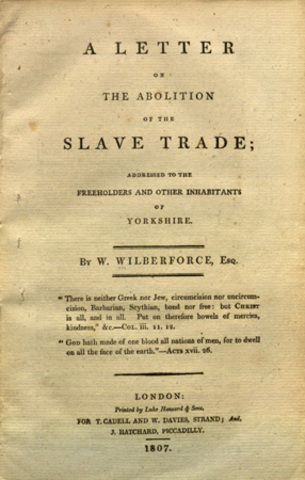
Fourteen years later, the Slave Trade Act of 1807 brought the slave trade to a close empire-wide.
Brendan RayHOST
12:13
It had been eighteen years of debate, procrastination, and sandbagging, but it finally passed.
Brendan RayHOST
12:20
It did not free those in bondage, but only served to end the practice of renewing the institution by squeezing new blood and flesh from Africa's shores.

Unknown podcast

Forgotten Britons Who Changed History

Sep 13 · 1 Mention

speaker_0UNKNOWN
6:01
His autobiography, first published in 1789, gives us an intimate narrative of the brutality he endured on slave ships, his eventual liberation via British law, and the life that followed as he traveled between London and Africa to campaign against the transatlantic slave trade.
speaker_0UNKNOWN
6:20
Equiano's testimony was a key factor in influencing Parliament to pass the Slave Trade Act of 1807, making it illegal for British ships to transport enslaved Africans.
speaker_0UNKNOWN
6:32
That was a pivotal moment that shifted the trajectory of both Britain's moral standing and its imperial calculus.
speaker_0UNKNOWN
6:39
And beyond legislation, Equiano established early connections between Britain and West Africa.
Stephen TrippHOST
30:27
And this Christian influence is having a massive influence on the politics and also the culture.
Stephen TrippHOST
30:32
So the very same month that the First Fleet set sail, Thomas Clarkson and William Wilberforce formed the Society for Affecting the Abolition of the Slave Trade.
Stephen TrippHOST
30:45
So this abolitionist movement is taking place as the First Fleet is setting sail, which is massive, right?
Christopher ReynoldsGUEST
30:53
Yeah.

Unknown podcast

George III: From American ‘Tyrant’ to British Royal Symbol

Sep 12 · 1 Mention

speaker_1UNKNOWN
9:37
This act solidified his legacy as an architect of constitutional integration.
speaker_1UNKNOWN
9:42
While in America the king's name had become synonymous with tyranny, many Britons admired him for steadfast loyalty, particularly during crises such as the Napoleonic Wars and the 1807 Abolition of the Slave Trade Act.
speaker_1UNKNOWN
9:57
Historians note that he presided over a series of parliamentary acts aimed at social reform despite his personal eccentricities.
speaker_1UNKNOWN
10:06
The contrast in public perception underscores how context shapes monarchic identity.

Unknown podcast

Olaudah Equiano: From Slave Ship to Abolitionist Voice

Sep 12 · 1 Mention

speaker_1UNKNOWN
6:04
It is also noteworthy how Equiano's personal narrative dovetails with wider legislative progress.
speaker_1UNKNOWN
6:10
The Slave Trade Act 1807 was passed two decades after his memoir's first publication, yet many abolitionists cite him as a key motivator in parliamentary debates.
speaker_1UNKNOWN
6:21
He became the human face of an otherwise abstract moral argument.
speaker_1UNKNOWN
6:26
The story of Equiano also reveals a broader pattern in British society.

Unknown podcast

From Crusader to Zulu Wars: Ambition, Power, and British Conflict

Sep 12 · 1 Mention

speaker_1UNKNOWN
10:31
A key point is Britain’s policy of abolition, which was gaining steam in England at the time.
speaker_1UNKNOWN
10:37
The Slave Trade Act 1807 and the later Slavery Abolition Act of 1833 were partly aimed at curbing the Dutch dependence on enslaved labor.
speaker_1UNKNOWN
10:47
Britain claimed moral superiority but also economic self-interest.
speaker_1UNKNOWN
10:52
The Cape had a growing slave population under the Dutch, so Britain saw an opportunity to replace that system with free colonist labor.

Unknown podcast

Britain and the Atlantic Slave Trade

Sep 11 · 2 Mentions

speaker_1UNKNOWN
4:50
The coalition that emerged blended morality with economic self-preservation.
speaker_1UNKNOWN
4:56
When Parliament finally passed the Slave Trade Act in eighteen oh seven, it didn't end slavery outright.
speaker_1UNKNOWN
5:02
It prohibited British ships from participating in the trade.
speaker_1UNKNOWN
5:06
It also gave Britain a pretext to interdict non-British ships.
speaker_1UNKNOWN
10:03
Those vessels that had been deployed in blockade duties or troop transports became available again for the transatlantic trade, including those that carried enslaved Africans.
speaker_1UNKNOWN
10:14
The Admiralty's experience in controlling sea lanes during the conflict gave them a template for enforcing the later slave trade prohibition once Parliament passed its legislation.
speaker_1UNKNOWN
10:26
When the Slave Trade Act of eighteen oh seven came into force, it wasn't just legislation.
speaker_1UNKNOWN
10:32
It was also an operational change.

Unknown podcast

The Harrying of the North: William’s Scorched‑Earth Campaign

Sep 11 · 1 Mention

TonyHOST
6:33
While critics note the ruling left slavery legal elsewhere, it nevertheless removed any formal basis for enslaving people inside Britain and sent shockwaves through the slave trade lobby that had lobbied Parliament for centuries.
TonyHOST
6:48
Shortly after, the abolitionist movement, spearheaded by Clarkson and Wilberforce, harnessed public sentiment and pressed Parliament to enact the Slave Trade Act of 1807, finally prohibiting British vessels from participating in the Middle Passage.
TonyHOST
7:05
Nevertheless, it would take another two decades for slavery itself to be abolished across the Empire.
TonyHOST
7:11
The Slavery Abolition Act 1833 took effect on 1st August that year, ending chattel labor wherever British flags flew.

Unknown podcast

The Atlantic Slave Trade: Britain’s Hidden Engine of Wealth

Sep 11 · 1 Mention

TonyHOST
4:55
Clarkson's relentless evidence gathering at Westminster, coupled with Wilberforce's parliamentary speeches, formed a coalition capable of shifting national conscience.
TonyHOST
5:06
Persistent pressure culminated in the eighteen oh seven Slave Trade Act, outlawing further importation into the empire, and later the eighteen thirty-three Slavery Abolition Act freed those still bound on plantations, a direct outcome of sustained grassroots activism interwoven with parliamentary will.
TonyHOST
5:25
These laws also triggered a recalibration of financial markets as banks divested from slave-based ventures and redirected capital toward emerging industries, reshaping the British economy once again.
TonyHOST
5:38
The transition was uneven and fraught with resistance from former plantation owners who fought to preserve their interests in new forms.
speaker_2NARRATOR
63:21
Villages like Liverpool and Glasgow were transformed into major trading cities as a result of their role in the slave trade, while the capital generated by the production of sugarcane in the British colonies in the Caribbean thundered the early Industrial Revolution to a not insignificant extent.
speaker_2NARRATOR
63:45
Despite the enormous financial benefits reaped from it, in 1807 the British Parliament had passed the Slave Trade Act.
speaker_2NARRATOR
63:56
This led to a ban on the trading of new slaves in British ships.
speaker_2NARRATOR
64:03
It still did not go far enough for the abolitionists, and in 1833 the Slavery Abolition Act was passed, banning the slave trade altogether throughout the British Empire.

1 more episode mentions Slave Trade Act 1807.

Create an account to see the whole feed, search across every transcript, and follow the entities you care about.

We value your privacy

We use cookies to understand how you use our platform and to improve your experience. Click “Accept All” to consent, or “Decline non-essential” to opt out of non-essential cookies. Read our Privacy Policy.