Sirolimus
CompoundWikipedia
24
MENTIONS
9
EPISODES
8
PODCASTS
Search complete. 24 mentions across 9 episodes found for "Sirolimus".
Oct 21, 2026

Andrew HubermanGUEST
mTOR, mammalian target of rapamycin.
Andrew HubermanGUEST
That's named after the drug that targets that receptor.
Andrew HubermanGUEST
Rapamycin targets the immune system and in some sense mimics fasting.
Andrew HubermanGUEST
Okay, this is broadly speaking.
Andrew HubermanGUEST
Keep in mind that the studies showing extension of life in different species, including mice, show that being fairly dramatically sub-maintenance caloric extends lifespan, but you're also potentially sub-happiness when you're that sub-caloric.

Paul ReynoldsHOST
It is not yet evidence that caloric restriction reduced anyone's structural damage.
Paul ReynoldsHOST
Rapamycin is a different case and a stronger one at that.
Paul ReynoldsHOST
Harrison and colleagues reported in Nature in 2009 that rapamycin, an inhibitor of the mTOR nutrient sensing pathway, extended both median and maximum lifespan in genetically heterogeneous mice when feeding began at 600 days of age, roughly the equivalent of a 60-year-old human.
Paul ReynoldsHOST
Age at 90% mortality rose 14% in females and about 9% in males.
Paul ReynoldsHOST
Treatment started late in already aging animals, in mice deliberately bred to be genetically diverse, so the result would not be an artifact of a single strain.
Paul ReynoldsHOST
That design carries weight.
Paul ReynoldsHOST
Rapamycin also has a plausible damage-reducing mechanism rather than a purely biomarker one.
Paul ReynoldsHOST
Inhibiting mTOR releases the brake on autophagy, the process by which cells identify damaged proteins and organelles and break them down for recycling.

Robert EvansHOST
Okay.
Kaveh HodaGUEST
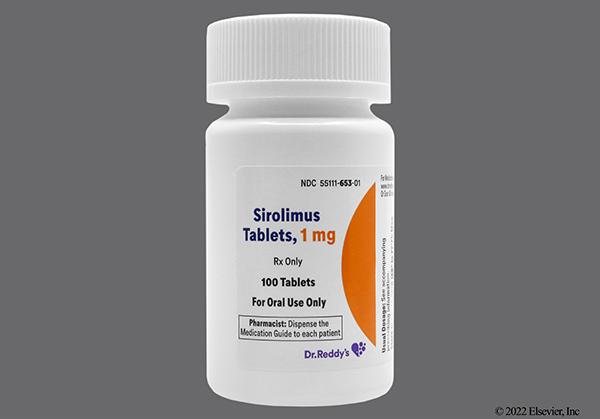
You might have seen it as Sirolimus.
Kaveh HodaGUEST
And he prescribes it for longevity enhancing purposes.
Robert EvansHOST
Ah.

Chris WilliamsonHOST
Before, but I remember when NMN, rapamycin, NAD, sublingual, uh, mix it in the yogurt, do all of this stuff.
Chris WilliamsonHOST
I remember when that was, you know, gonna make us all live to 150, and w- what is the state of the world of longevity drug supplements now? What's happening with that-
Andrew HubermanGUEST
Yeah, I just did-
Andrew HubermanGUEST
... an episode with Peter Attia.
Andrew HubermanGUEST
So here's the deal as I understand it.
Andrew HubermanGUEST
Peter is pretty bullish on rapamycin.
Andrew HubermanGUEST
Um, remember that mTOR, which is expressed at very high levels in essentially all cells of the brain and body during development, declines across the lifespan.
Andrew HubermanGUEST
mTOR, mammalian target of rapamycin.

Matt KaeberleinGUEST
And so we talked about mTOR, this growth-promoting factor.
Matt KaeberleinGUEST
Rapamycin inhibits mTOR.
Matt KaeberleinGUEST
Again, if people remember, I said mTOR stands for mechanistic target of rapamycin.
Matt KaeberleinGUEST
They named mTOR after the drug.
Matt KaeberleinGUEST
So if you think about mTOR as a volume knob, nutrients are high, mTOR gets turned up, that promotes growth.
Matt KaeberleinGUEST
Nutrients are low, mTOR gets turned down, that promotes stress resistance and shuts down growth and reproduction.
Matt KaeberleinGUEST
Rapamycin is a drug that turns the volume down on mTOR.
Matt KaeberleinGUEST
And what we have observed is that in every animal where it's ever been tested in the lab, if you genetically turn down mTOR, so we can do gene therapies and things like that to turn down mTOR, or if you use the drug rapamycin, you cause the organisms to live longer and they seem to age more slowly.

Stephen PetterutiHOST
The, uh, repurposed drugs can block mTOR.
Stephen PetterutiHOST
Um, Rapamune, metformin have been known to have that attribute.
Stephen PetterutiHOST
But when it comes to nutrition, you just can't avoid generating some mTOR.
Stephen PetterutiHOST
When it comes to nutrition, you can't avoid glutamine.

Paloma NewtonGUEST
And that's all about how do you increase that quality of life and extend lifespan.
Paloma NewtonGUEST
You know, rapamycin trials, which I think are very, very early comparatively to stem cell therapy, which is pretty understood, as well as, um, Loyal, which is about to get approval.
Paloma NewtonGUEST
Rapamycin is a very exciting frontier that we're watching come to fruition.
Paloma NewtonGUEST
Um-
Mia CobbHOST
Yeah, I've heard about that one at conferences.

Cory TichauerGUEST
And we're able to, in conjunction with senolytic therapies, with therapies that support mitophagy and autophagy, actually regain the cellular function and get people working again.
Cory TichauerGUEST
And that could be rapamycin, that could be KPV or MSH, that could be fisetin and urolithin A and spermidine and all these really interesting things right now.
Cory TichauerGUEST
Rapamycin is such a whole nother interesting conversation.
Cory TichauerGUEST
I probably got more Rapamycin data than almost anyone I think at this point.
Cory TichauerGUEST
That'll have to be for a follow up.
Rich JohannesenHOST
So that's exciting.
Chris WilliamsonHOST
We've spoken about this before, but I remember when NMN, rapamycin, NAD, sublingual, uh, mix it in the yogurt, do all of this stuff.
Chris WilliamsonHOST
I remember when that was, you know, gonna make us all live to 150, and w- what is the state of the world of longevity drug supplements now? What's happening with that-
Andrew HubermanGUEST
Yeah, I just-
Andrew HubermanGUEST
... did an episode with Peter Attia.
Andrew HubermanGUEST
So here's the deal as I understand it.
Andrew HubermanGUEST
Peter is pretty bullish on rapamycin.
Andrew HubermanGUEST
Um, remember that mTOR, which is expressed at very high levels in essentially all cells of the brain and body during development, declines across the lifespan.
Andrew HubermanGUEST
mTOR, mammalian target of rapamycin.