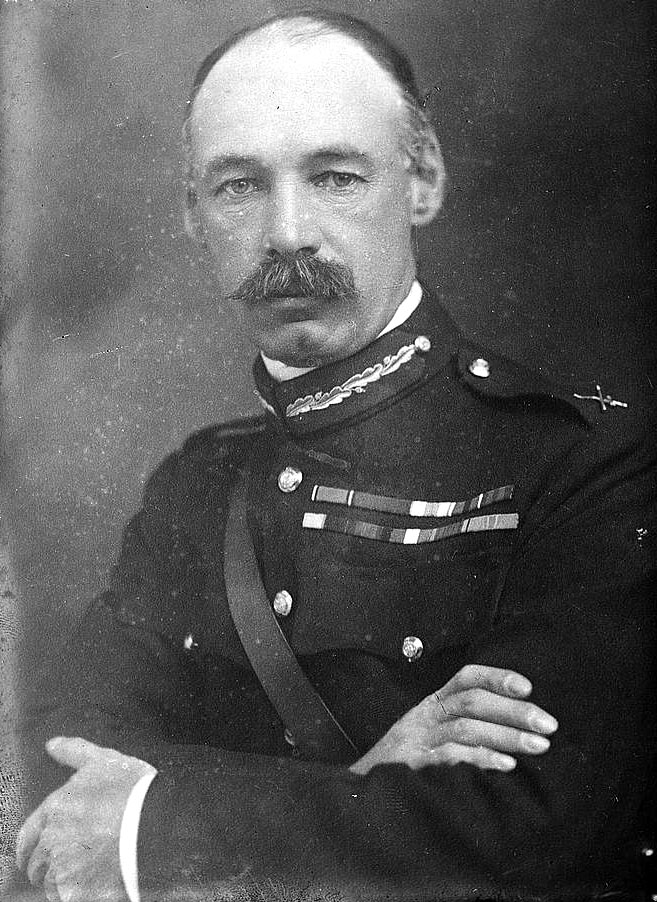
Sir Henry Rawlinson, 1st Baronet
British army officerWikipedia
17
MENTIONS
11
EPISODES
11
PODCASTS
Search complete. 17 mentions across 11 episodes found for "Sir Henry Rawlinson, 1st Baronet".
Sep 9, 2026

Tracy V. WilsonHOST
It's an account of Achaemenid King Darius I written in Babylonian, Old Persian, and Elamite.
Tracy V. WilsonHOST
Henry Rawlinson published his work on the Old Persian section of it in 1849, and that enabled the translation of the other languages.
Tracy V. WilsonHOST
Ashurbanipal's library was part of the process of deciphering cuneiform, as it provided an array of additional samples of cuneiform script to work from.
Tracy V. WilsonHOST
Once people were able to read the cuneiform script that they were written in, the tablets in Ashurbanipal's library became the source of just a wealth of new historical information.

Paul WallisHOST
Nathaniel Schmitt in the 1890s, Friedrich Delitzsch in the 1900s.
Paul WallisHOST
George Smith published on this topic in 1876, The Chaldean Account of Genesis, and in it he says this about the work of Henry Rawlinson.
Paul WallisHOST
On the discovery and decipherment of the cuneiform inscriptions, Oriental scholars hoped that copies of the Babylonian histories and traditions would one day be discovered, and we should thus gain earlier and more satisfactory evidence as to these primitive stories.
Paul WallisHOST
In the mound of Kuyunzik, opposite the town of Mosul, Mr. Layard discovered part of the Royal Assyrian Library, and further collections also forming part of its library have been subsequently found by Mr. H. Rassam, Mr. Loftus, and myself.
Paul WallisHOST
Sir Henry Rawlinson, who made the preliminary examination of Mr. Lyard's treasures and who was the first to recognize their value, estimated the number of these fragments of inscriptions at over 20,000.
Paul WallisHOST
The attention of decipherers was in the first instance drawn to the later historical inscriptions, particularly to those of the Assyrian kings contemporary with the Hebrew monarchy.
Paul WallisHOST
And in this section of inscriptions, a very large number of texts of great importance rewarded the toil of Assyrian scholars.
Paul WallisHOST
Inscriptions of Tiglath-Pileser, Shalmaneser, Sargon, Sennacherib, Esarhaddon, Nebuchadnezzar, Nabonidus, and numerous other ancient sovereigns bearing directly on the Bible.

speaker_6ADVERTISER
Available at Lowe's.
Phil ChenevertNARRATOR
THE TESTIMONY OF THE MONUMENTS TO THE TRUTH OF THE SCRIPTURES by George Frederick Wright all history is fragmentary each particular fact is the centre of an infinite complex of circumstances no man has intelligence enough to insert a supposititious fact into circumstances not belonging to it and make it exactly fit this only infinite intelligence could do a successful forgery therefore is impossible if only we have a sufficient number of the original circumstances with which to compare it it is this principle which gives such importance to the cross-examination of witnesses if the witness is truthful the more he is questioned the more perfectly will his testimony be seen to accord with the framework of circumstances into which it is fitted if false the more will his falsehood become apparent remarkable opportunities for cross-examining the old testament scriptures have been afforded by the recent uncovering of long buried monuments in bible lands and by deciphering the inscriptions upon them it is the object of this essay to give the results of a sufficient portion of this cross-examination to afford a reasonable test of the competence and honesty of the historians of the old testament and of the faithfulness with which their record has been transmitted to us but the prescribed limits will not permit the half to be told while room is left for an entire essay on the discoveries of the last five years to be treated by another hand specially competent for the task passing by the monumental evidence which has removed objections to the historical statements of the new testament as less needing support attention will be given first to one of the old testament narratives which is nearest to us in time and against which the harshest judgments of modern critics have been hurled we refer to the statements in the book of daniel concerning the personality and fate of belshazzar the identification of belshazzar in the fifth chapter of daniel belshazzar is called the son of nebuchadnezzar and is said to have been king of babylon and to have been slain on the night in which the city was taken but according to the other historians he was the son of nabonidus who was then king and who is known to have been out of the city when it was captured and to have lived some time afterwards here certainly there is about as glaring an apparent discrepancy as could be imagined indeed there would seem to be a flat contradiction between profane and sacred historians but in eighteen fifty four sir henry rawlinson found while excavating in the ruins of mug here identified as the site of the city of ur from which abraham emigrated inscriptions which stated that when nabonidus was near the end of his reign he associated with him on the throne his eldest son and allowed him the royal title thus making it perfectly credible that belshazzar should have been in babylon as he is said to have been in the bible and that he should have been called king and that he should have perished in the city while nabonidus survived outside that he should have been called king while his father was still living is no more strange than that jehoram should have been appointed by his father jehoshaphat king of judah seven years before his father's death see two kings one seventeen and eight sixteen or that jotham should have been made king before his father uzziah died of leprosy though uzziah is still called king in some of the references to him that belshazzar should have been called son of nebuchadnezzar is readily accounted for on the supposition that he was his grandson and there are many things to indicate that nabonidus married nebuchadnezzar's daughter while there is nothing known to the contrary but if this theory is rejected there is the natural supposition that in the loose use of terms of relationship common among oriental people son might be applied to one who is simply a successor in the inscriptions on the monuments of shalmaneser the second referred to below jehu the extirpator of the house of omri is called the son of omri The status of Belshazzar implied in this explanation is confirmed incidentally by the fact that Daniel is promised in verse 6 the third place in the kingdom, and in verse 29 is given that place, all of which implies that Belshazzar was second only.
Phil ChenevertNARRATOR
Thus, what was formerly thought to be an insuperable objection to the historical accuracy of the book of Daniel proves to be, in all reasonable probability, a mark of accuracy.
Phil ChenevertNARRATOR
The coincidences are all the more remarkable for being so evidently undesigned.
Phil ChenevertNARRATOR
the black obelisk of shalmaneser from various inscriptions in widely separated places we are now able to trace the movements of shalmaneser the second through nearly all of his career in b c eight four two he crossed the euphrates for the sixteenth time and carried his conquests to the shores of the mediterranean being opposed by haziel of damascus he overthrew the syrian army and pursued it to the royal city and shut it up there while he devastated the territory surrounding but while there is no mention of his fighting with the tyrians sidonians and israelites he is said to have received tribute from them and from jehu the son of omri this inscription occurs on the celebrated black obelisk discovered many years ago by sir henry rawlinson in the ruins of nimrud on it are represented strings of captives with evident jewish features in the act of bringing their tribute to the assyrian king Now, though there is no mention in the sacred records of any defeat of Jehu by the Assyrians, nor of the paying of tribute by him, it is most natural that tribute should have been paid under the circumstances, for in the period subsequent to the battle of Kakar, Damascus had turned against Israel, so that Israel's most likely method of getting even with Hazael would have been to make terms with his enemy and pay tribute, as she is said to have done, to Shalmaneser.
Phil ChenevertNARRATOR
the moabite stone one of the most important discoveries giving reality to old testament history is that of the moabite stone discovered at debon east of the jordan in eighteen sixty eight which was set up by king mesha about eight fifty b c to signalize his deliverance from the yoke of omri king of israel the inscription is valuable among other things for its witness to the civilized condition of the moabites at that time and to the close similarity of their language to that of the hebrews from this inscription we learn that omri king of israel was compelled by the rebellion of mesha to resubjugate moab and that after doing so he and his son occupied the cities of moab for a period of forty years but that after a series of battles it was restored to moab in the days of mesha whereupon the cities and fortresses retaken were strengthened and the country repopulated while the methods of warfare were similar to those practised by israel on comparing this with two kings three four twenty seven we find a parallel account which dovetails in with this in a most remarkable manner though naturally the biblical narrative treats lightly of the reconquest by misha simply stating that on account of the horror created by the idolatrous sacrifice of his eldest son upon the walls before them the israelites departed from the land and returned to their own country the expedition of shishak in the fourteenth chapter of one kings we have a brief account of an expedition of shishak king of egypt against jerusalem in the fifth year of rehoboam to the humiliation of judah it is told that shishak succeeded in taking away the treasures of the house of jehovah and of the king's house among them the shields of gold which solomon had made so that rehoboam made shields of brass in their stead to this simple unadorned account there is given a wonderful air of reality as one gazes on the southern wall of the court of the temple of amen at karnak and beholds the great expanse of sculptures and hieroglyphics which are there inscribed to represent this campaign of shishak one hundred and fifty-six places are enumerated among those which were captured the northernmost being megiddo among the places are gaza adullam beth horon aijalon gibeon and judah malek in which dr birch is probably correct in recognizing the sacred city of jerusalem malek being the word for royalty israel in egypt the city of tarpanis in egypt mentioned by jeremiah as the place to which the refugees fled to escape from nebuchadnezzar was discovered in eighteen eighty six in the mound known as tel defene in the north-eastern portion of the delta where mr flinders petrie found not only evidences of the destruction of the palace caused by nebuchadnezzar but apparently the very brickwork or pavement spoken of in jeremiah forty three eight then came the word of the lord unto jeremiah in tappanes saying take great stones in thine hand and hide them in mortar in the brickwork which is at the entry of pharaoh's house in tappanes in the sight of the men of judah adding that nebuchadnezzar would set his throne upon these stones and spread his royal pavilion over them A brick platform in partial ruins corresponding to this description was found by Mr. Petri adjoining the fort upon the north-west.
Phil ChenevertNARRATOR
In every respect the arrangement corresponded to that indicated in the book of Jeremiah.

AvailleNARRATOR
Simplicity is the sign of greatness in art, and the Egyptians never strove to be original or to be sensational.
AvailleNARRATOR
Within the trammels of his convention, the ancient Egyptian looked at nature through his own eyes, and thus character was imparted alone by his subjective personality, whether from a religious or aesthetic point of view.
AvailleNARRATOR
It is for this reason that Egyptian portraiture to the untrained eye often appears to have a certain sameness and even monotony.
AvailleNARRATOR
This, however, is really due to the convention of the epoch, whereby individual traits were softened in accordance with the ideals of the Egyptian convention.
8 MINS LATER
AvailleNARRATOR
A story that opens like Aladdin's cave and ends like a Greek myth of Nemesis cannot fail to capture the imagination of all men and women who, in this workaday existence, can still be moved by tales of high endeavour and unrelenting doom.
AvailleNARRATOR
Let it be gratefully acknowledged by those to whom Carnarvon's going must remain an ever-enduring sorrow that the sympathy displayed equals the excitement evoked by the revelations in the Valley of the Kings.
AvailleNARRATOR
It is in thankful response to that warm-hearted sympathy that this slight sketch of a many-sided personality around whom such emotions have centred finds place here as introduction to the history of that discovery to which the discoverer so eagerly devoted his energies and ultimately sacrificed his life.
AvailleNARRATOR
To those who knew Lord Carnarvon there is a singular fitness in the fact that he should have been the hero of one of the most dramatic episodes of the present day since, under the quiet exterior of this reticent Englishman, beat, in truth, a romantic heart.

David BarnesNARRATOR
For a few years subsequent to the war, our foreign policy happily remained free from complications, and it will be desirable now to refer shortly to the progress of Russia in Central Asia, and of her conquests of the decaying principalities of Khiva, Bukhara and Kokand.
David BarnesNARRATOR
Previous to 1847, the old boundary line of Russia south of Orenburg abutted on the Great Kyrgyz Steppe, a zone, as the late Sir H. Rawlinson told us, of almost uninhabited desert stretching 2,000 miles from west to east, and nearly 1,000 from north to south, which had hitherto acted as a buffer between Russia and the Mohammedan principalities below the Aral.
David BarnesNARRATOR
Footnote, Parliamentary Papers, Afghanistan 1878.
David BarnesNARRATOR
Quote, It was in 1847, contemporaneously with our final conquest of the Punjab, that the curtain rose on the aggressive Russian drama in Central Asia, which is not yet played out.
21 MINS LATER
David BarnesNARRATOR
It must not be forgotten that, although amongst those best qualified to judge, the majority had long been opposed to advance and conquest in territories beyond our north-west frontier, and entertained but little fear of Russian aggressive power, still there were others, men of long experience who had filled high positions in India, who held different views, and it is probable that not only successive British governments, but the public generally, who have no time for carefully weighing the diverse aspects of the subject, were influenced sometimes one way, sometimes another.
David BarnesNARRATOR
In the many difficulties connected with our world-wide empire, this must always be more or less the case.
David BarnesNARRATOR
For instance, the late Sir H. Rawlinson, a few years before the Second Afghan War, took a very alarmist view of the progress of Russia, not only in Central Asia, but also in Asia Minor.
David BarnesNARRATOR
He considered that her advance from Orenburg was only part of one great scheme of invasion, and he averred that the conquest of the Caucasus had given her such a strong position that there was no military or physical obstacle to the continuous march of Russia from the Araxes to the Indus.

Philip GriffithsNARRATOR
Knott's political, who, the sole survivor of the men who were prominent during this unhappy period, still lives among us esteemed and revered, was certainly the ablest officer of the unpopular department to which he belonged.
Philip GriffithsNARRATOR
and how cool was henry rawlinson's temper is evinced in his ability to live in amity with the rugged and outspoken chief who addressed him in such philippic as the following words all the more trenchant because he to whom they were addressed must have realized how intrinsically true they were i have no right to interfere with the affairs of this country and i never do so but in reference to that part of your note where you speak of political influence i will candidly tell you that these are not times for mere ceremony and that under present circumstances and at a distance of two thousand miles from the seat of the supreme government i throw responsibility to the wind and tell you that in my opinion you have not had for some time past, nor have you at present, one particle of political influence in this country.
Philip GriffithsNARRATOR
Not steadily laboured to maintain the morale and discipline of his troops, and thus watching the flowing tide of misrule and embroilment, he calmly made the best preparations in his power to meet the storm, the sure and early outbreak of which his clear discernment prognosticated.
Philip GriffithsNARRATOR
Shah Suja's viceroy at Kandahar was his heir apparent, Prince Timur.

speaker_3NARRATOR
THE TESTIMONY OF THE MONUMENTS TO THE TRUTH OF THE SCRIPTURES by George Frederick Wright.
speaker_3NARRATOR
all history is fragmentary each particular fact is the centre of an infinite complex of circumstances no man has intelligence enough to insert a supposititious fact into circumstances not belonging to it and make it exactly fit this only infinite intelligence could do a successful forgery therefore is impossible if only we have a sufficient number of the original circumstances with which to compare it it is this principle which gives such importance to the cross-examination of witnesses if the witness is truthful the more he is questioned the more perfectly will his testimony be seen to accord with the framework of circumstances into which it is fitted if false the more will his falsehood become apparent remarkable opportunities for cross-examining the old testament scriptures have been afforded by the recent uncovering of long buried monuments in bible lands and by deciphering the inscriptions upon them it is the object of this essay to give the results of a sufficient portion of this cross-examination to afford a reasonable test of the competence and honesty of the historians of the old testament and of the faithfulness with which their record has been transmitted to us but the prescribed limits will not permit the half to be told while room is left for an entire essay on the discoveries of the last five years to be treated by another hand specially competent for the task passing by the monumental evidence which has removed objections to the historical statements of the new testament as less needing support attention will be given first to one of the old testament narratives which is nearest to us in time and against which the harshest judgments of modern critics have been hurled we refer to the statements in the book of daniel concerning the personality and fate of belshazzar the identification of belshazzar in the fifth chapter of daniel belshazzar is called the son of nebuchadnezzar and is said to have been king of babylon and to have been slain on the night in which the city was taken but according to the other historians he was the son of nabonidas who was then king and who is known to have been out of the city when it was captured and to have lived some time afterwards here certainly there is about as glaring an apparent discrepancy as could be imagined indeed there would seem to be a flat contradiction between profane and sacred historians but in eighteen fifty four sir henry rawlinson found while excavating in the ruins of mugheer identified as the site of the city of ur from which abraham emigrated inscriptions which stated that when nabonidus was near the end of his reign he associated with him on the throne his eldest son bill shah uzur and allowed him the royal title thus making it perfectly credible that belshazzar should have been in babylon as he is said to have been in the bible and that he should have been called king and that he should have perished in the city while nabonidus survived outside that he should have been called king while his father was still living is no more strange than that jehoram should have been appointed by his father jehoshaphat king of judah seven years before his father's death see two kings one seventeen and eight sixteen or that jotham should have been made king before his father uzziah died of leprosy though uzziah is still called king in some of the references to him that belshazzar should have been called son of nebuchadnezzar is readily accounted for on the supposition that he was his grandson and there are many things to indicate that Nabonidus married Nebuchadnezzar's daughter, while there is nothing known to the contrary.
speaker_3NARRATOR
But if this theory is rejected, there is the natural supposition that in the loose use of terms of relationship common among Oriental people, son might be applied to one who is simply a successor.
speaker_3NARRATOR
In the inscriptions on the monuments of Shalmaneser II, referred to below, Jehu, the extirpator of the house of Omri, is called the son of Omri.
speaker_3NARRATOR
Thus, what was formerly thought to be an insuperable objection to the historical accuracy of the book of Daniel proves to be, in all reasonable probability, a mark of accuracy.
speaker_3NARRATOR
The coincidences are all the more remarkable for being so evidently undesigned.
speaker_3NARRATOR
the black obelisk of shalmaneser from various inscriptions in widely separated places we are now able to trace the movements of shalmaneser the second through nearly all of his career in b c eight four two he crossed the euphrates for the sixteenth time and carried his conquests to the shores of the mediterranean being opposed by haziel of damascus he overthrew the syrian army and pursued it to the royal city and shut it up there while he devastated the territory surrounding but while there is no mention of his fighting with the tyrians sidonians and israelites he is said to have received tribute from them and from jehu the son of omri this inscription occurs on the celebrated black obelisk discovered many years ago by sir henry rawlinson in the ruins of nimrud on it are represented strings of captives with evident jewish features in the act of bringing their tribute to the assyrian king Now, though there is no mention in the sacred records of any defeat of Jehu by the Assyrians, nor of the paying of tribute by him, it is most natural that tribute should have been paid under the circumstances, for in the period subsequent to the battle of Kakar, Damascus had turned against Israel, so that Israel's most likely method of getting even with Hazael would have been to make terms with his enemy and pay tribute, as she is said to have done, to Shalmaneser.
speaker_3NARRATOR
the moabite stone one of the most important discoveries giving reality to old testament history is that of the moabite stone discovered at debon east of the jordan in eighteen sixty eight which was set up by king mesha about eight fifty b c to signalize his deliverance from the yoke of omri king of israel the inscription is valuable among other things for its witness to the civilized condition of the moabites at that time and to the close similarity of their language to that of the hebrews from this inscription we learn that omri king of israel was compelled by the rebellion of mesha to resubjugate moab and that after doing so he and his son occupied the cities of moab for a period of forty years but that after a series of battles it was restored to moab in the days of mesha whereupon the cities and fortresses retaken were strengthened and the country repopulated while the methods of warfare were similar to those practiced by israel on comparing this with two kings three four twenty seven we find a parallel account which dovetails in with this in a most remarkable manner though naturally the biblical narrative treats lightly of the reconquest by misha simply stating that on account of the horror created by the idolatrous sacrifice of his eldest son upon the walls before them the israelites departed from the land and returned to their own country.

Juan NaulaNARRATOR
Lawrence did reportedly apply to join the army, although was rejected on account of his height, following which, he contacted Newcomb and asked if he might have a job in military intelligence, he managed to secure an interview with Colonel Coote Headley, the head of Military Operations Unit 4, known as M04, following which, he was immediately taken up and assumed a position on Headley's staff in September 1914.
Juan NaulaNARRATOR
Initially acting as a civilian, Lawrence was admitted to the army, without actually being formally commissioned, at the request of General Sir Henry Rawlinson, who was disgruntled at having to work alongside non-military staff, On the 30th of October 1914, the British declared war against the Ottoman Empire, after their attack on Russian ports on the 29th, the Empire was waning in its power, and had been weakened in the years immediately prior to the outbreak of World War I, as a consequence of insurrections launched by Arab tribes and kingdoms, some of which had already been partially coordinated with the aid of the British.
Juan NaulaNARRATOR
one such kingdom lay under the control of Hussein bin Ali, the Sharif of Mecca, who in the first half of 1914, had made contact with Lord Kitchener in Cairo via his son, Abdullah, and effectively asked whether or not the British would back a rebellion,
speaker_0ADVERTISER
if

speaker_0NARRATOR
THE TESTIMONY OF THE MONUMENTS TO THE TRUTH OF THE SCRIPTURES by George Frederick Wright all history is fragmentary each particular fact is the centre of an infinite complex of circumstances no man has intelligence enough to insert a supposititious fact into circumstances not belonging to it and make it exactly fit this only infinite intelligence could do a successful forgery therefore is impossible if only we have a sufficient number of the original circumstances with which to compare it it is this principle which gives such importance to the cross-examination of witnesses if the witness is truthful the more he is questioned the more perfectly will his testimony be seen to accord with the framework of circumstances into which it is fitted if false the more will his falsehood become apparent remarkable opportunities for cross-examining the old testament scriptures have been afforded by the recent uncovering of long buried monuments in bible lands and by deciphering the inscriptions upon them it is the object of this essay to give the results of a sufficient portion of this cross-examination to afford a reasonable test of the competence and honesty of the historians of the old testament and of the faithfulness with which their record has been transmitted to us but the prescribed limits will not permit the half to be told while room is left for an entire essay on the discoveries of the last five years to be treated by another hand specially competent for the task passing by the monumental evidence which has removed objections to the historical statements of the new testament as less needing support attention will be given first to one of the old testament narratives which is nearest to us in time and against which the harshest judgments of modern critics have been hurled we refer to the statements in the book of daniel concerning the personality and fate of belshazzar the identification of belshazzar in the fifth chapter of daniel belshazzar is called the son of nebuchadnezzar and is said to have been king of babylon and to have been slain on the night in which the city was taken but according to the other historians he was the son of nabonidus who was then king and who is known to have been out of the city when it was captured and to have lived some time afterwards here certainly there is about as glaring an apparent discrepancy as could be imagined indeed there would seem to be a flat contradiction between profane and sacred historians but in eighteen fifty four sir henry rawlinson found while excavating in the ruins of mug here identified as the site of the city of ur from which abraham emigrated inscriptions which stated that when nabonidus was near the end of his reign he associated with him on the throne his eldest son and allowed him the royal title thus making it perfectly credible that belshazzar should have been in babylon as he is said to have been in the bible and that he should have been called king and that he should have perished in the city while nabonidus survived outside that he should have been called king while his father was still living is no more strange than that jehoram should have been appointed by his father jehoshaphat king of judah seven years before his father's death see two kings one seventeen and eight sixteen or that jotham should have been made king before his father uzziah died of leprosy though uzziah is still called king in some of the references to him that belshazzar should have been called son of nebuchadnezzar is readily accounted for on the supposition that he was his grandson and there are many things to indicate that nabonidus married nebuchadnezzar's daughter while there is nothing known to the contrary but if this theory is rejected there is the natural supposition that in the loose use of terms of relationship common among oriental people son might be applied to one who is simply a successor in the inscriptions on the monuments of shalmaneser the second referred to below jehu the extirpator of the house of omri is called the son of omri The status of Belshazzar implied in this explanation is confirmed incidentally by the fact that Daniel is promised in verse 6 the third place in the kingdom, and in verse 29 is given that place, all of which implies that Belshazzar was second only.
speaker_0NARRATOR
Thus, what was formerly thought to be an insuperable objection to the historical accuracy of the book of Daniel proves to be, in all reasonable probability, a mark of accuracy.
speaker_0NARRATOR
The coincidences are all the more remarkable for being so evidently undesigned.
speaker_0NARRATOR
the black obelisk of shalmaneser from various inscriptions in widely separated places we are now able to trace the movements of shalmaneser the second through nearly all of his career in b c eight four two he crossed the euphrates for the sixteenth time and carried his conquests to the shores of the mediterranean being opposed by haziel of damascus he overthrew the syrian army and pursued it to the royal city and shut it up there while he devastated the territory surrounding but while there is no mention of his fighting with the tyrians sidonians and israelites he is said to have received tribute from them and from jehu the son of omri this inscription occurs on the celebrated black obelisk discovered many years ago by sir henry rawlinson in the ruins of nimrud on it are represented strings of captives with evident jewish features in the act of bringing their tribute to the assyrian king now though there is no mention in the sacred records of any defeat of Jehu by the Assyrians, nor of the paying of tribute by him, it is most natural that tribute should have been paid under the circumstances, for in the period subsequent to the battle of Kakar, Damascus had turned against Israel, so that Israel's most likely method of getting even with Hazael would have been to make terms with his enemy and pay tribute, as she is said to have done, to Shalmaneser.
speaker_0NARRATOR
the moabite stone one of the most important discoveries giving reality to old testament history is that of the moabite stone discovered at debon east of the jordan in eighteen sixty eight which was set up by king mesha about eight fifty b c to signalize his deliverance from the yoke of omri king of israel the inscription is valuable among other things for its witness to the civilized condition of the moabites at that time and to the close similarity of their language to that of the hebrews from this inscription we learn that omri king of israel was compelled by the rebellion of mesha to resubjugate moab and that after doing so he and his son occupied the cities of moab for a period of forty years but that after a series of battles it was restored to moab in the days of mesha whereupon the cities and fortresses retaken were strengthened and the country repopulated, while the methods of warfare were similar to those practiced by Israel.
speaker_0NARRATOR
On comparing this with 2 Kings 3, 4-27, we find a parallel account which dovetails in with this in a most remarkable manner, though naturally the biblical narrative treats lightly of the reconquest by Misha, simply stating that on account of the horror created by the idolatrous sacrifice of his eldest son upon the walls before them, the Israelites departed from the land and returned to their own country.

Stephen SeidelNARRATOR
It seems strange that science should be indebted to a doctor and a soldier for lifting the curtains of the past, that scholars who had spent their lives studying foreign languages should have to rely upon two men to whom these things were just an absorbing hobby.
Stephen SeidelNARRATOR
When Henry Rawlinson sailed for Bombay to enter the service of the East India Company in 1827, he was only 17 years old.
Stephen SeidelNARRATOR
Blessed with an uncanny knack for learning languages, he found this ability stood him in good stead upon his arrival in India.
Stephen SeidelNARRATOR
Where other men were beaten by native dialects, he took to them as a duck takes to water.
1 more episode mentions Sir Henry Rawlinson, 1st Baronet.
Create an account to see the whole feed, search across every transcript, and follow the entities you care about.