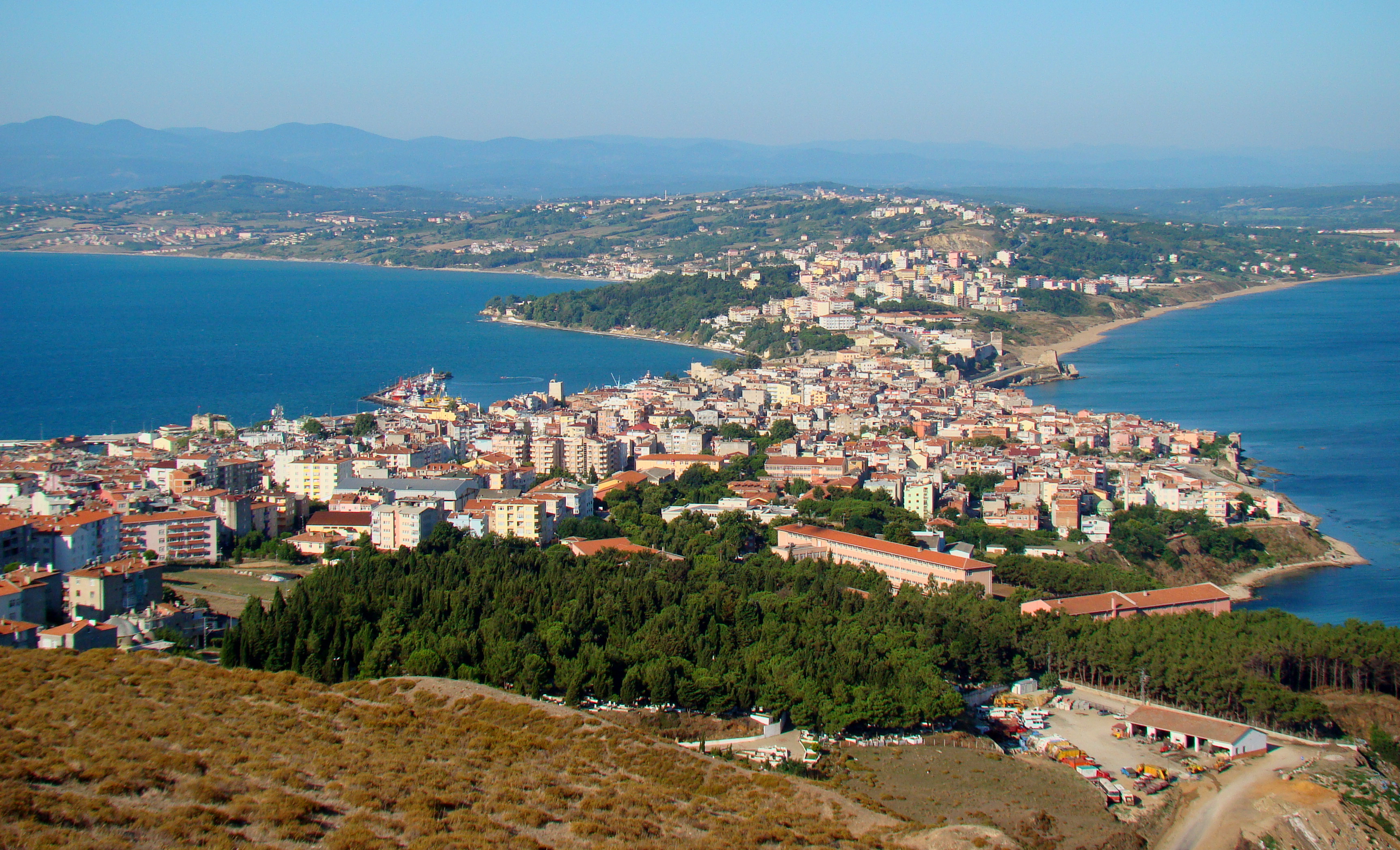
Sinop
City in TurkeyWikipedia
16
MENTIONS
11
EPISODES
11
PODCASTS
Search complete. 16 mentions across 11 episodes found for "Sinop".
Oct 1, 2026

Suzanne O'NeillGUEST
This, this is Diogenes the, the Cynic.
Suzanne O'NeillGUEST
He, um, was exiled from his home city in Sinope, which is in modern-day Turkey, and he was asked, you know, "Well, uh, where are you a citizen of?" Because it mattered which city state.
Suzanne O'NeillGUEST
Like in medieval Italy, it mattered which city state you came from.
Suzanne O'NeillGUEST
He said, "I am a citizen of the world."

Fırat BozçalıGUEST
And I started to actually visit these different towns across the all Kurdish region of Turkey.
Fırat BozçalıGUEST
So I visited, and I already visited a bit of research in Sinopi, but I also went to Erdvan, I went all the way to the Ödür, visited the Turkish-Azerbaijani-Nacivani border.
Fırat BozçalıGUEST
I listed one, I listed these other palms, and then kind of connected with the bar associations, the lawyers, and collecting court cases.
Fırat BozçalıGUEST
And eventually, I decided to base my research in one.

James K. WhiteNARRATOR
From this time, Genoa declined in power, while Venice waxed stronger and more haughty.
James K. WhiteNARRATOR
The conquest of Constantinople by the Turks, followed rapidly by the expulsion of the Genoese from Trebizond, Sinope, Kaffa, and Azov, was the end of the commercial prosperity of the Ligurian Republic in the East.
James K. WhiteNARRATOR
The Black Sea and Marmora were now Turkish lakes.
James K. WhiteNARRATOR
The castles of the Dardanelles, mounted with heavy guns, protected any Ottoman fleet from pursuit.

speaker_4NARRATOR
This led the Ottomans to declare war in October.
speaker_4NARRATOR
Fearing Russian growth and moved by public outrage after a major naval engagement at Sinop, Britain and France joined the war in 1854.
speaker_4NARRATOR
The conflict eventually centered on the Crimean peninsula, where Allied forces attempted to capture the naval base of Sevastopol.
speaker_4NARRATOR
After a long siege and several battles, the city fell in 1855.
10 MINS LATER
speaker_4NARRATOR
Russia claimed the occupation was a response to the Sultan's failure to protect Christian sites, believing that other European powers like Austria would not intervene.
speaker_4NARRATOR
In contrast, the UK viewed the move as a threat to its interests in Asia and sent its fleet to join the French in the Dardanelles.
speaker_4NARRATOR
Battle of Sinop Diplomatic efforts continued as representatives from the four great powers met in Vienna in late 1853 to draft a peace note.
speaker_4NARRATOR
Although the Tsar accepted these terms, the Sultan rejected the proposal due to its ambiguous phrasing.

speaker_1ADVERTISER
Paid for by Better Nevada Pack.
LambdaNARRATOR
The Lives and Opinions of Eminent Philosophers Book 6 by Diogenes Laertius Translated by Charles Duke Young Chapter 2 Part 1 Life of Diogenes Diogenes was a native of Sinope, the son of Trasius, a money-changer.
LambdaNARRATOR
and diocles says that he was forced to flee from his native city as his father kept the public bank there and had adulterated the coinage but ebullidas in his essay on diogenes says that it was diogenes himself who did this and that he was banished with his father and indeed he himself in his paradalus says of himself that he had adulterated the public money Others say that he was one of the curators, and was persuaded by the artisans employed, and that he went to Delphi, or else to the Oracle of Delos, and there consulted Apollo, as to whether he should do what people were trying to persuade him to do, and that, as the god gave him permission to do so, Diogenes, not comprehending that the god meant that he might change the political customs.
LambdaNARRATOR
Footnote the passage is not free from difficulty.
1 HR 17 MINS LATER
LambdaNARRATOR
Chapter 3 Life of Monimus Monimus was a Syracusan and a pupil of Diogenes, but also a slave of some Corinthian money-changer.
LambdaNARRATOR
As Horsicratus tells us, cineades who bought diogenes used often to come to him extolling the excellency of diogenes both in action and words till he excited a great affection for the man in the mind of monimus for he immediately feigned madness and threw about all the money and all the coins that were on the table until his master discarded him and then he straightway went to diogenes and became his pupil he also followed crates the cynic a good deal and devoted himself to the same study as he did and the sight of this conduct of his made his master all the more think him mad and he was a very eminent man so that even menander the comic poet speaks of him accordingly in one of his plays namely in hippocamus he mentions him thus there is a man o philo named monimus a wise man though but little known and one who bears a wallet at his back and is not content with one but three he never spoke a single sentence by great joe i swear like this one know thyself or any other of the off-quoted proverbs all such sayings he scorned and he did beg his way through dirt teaching that all opinion is but vanity but he was a man of such gravity that he despised glory and sought only for truth he wrote some jests mingled with serious treatises and two essays on appetites and an exhortation chapter four life of onesicritus onysicritus is called by some authors an eugeniton but demetrius the magnesian affirms that he was a native of astypelia he also was one of the most eminent of the disciples of diogenes and he appears in some points to resemble xenophon for xenophon joined in the expedition of cyrus anonicicritus in that of alexander and xenophon wrote the creopadia anonicicritus wrote on the account of the education of alexander xenophon too wrote a pan gyric on cyrus anonicicritus one on alexander They were also both similar to one another in style, except that a copyist is naturally inferior to the original.
LambdaNARRATOR
Menander II, who was surnamed Rhymus, was a pupil of Diogenes and a great admirer of Homer, and so was Hegesias of Sinope, who was nicknamed Clochus, and Philsicus, the Aegeanatan, as we have said before.
LambdaNARRATOR
Chapter 5 life of cratus cratus was a theban by birth and the son of ascondus he also was one of the eminent disciples of the cynic but hippopotas asserts that he was not a pupil of diogenes but bryson the achaean there are the following sportive lines of his quoted the waves around vain paris's fruitful soil and fertile acres crown the sea-born isle land which no parasite ever dares invade or loots the seducer of her hapless maid it bears figs bread thyme garlic savory charms gifts which never tempt man to detest arms they would rather fight for gold than glorious dreams there is also an account book of his much spoken of which is drawn up in such terms as these put on the cook for minas half a score put on the doctor for drachma more five talents to the flatterer some smoke to the adviser an obol and a cloak for the philosopher for the willing nymph a talent he was also nicknamed door-opener because he used to enter every house and give the inmates advice these lines too are his All this I learned and pondered in my mind, Drawing deep wisdom from the muse's kind, But all the rest is vanity.

CarolinaNARRATOR
And to this day there are Cimmerian walls in Scythia and a Cimmerian ferry, and there is a country Cimmeria and a strait named Cimmerian.
CarolinaNARRATOR
Furthermore, it is evident that the Cimmerians in their flight from the Scythians into Asia also made a colony on the peninsula where the Greek city of Sinope has been founded.
CarolinaNARRATOR
And it is clear that the Scythians pursued them and invaded Media, missing their way.
CarolinaNARRATOR
For the Cimmerians always fled along the coast, and the Scythians pursued with the Caucasus on their right until they came into the Median land, turning inland on their way.

CarolinaNARRATOR
And to this day there are Cimmerian walls in Scythia and a Cimmerian ferry, and there is a country Cimmeria and a strait named Cimmerian.
CarolinaNARRATOR
Furthermore, it is evident that the Cimmerians in their flight from the Scythians into Asia also made a colony on the peninsula where the Greek city of Sinope has been founded.
CarolinaNARRATOR
And it is clear that the Scythians pursued them and invaded Media, missing their way.
CarolinaNARRATOR
For the Cimmerians always fled along the coast, and the Scythians pursued with the Caucasus on their right until they came into the Median land, turning inland on their way.

CarolinaNARRATOR
And to this day there are Cimmerian walls in Scythia, and a Cimmerian ferry, and there is a country Cimmeria, and a strait named Cimmerian.
CarolinaNARRATOR
Furthermore, it is evident that the Cimmerians in their flight from the Scythians into Asia also made a colony on the peninsula where the Greek city of Sinope has been founded.
CarolinaNARRATOR
And it is clear that the Scythians pursued them and invaded Media, missing their way.
CarolinaNARRATOR
For the Cimmerians always fled along the coast, and the Scythians pursued with the Caucasus on their right until they came into the Median land, turning inland on their way.

Dan CumminsHOST
Turkey had some victories in the beginning, but soon it was clear that the Russians were winning the war.
Dan CumminsHOST
Just a month into the fighting, the Russians had defeated the Turkish Navy at the port of Sinop in the Black Sea.
Dan CumminsHOST
Roughly 2,000 sailors and officers were killed when their wooden ships were set on fire, and the slaughter inflamed the West's already negative opinion of Russia, even though, to my knowledge, zero sick gentlewomen in distressed circumstances were lost.
Dan CumminsHOST
The British, who were trading partners with Turkey, were also concerned about their access to India getting cut off.
1 more episode mentions Sinop.
Create an account to see the whole feed, search across every transcript, and follow the entities you care about.