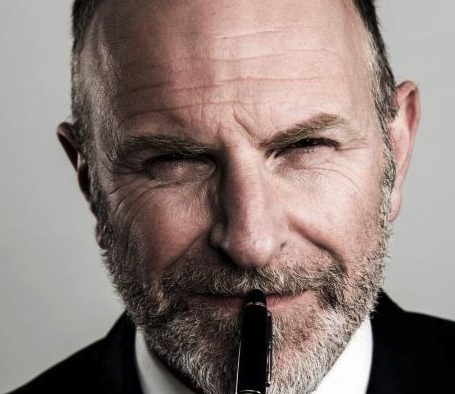
Simon Evans
English comedian and writer
10
APPEARANCES
9
PODCASTS
Jul 22, 2026

Jason DavisHOST
But can this help American soccer take the next step? Will this bring soccer into the mainstream? Simon, I know you have thoughts on that.

Simon EvansGUEST
I mean, these debates are all the same, aren't they? You know, I mean, when the US national team were eliminated, we had a debate about pay to play.
Simon EvansGUEST
And, you know, where does soccer go from here? I mean, I think the World Cup was about as mainstream as soccer could get in the United States, no? I mean, it was everywhere.
Simon EvansGUEST
I mean, I think from that point of view, you know, and let's not forget, there were some critical voices at the start saying this thing's going to be a flop.
8 MINS LATER
Jason DavisHOST
Is that something that makes economic sense? Because that's the argument that Tenorio is making.


Simon EvansGUEST
It's, it is notable because it was a, it's, uh, the Samsung Galaxy S3, which is kind of obsolete, and it was out of contract, but it had the big fat extra battery pack on the back.
12 MINS LATER
NeilHOST
Yeah.
Simon EvansGUEST
If you, if you, if you're actually keeping twenty percent of what you buy at any, any given-

speaker_4UNKNOWN
[laughing]
Simon EvansGUEST
And I remember thinking, "I wonder how that will hold up when it encounters its first significant challenge." And I don't think it's insignificant that that challenge is possibly coming now from Islam.
Simon EvansGUEST
I suspect a lot of young people are seeing the extent to which Islam provides, uh, not just a moral code, but a sort of unity, a societal organizing principle.
Simon EvansGUEST
And although we like to think in our post-Enlightenment and post, uh, Darwinian and, and post, sort of, uh, post-war settlement world that religion is a matter for personal conscience, I think actually we all understand at some level that it's a bit more than that.
Simon EvansGUEST
It's actually a, uh, a way of coming together with some surety, some confidence that we can trust one another, that we have a, in common certain understandings of what life is about and what's-- how we should behave towards one another, and they may be looking for that as well, possibly.
Simon EvansGUEST
I will also just mention, before my time is up, there's a certain amount of reading I've been doing lately, working my way very slowly through an absolutely enormous book by Dr Iain McGilchrist, a thing called, uh, The Matter With Things.
32 MINS LATER
James PantonMODERATOR
Into the mic, please.


Simon EvansGUEST
I remember those wrangles and the extent to which he felt he could leverage the letter of the law, but perhaps against the spirit as expressed by the people.
Simon EvansGUEST
Well, they always say after a general election, the British people have spoken.
14 MINS LATER


Simon EvansGUEST
And we have ranges of cars who come from an old Bentley, which has wooden spoked wheels, to a fast McLaren car.
Simon EvansGUEST
Edwardian based cars when they first came out up to cars in the year 2000 so we have an absolute range of different cars last year we had two people who brought their Morris Marinas along through to an Aston Martin DB5 that James Bond used to drive so it's a range absolute range of different cars that people can come along with memories of what they used to be like and they can talk to the the owners of the cars as well.

Jason DavisHOST
Uh, but specifically on MLS Next Pro a- and the people that you've talked to, what are they trying to achieve in, in maybe the, the near term with this money, this investment from KKR and Home- Hometown Soccer Holdings?
Simon EvansGUEST
We had, we had Tom Glick on, who's, who's the CEO of Hometown Soccer Holdings, former executive with a number of clubs, including, uh, Charlotte, and worked at the City Football Group and so on.
Simon EvansGUEST
And basically, uh, he outlined that the idea of moving MLS reserve teams to other markets, probably quite adjacent markets from what he was suggesting, rebranding them in the way that we've seen with Huntsville, um, in Alabama, which is Nashville's reserve team, of course.

Adelie Pojzman-PontayHOST
And so it's made of two layers.
Simon EvansGUEST
It has a inner layer and an outer layer, and the reason for that is that across the whole facility, you have what's known as overpressurization in that area.
Simon EvansGUEST
And you have underpressurization in the main volume of the facility, and the reason for that is that minimizes the flow of contaminated air from the inside to the outside.
7 MINS LATER
Adelie Pojzman-PontayHOST
To what extent do you think the international community is sufficiently aware of the risk of what's happened in Chernobyl? Also, are they taking into account what could happen with this current war and future wars on other power plants, and are they there to support Ukraine and to support the work that needs to be done?


Simon EvansGUEST
Well, I suppose, excuse me again, I agree with you about the don't care thing, which is a question of framing, right? It's not allowing the other side to choose the frame and to choose the language you adopt.
Simon EvansGUEST
I suppose the obvious query is, do you see Restore as having a chance to form a government? And if not, are they more likely to do damage? I mean, this is the big thing now.
Simon EvansGUEST
As we're moving into a multipolar, at least five viable parties at the next election, what kind of coalitions are likely to be formed before polling day and after polling day? And are we now in sort of continental territory where, again, unintended consequences can...
Simon EvansGUEST
I think there's a couple of international things that might change over the next two or three years.


Simon EvansGUEST
... where coming into COP, all of the countries in the world basically put, put out, um, pledges, you know, in w- what were called nationally determined contributions towards cutting emissions.
Simon EvansGUEST
And heading into, to the summit that year, which, you know, which I remember quite well, it was, it was abundantly clear that those, collectively, tho- those pledges were not gonna be enough to meet the, the moment.
Simon EvansGUEST
And so they built into the Paris Agreement a five yearly ratchet mechanism whereby every five years, countries have to come back with new pledges that are meant to be more ambitious.
Simon EvansGUEST
So we're w- as you said, we're 10 years into the Paris Agreement, and so now is the moment where countries are supposed to have been putting forward a new set of more ambitious pledges.
Rowan HooperHOST
I mean, they're, they're there to say, "We're still doing things even if the administration isn't." So, you know, is there any silver lining we can get from that?


Simon EvansGUEST
First of all, I think there's always this sense, and it- it- you know, it's- it's sort of encouraged almost by people that participate in the COP, that it's, like, this one, big- big bang moment every year where we're gonna sort things out.
Simon EvansGUEST
And I just think that for all sorts of reasons, you know, not least the fact that you're trying to agree stuff by consensus among nearly 200 countries, it- it just doesn't work like that.
Simon EvansGUEST
Most of the, you know, genuine progress on the ground comes in, you know- i- in countries th- through- through national governments.
Simon EvansGUEST
Like, it's a really pivotal year for the Paris Agreement because we're meant to be seeing all of these new national climate pledges, nationally determined contributions out to 2035, and they're all supposed to have been submitted by February and they got an extension until September.
Simon EvansGUEST
And so by November when we're at, you know, in Belém, we'll see what- what those really stack up to.
37 MINS LATER