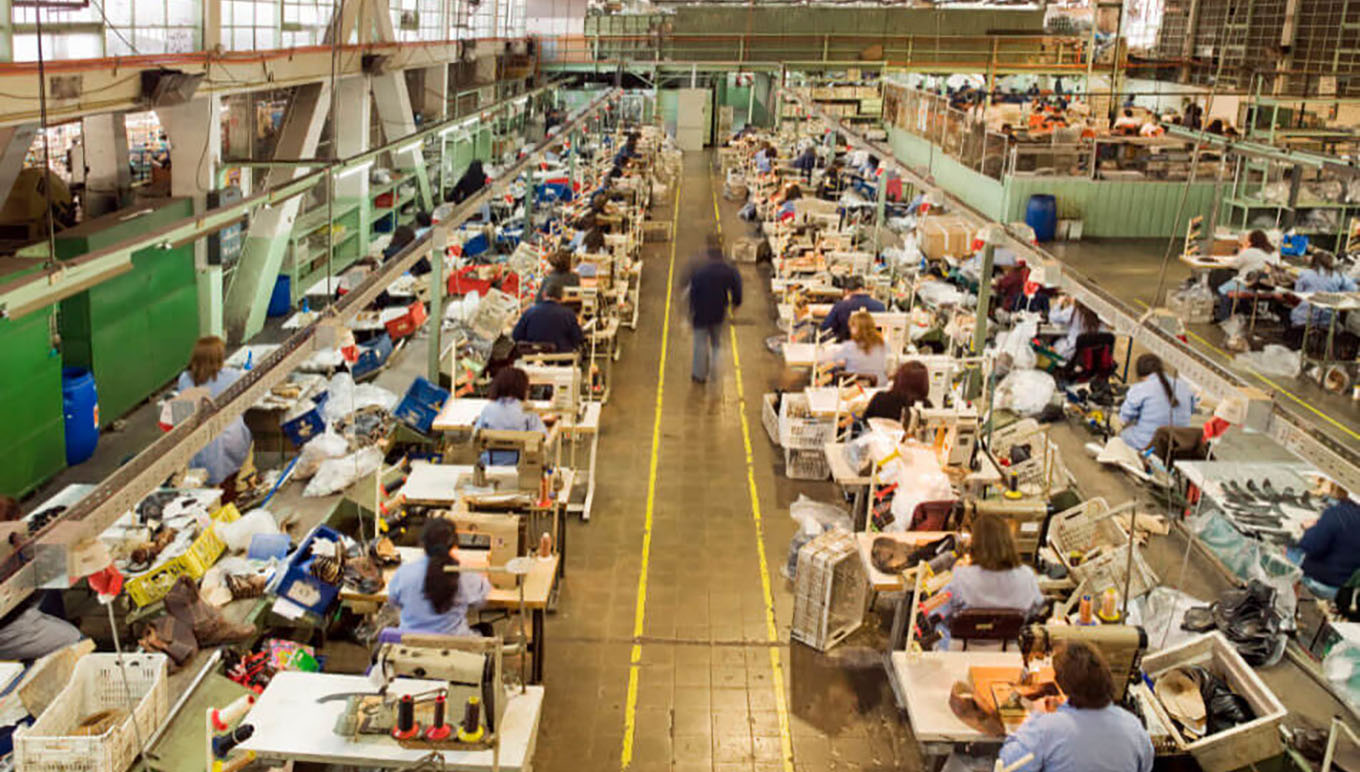
Shop floor
41
MENTIONS
8
EPISODES
8
PODCASTS
Search complete. 41 mentions across 8 episodes found for "Shop floor".
Nov 4, 2026

Robert WeberHOST
I want to switch a little bit to our discussion because we now talked a lot about the office environment, right? And now the next wave is coming with physical AI.
Robert WeberHOST
And we discussed agents near to the shop floor.
Robert WeberHOST
Let's frame it like this.
Robert WeberHOST
Will this be more difficult or can you build on your experience? Do you see the wave coming that all the guys on the shop floor are saying, oh, Jan, we need something when it comes to 1, 2, 3, 4, 5, or we want to solve something with AI in this case or on the convoyer belt or whatever.
Robert WeberHOST
So what is coming in the next wave? Yeah,
Jan TönnissenGUEST
I have to admit, I'm I'm not the expert on our shop floors because there are quite a few and different ones.
Jan TönnissenGUEST
But what I already have seen is the connection of data on the shop floor.
Jan TönnissenGUEST
We have a very cool use case where you can actually talk to your production line.

StaceyHOST
Let's dive into today's episode and keep your business on track.
StaceyHOST
Today we're leaving the front office and walking out onto the shop floor.
StaceyHOST
Most eMMC advice stops at the office door, but if you run a machine shop, a lot of your CUI lives right next to the machines.
StaceyHOST
We're covering the 400,000 machines with a Windows 7 controller that you do not have to replace.
BrookeHOST
That's nice.
BrookeHOST
If it were that way, that would be wonderful.
BrookeHOST
But the shop floor would still be in scope for physical CUI and for controlling it there.
BrookeHOST
While that's not quite as many things to do as for the, you know, running it over the network out there, then there's still stuff to do.

Cole StrandbergHOST
And then you spent some time working as a technician going to college.
Cole StrandbergHOST
Eventually, you got your MBA and you experienced the industry from really... very different perspectives right from the shop floor and the corporate side how did those different experiences shape you kind of early to mid-career
Brian von TressGUEST
So, you know, the way you explain it sounds so intentional, but it was really more of a lost guy trying to figure out what I wanted to do.
Brian von TressGUEST
So, you know, I worked in the shop and I eventually was interested in being a painter.

Mirko PetersHOST
It collects machine data close to the source, filters it, normalizes it, and buffers it when the network link isn't available.
Mirko PetersHOST
That work belongs near the shop floor because the shop floor has its own limits, its own network zones, and equipment that may outlive several cloud strategies.
Mirko PetersHOST
A controller from the 1990s doesn't become less useful just because somebody wants a modern data platform.
Mirko PetersHOST
It still runs a physical process, it may communicate through an older protocol, it may sit on a protected network, and it may need to keep working during a network outage, which is a fairly reasonable demand from a machine that produces parts for a living.
Mirko PetersHOST
For Microsoft-centric plans, Azure IoT Operations is one option for the edge layer.
Mirko PetersHOST
It runs through Azure Arc-enabled deployment patterns and supports industrial connectivity, local data processing, and data flows between the edge and cloud services, fitting well where you want a managed approach across several sites, especially when you already use Azure and need a consistent way to operate edge workloads, But it is an option, not a requirement.
Mirko PetersHOST
You may already have an industrial gateway, a historian connector, a vendor platform, or a local MQTT broker that does part of this job well, and replacing working shop floor infrastructure just to produce a cleaner architecture slide is rarely a good first move.
Mirko PetersHOST
The question is whether the existing edge layer can publish reliable, governed events into the wider decision flow without weakening plant security or interfering with production.

Liam O'NeillHOST
Bart, I'd like to start with those early experiences and how they shaped how you approached transformation.
Liam O'NeillHOST
What was it that started on the shop floor thought you perhaps wouldn't have got if you'd entered through a more white collar route.
Bart SegersGUEST
For me, the main thing that I take away in my day-to-day business is really the importance of stakeholder management.
Bart SegersGUEST
I think we can always make a great plan on how we will interfere with a lot of people, but you just cannot compare how to speak and present to an executive board than when you go to blue collars and then white collars management, side management and so on.
Bart SegersGUEST
would good look like? What would a bad rollout look like? just forcing it through and coming in and said this is now what it will look like and we'll see each other in six months and unfortunately this is not saying that this has happened to me would also not be fully fair yet I've seen it happen before where of course you cannot give them any freedom or liberty in which they want to or don't want to do some things.
Bart SegersGUEST
Some things, of course, have to be maintained.
Bart SegersGUEST
But I always try to explain it as it's you're on a football field, right? And we as leadership, we as my team, my department, we define where the outliers are where the offside line is of the football field but they can position themselves wherever it suits them best and then you immediately open a door to them where they can say oh so there is willingness to listen what i have to tell and that's also typically when you speak to blue colors those are the people working the longest when i go into factories when i go to shop floors If you see the average amount of time people working for a company is mainly higher on the shop floor than it is on a management level and even higher than it's even lower average.
Bart SegersGUEST
So those are typically the ones who are 30 years, 35 years of experience.

Corey SmithHOST
I know you're super busy.
Corey SmithHOST
We're going to title this podcast, Building the Next Generation, Developing Automotive Talent from the Shop Floor to Leadership.
Corey SmithHOST
You literally grew up in the dealership and have worked with several different roles in the dealership.
Corey SmithHOST
Looking back on what experiences have shaped you to where you are today, how has that journey changed the way you lead and develop people now?

Mark BracknallHOST
This was almost taking it back to the old school of Manufacturing Leaders podcast episodes, where we really get into the grips of, of leaders and their journey.
Mark BracknallHOST
Twenty-three years ago, James started out on the shop floor of Polar, a family-run business, his dad's business, and now MD of the business, and has been for quite some time.
Mark BracknallHOST
So we talk through that journey, we talk through what it took to get there, um, we talk through that nonlinear route to becoming who he is, but actually the good, the bad, and the ugly.
Mark BracknallHOST
Um, a real open, honest, and authentic episode where we touched on his journey, his development as a leader from taking external advice, from using his support network and systems around him to become the leader he is, and ultimately for Polar to become the business they are today.

Ben StewartGUEST
So Rockwell, of course, we're a leader in hardware and controls.
Ben StewartGUEST
Everybody in North America knows Rockwell on the shop floor, Alan Bradley.
Ben StewartGUEST
And I came over to Rockwell about five years ago.
Ben StewartGUEST
They acquired Plex Systems.
Chris McNamaraHOST
How are MES strategies changing as automation matures? We're here at IMTS, everything's automation, everything is breaking news and emerging technologies and techniques and tools and all that stuff.
Chris McNamaraHOST
How is this affecting the world of MES? So
Ben StewartGUEST
I think as you look at, you walk around a shop floor, many companies have point solutions, they've got a lot of Excel, they've got little custom things that they've done for MES to solve specific point problems.
Ben StewartGUEST
And more companies are opening up to saying, hey, how do I take advantage of this technology? How do I do something at enterprise scale? How do I put this standardized across my company? Because I have these custom solutions that are hard to replicate from line to line, from plant to plant in a global enterprise.