Shinto
ReligionWikipedia
1.1k
MENTIONS
243
EPISODES
211
PODCASTS
Search complete. 1052 mentions across 243 episodes found for "Shinto".
Sep 18, 2026

Tara A. DevlinHOST
It got narrower as you went and it was around seven or eight metres long.
Tara A. DevlinHOST
When I was just a kid, the villagers would assign someone each month to light a fire and offer some prayers at the Shinto altar hidden in the back of this cavern.
Tara A. DevlinHOST
According to the legend, this imperial prince lived long ago, well before the Nara period in the 700s.
Tara A. DevlinHOST
Most of the people in our village were farmers, and it had long been a custom to give newborns two different names.

Nick BrightHOST
Like other mafias and mobs around the world, they possess an organizational culture founded on the basis of this perceived ideology of machismo, manliness, and rough ruggedness.
Nick BrightHOST
But unlike other mafias and mobs, we will see that they also play a very public role in their communities, often walking at parades, giving exhibitions at festivals, and even performing community service tasks such as donating money or labor to Buddhist temples or Shinto shrines and other volunteer work.
Nick BrightHOST
The Yakuza are very fascinating, especially in this day and age, because there are actually not that many of them left.
Nick BrightHOST
So much of their most visible and impactful history is behind them.

Isaac MeyerHOST
He'll pass them directly on to his successor by word of mouth, and brushes the bear with a branch from a fir tree or a leafy stalk of bamboo.
Isaac MeyerHOST
The brushing is intended to mimic purification done by a haregushi, the purifying wands used by Shinto priests.
Isaac MeyerHOST
The shikari will then ritually skin the bear, starting with a lengthwise cut down the centerline of its body.
Isaac MeyerHOST
Once the skinning is complete, then follows a more elaborate ritual I will turn to Scott Schnell to explain.

AvailleNARRATOR
One.
AvailleNARRATOR
Of whatever dimension, the temples or shrines of poor Shinto are all built in the same archaic style.
AvailleNARRATOR
The typical shrine is a windowless oblong building of unpainted timber with a very steep overhanging roof.
AvailleNARRATOR
The front is the gable end, and the upper part of the perpetually closed doors is wooden lattice work, usually a grating of bars closely set and crossing each other at right angles.
AvailleNARRATOR
So shaped and so tinted, the isolated country yashiro may seem less like a work of joinery than a feature of the scenery, a rural form related to nature as closely as rocks and trees, a something that came into existence only as a manifestation of Ohotsuchi no Kami, the earth god, the primeval divinity of the land.
AvailleNARRATOR
Why certain architectural forms produce in the beholder a feeling of weirdness is a question about which I should like to theorize some day.
AvailleNARRATOR
At present I shall venture only to say that Shinto shrines evoke such a feeling.
AvailleNARRATOR
It grows with familiarity instead of weakening, and a knowledge of popular beliefs is apt to intensify it.

NateHOST
And, uh, like, if you're making a high-budget animated version of Sekiro, why would you do that? What do...
NateHOST
What was, what would be the point of demystifying the only cool... like, one of the coolest aspects, not the only cool, but for me definitely the coolest aspect of, like, the Sekiro setting was, like, the Japanese Shinto mysticism stuff.
NateHOST
I love that shit.
RemyHOST
You like the Japanese stuff, the weeb stuff.

John GreenHOST
But those aren't even the most widely practiced religions.
John GreenHOST
Like, there are more followers of Sikhism worldwide than there are followers of Judaism, and Shinto is practiced by millions of people and yet zero representation on the Coexist bumper sticker.
John GreenHOST
So what's the point of having a category like the Big Five, and why do we hear about only a few religions while ignoring tons of others? Well, let's go back in time to figure that out.
John GreenHOST
As we saw in episode one, what counts as a religion is actually quite complicated.

Darren VickersHOST
Which raises an important question.
Darren VickersHOST
Why would an emperor need a sorcerer? The Way of Yin and Yang, a fusion of Chinese cosmology, Buddhism, and native Shinto belief, made Japan's official science in the year 675.
Darren VickersHOST
But when plagues and vengeful spirits haunted Heian-era Kyoto, science alone couldn't save them.
Darren VickersHOST
Mysticism became the only cure.

TKHOST
Ainu religion is based on an animistic system where every living and non-living thing on Earth holds a god inside of it called a Kamyu.
TKHOST
Fun side note, many anthropologists believe this to be the origins of the multiple gods of Shintoism, But that is an episode for another day.
TKHOST
It's just a fun little side fact.
TKHOST
So the Kamyu provide the foundation of the Ainu religion, and the central deity is the goddess of the hearth, Pchi Kamyu.

speaker_1NARRATOR
What Rikyu demanded was not cleanliness alone, but the most beautiful and the natural also.
speaker_1NARRATOR
the name a boat of fancy implies a structure created to meet some individual artistic requirement the tea room is made for the tea master not the tea master for the tea room it is not intended for posterity and is therefore ephemeral The idea that everyone should have a house of his own is based on an ancient custom of the Japanese race, Shinto superstition ordaining that every dwelling should be evacuated on the death of its chief occupant.
speaker_1NARRATOR
Perhaps there may have been some unrealized sanitary reason for this practice.
speaker_1NARRATOR
Another early custom was that a newly built house should be provided for each couple that married.

William GavulaVOICE_ACTOR
Stone huts.
William GavulaVOICE_ACTOR
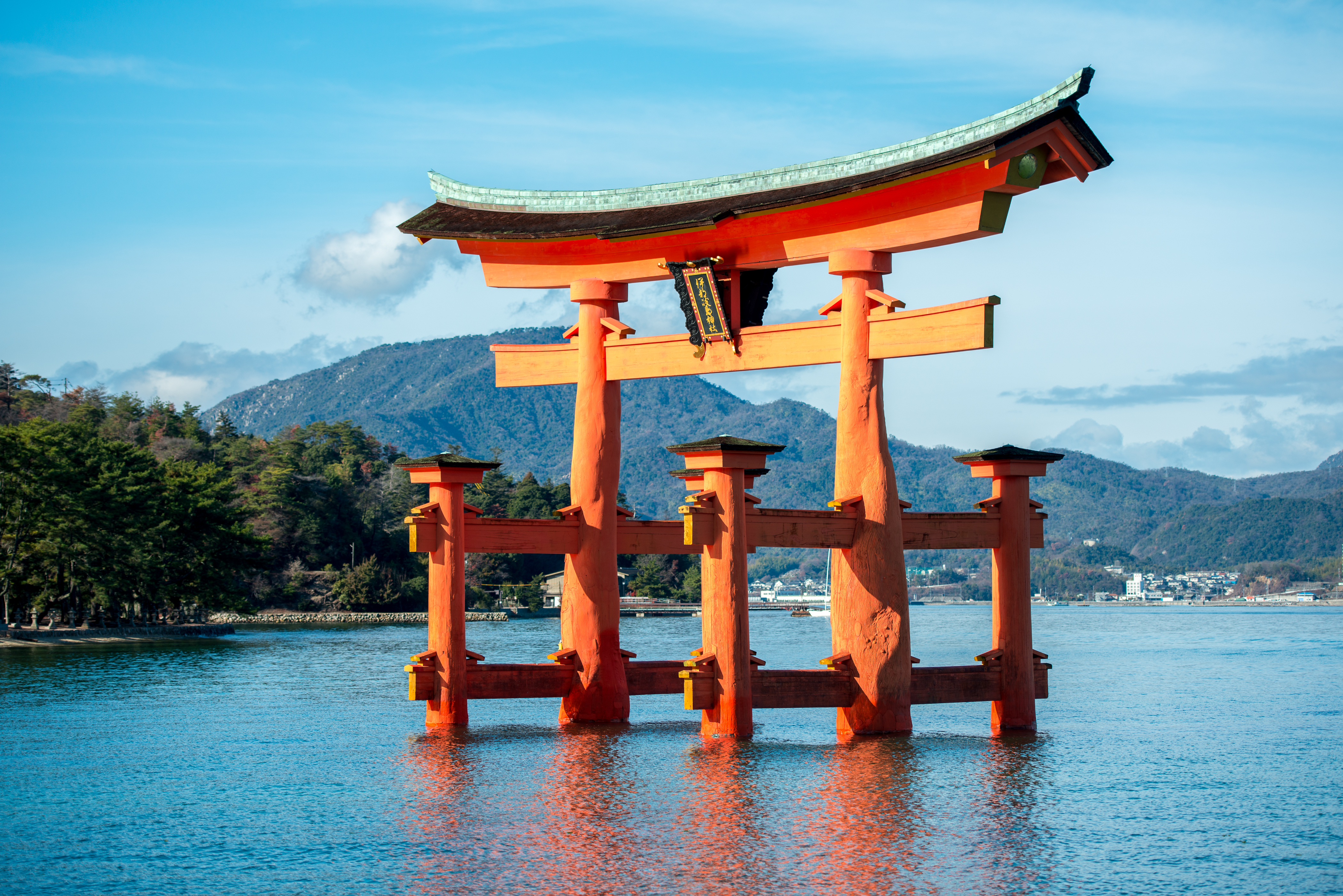
Shinto shrine with torii.
William GavulaVOICE_ACTOR
Icy well called the Spring of Gold.
William GavulaVOICE_ACTOR
Stone tablet bearing a Chinese poem in the design of a tiger.
233 more episodes mention Shinto.
Create an account to see the whole feed, search across every transcript, and follow the entities you care about.