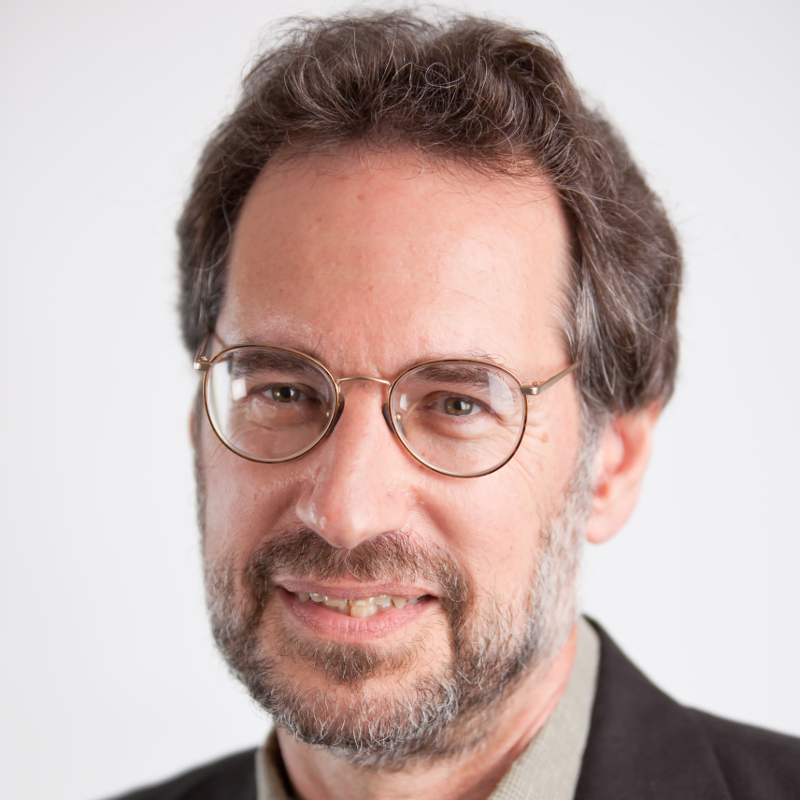
Sheldon Cohen
Professor and psychologistWikipedia
13
MENTIONS
9
EPISODES
7
PODCASTS
Search complete. 13 mentions across 9 episodes found for "Sheldon Cohen".
Oct 10, 2026

Denis RancourtGUEST
add one more piece to the puzzle.
Denis RancourtGUEST
There is a researcher called Sheldon, um, what was the name? Sheldon Cohen, a professor in the United States who a large part of his research and his career was about, okay, what are the factors that control whether or not you're gonna get a respiratory disease and how sick you're gonna be from it? That was...
Denis RancourtGUEST
He, he did a lot of research for decades on this.
Denis RancourtGUEST
So he w- what he took at the time, he took college students and tried to infect him with fluid from sick people, basically, okay?

Denis RancourtGUEST
And from the science, it's clear.
Denis RancourtGUEST
For example, Sheldon Cohen, who is a professor in the United States, spent his career demonstrating, trying to find what determines when a college student will get a respiratory condition and how sick they will be when they get it.
Denis RancourtGUEST
He did this for years.
Denis RancourtGUEST
He was actually infecting college students with fluids from sick people and trying to get them to be sick to see when they would be sick and when they wouldn't be sick and how sick they would be, okay? So he had hundreds of volunteers.
Denis RancourtGUEST
I wouldn't go too far in that direction because dirtiness doesn't make you sick.
Denis RancourtGUEST
In the sense that, I think that's overemphasized.
Denis RancourtGUEST
If you look at Sheldon Cohen's work, He was actually putting as dirty as you could be right into the throats of young people.
Denis RancourtGUEST
And the only ones that got sick are the ones that were stressed, okay? The others did get sick and were socially isolated.
Denis RancourtGUEST
And from the science, it's clear.
Denis RancourtGUEST
For example, Sheldon Cohen, who is a professor in the United States, spent his career demonstrating, trying to find what determines when a college student will get a respiratory condition and how sick they will be when they get it.
Denis RancourtGUEST
He did this for years.
Denis RancourtGUEST
He was actually infecting college students with fluids from sick people and trying to get them to be sick to see when they would be sick and when they wouldn't be sick and how sick they would be, okay? So he had hundreds of volunteers.
Denis RancourtGUEST
I wouldn't go too far in that direction because dirtiness doesn't make you sick.
Denis RancourtGUEST
In the sense that, I think that's overemphasized.
Denis RancourtGUEST
If you look at Sheldon Cohen's work, he was actually putting as dirty as you could be right into the throats of young people and the only ones that got sick are the ones that were stressed okay the others didn't get sick and and that were socially isolated so i think that what about
David KnightHOST
increasing the uh bacterial load or whatever the uh the biome you know in terms of holding it there

Denis RancourtGUEST
And from the science, it's clear.
Denis RancourtGUEST
For example, Sheldon Cohen, who is a professor in the United States, spent his career demonstrating, trying to find what, what determines when a college student will get, uh, a respiratory condition and how sick they will be when they get it.
David KnightHOST
Mm-hmm.
Denis RancourtGUEST
He did this for years.
5 MINS LATER
Denis RancourtGUEST
Like, like, in the sense that, in the sense that...
Denis RancourtGUEST
I think that's overemphasized.
Denis RancourtGUEST
Like, if you, if you look at Sheldon Cohen's work, he was actually putting as dirty as you could be right into the throats of young people.
Denis RancourtGUEST
[laughs]
Denis RancourtGUEST
And from the science, it's clear.
Denis RancourtGUEST
For example, Sheldon Cohen, who is a professor in the United States, spent his career demonstrating, trying to find what, what determines when a college student will get, uh, a respiratory condition, and how sick they will be when they get it.
David KnightHOST
Mm-hmm.
Denis RancourtGUEST
He did this for years.
5 MINS LATER
Denis RancourtGUEST
Like, like, in the sense that, in the sense that...
Denis RancourtGUEST
I think that's overemphasized.
Denis RancourtGUEST
Like, if you, if you look at Sheldon Cohen's work, he was actually putting as dirty as you could be right into the throats of young people.
Denis RancourtGUEST
[laughs]

MiaHOST
Here's one that really surprised me.
MiaHOST
At Carnegie Mellon, a team led by psychologist Sheldon Cohen interviewed four hundred healthy adults every evening for two weeks, asking about their conflicts, their support, and whether they'd been hugged that day.
MiaHOST
Then, I love how committed these volunteers were.
MiaHOST
They were deliberately exposed to a common cold and watched in quarantine.

Will BulsiewiczHOST
In hospitals, it's called alarm fatigue, a monitor that beeps all night, and by three in the morning, nobody in the unit even flinches.
Will BulsiewiczHOST
Sheldon Cohen's group showed that people under long-term stress had immune cells that had become resistant to cortisol signal.
Will BulsiewiczHOST
The brake pedal was still there, but the cells had stopped responding to it, and inflammation was running with the brakes off.
Will BulsiewiczHOST
So here's what I do.

Rich SlatcherGUEST
The idea behind it is that...
Rich SlatcherGUEST
So a lot of the, the earliest work, um, in relationships and health, uh, was done by, uh, Sheldon Cohen, uh, at Carnegie Mellon, a social psychologist who really I mean, you can't, you, uh, he had such an enormous impact on this area of research, and he had this thing called the stress buffering hypothesis.
Rich SlatcherGUEST
The idea being that, uh, social support, um, could buffer the negative effects of stress on your health.
Rich SlatcherGUEST
There'd been other work, uh, showing that, uh, conflict was bad for your health.

Denis RancourtGUEST
And what we have been saying since the start is that respiratory ailments are extremely sensitive to stress and isolation.
Denis RancourtGUEST
And so this is from the work of Professor Sheldon Cohen in the US, who who a large part of his scientific research demonstrated this, that you're going to you're more likely to develop a respiratory condition even if you're young.
Denis RancourtGUEST
Like he was doing this with college students at the time, he was trying to infect them directly.
Denis RancourtGUEST
And he found that you're more likely to get infected or rather to develop the condition.