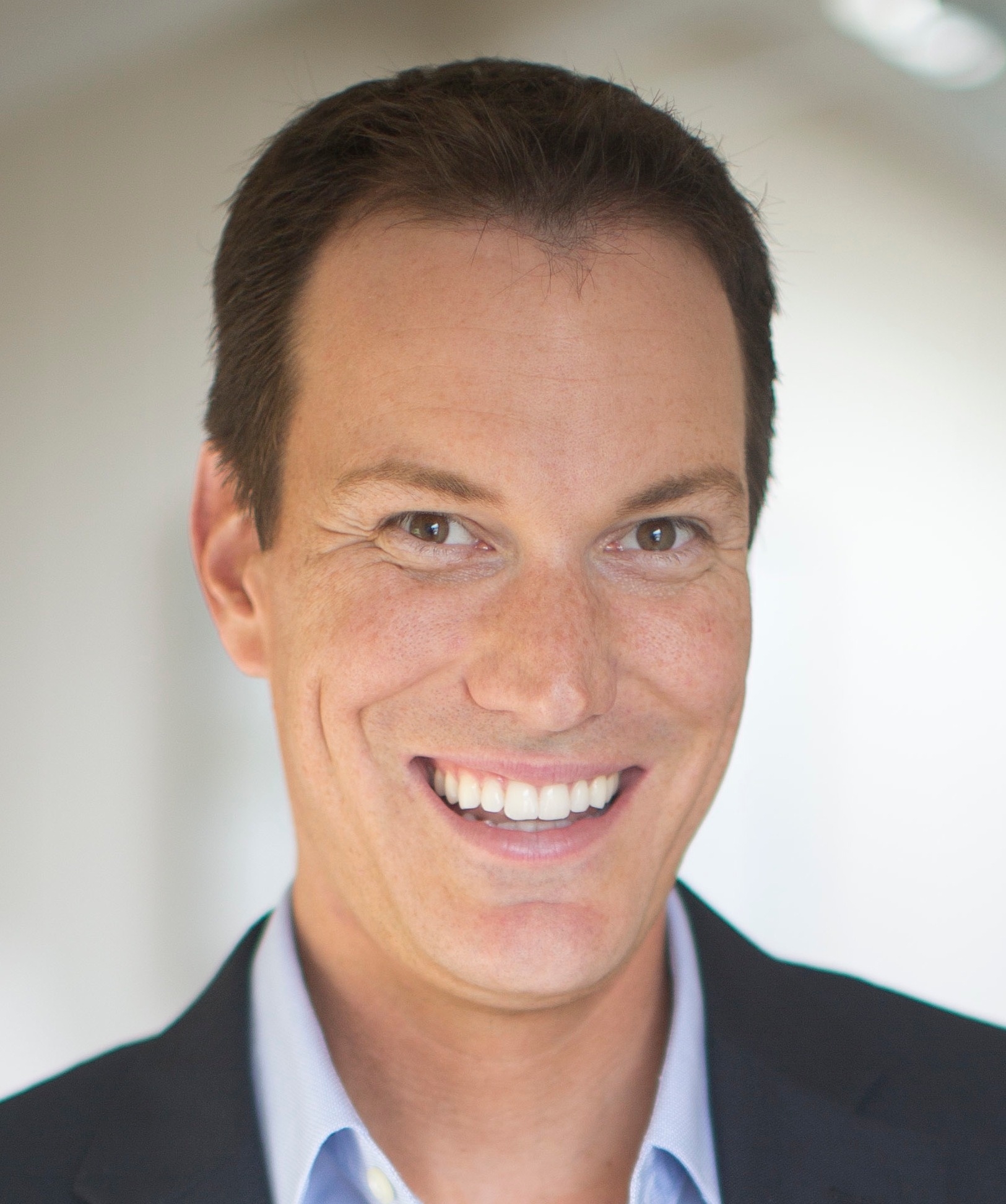
Shawn Achor
American author and orator
10
APPEARANCES
9
PODCASTS
Sep 9, 2026

Shawn AchorGUEST
Those are the moments where, you know, we say things all the time that we think are positive, like, you know, "I believe my behavior matters," right? Or, "I believe I'm not alone." And we want people to get to those beliefs.
Shawn AchorGUEST
But we need to add the warrants to those, otherwise they sound like just hopefulness in a world in which it seems like things are not going the right way.
Shawn AchorGUEST
In the book, I mentioned speaking at a large public school, and the superintendent got up in front of me and said, "Hey, we got this guy to come in and talk about positive psychology 'cause we could all use a little happiness because our graduates are graduating into the worst world graduates have ever graduated into." And I listened to him, and you could see the w- the room not deflate but get prepared, like hunch up for the challenges that are in front of them.
17 MINS LATER


Shawn AchorGUEST
... which simply was about how, um, there was a person that was injured on the side of a, of a path, um, or a road, and all these people that should have helped didn't, and then the person who you never thought would have helped was the one who actually helped, the, the Good Samaritan.
Shawn AchorGUEST
They're writing up a sermon, and then they have to walk across campus to deliver the sermon, and there's two conditions.
Shawn AchorGUEST
Just walk down this path, and you'll deliver your sermon to the people that are waiting for you there.
Shawn AchorGUEST
We have lots of time." The other group they said, "You are so behind right now.
8 MINS LATER

Mike CarruthersHOST
So the sentence that really grabbed me when I was looking over the information about your book is this sentence: "The greatest predictor of your future is the beliefs you hold about the world." So I'd like you to explain that 'cause I think that's a great place to start this conversation.
Shawn AchorGUEST
What the research that I've been doing over the past 10 years has been showing is that we've been underestimating how powerful our beliefs are of predicting our future lives.
Shawn AchorGUEST
For example, a study came out earlier this year from Yale, and they tracked- 12,000 seniors over a 12-year period of time from age 65 to age 77 and most people believe that as you get older, as you move towards 77, that there's a decline mentally and physically.
Shawn AchorGUEST
We hold that belief, so we don't, we don't even put that in the belief category.
Shawn AchorGUEST
We put that in the scientific fact category but it turns out that that's actually accurate.
Mike CarruthersHOST
So you can't really change your belief unless you realize it's a belief, and so what are the kinds of beliefs that maybe we don't pay attention to or don't realize that they're beliefs that we could change?

speaker_3UNKNOWN
[laughs]
Shawn AchorGUEST
And when they see this, they say, "Shawn, why do you waste your time studying happiness at Harvard? Seriously, what does a Harvard student possibly have to be unhappy about?" Embedded within that question is the key to understanding the science of happiness.
Shawn AchorGUEST
'Cause what that question assumes is that our ex- external world is predictive of our happiness levels, when in reality, if I know everything about your external world, I can only predict 10% of your long-term happiness.
Shawn AchorGUEST
90% of your long-term happiness is predicted not by the external world, but by your, the way your brain processes the world.
Shawn AchorGUEST
And if we change it, if we change our formula for happiness and success, what we can do is change the way that we can then affect reality.
speaker_3UNKNOWN
[laughs]


Shawn AchorGUEST
You're so good at this because you're able to pair a line in the book to C.S. Lewis' Great Deports.

speaker_0HOST
So I'm curious, you know, what are those true limits? You know, can belief genuinely transform human performance, health, perception, behavior? Or are we perhaps mistaken psychologically mediated placebo effects for something deeper about reality?
Shawn AchorGUEST
One is, can the beliefs change our performance? And then is there a limit to those beliefs? So let me start with the limit one.
Shawn AchorGUEST
The problem is that we often don't know what reality actually is because every input that comes into our brain comes in through this lens that's through the lens of these beliefs about the world.
19 MINS LATER
speaker_0HOST
Yeah, and what does the science show in terms of do people change beliefs through evidence or perhaps through emotionally significant experiences?


Laurie SantosHOST
Could you explain the example of home field advantage and why it's so powerful for showing the effect of beliefs?
Shawn AchorGUEST
So like most of your listeners who know about the placebo effect, they know probably about the home field advantage.
Shawn AchorGUEST
It's pretty prevalent in our society that if you play in your home stadium or your home court, you have an increased likelihood of winning regardless of opponent.
Shawn AchorGUEST
There's, like, a 30% chance of losing at home, but there is a 50% chance of winning at home with a 20% chance of a draw, but what you see is this massive benefit to playing in your home stadium.
20 MINS LATER

Molly FletcherHOST
And it's hard to change our beliefs, right? Like, but wh- why is it so hard to change our beliefs?
Shawn AchorGUEST
Some beli- so, uh, I, uh, went to the divinity school before getting into this work.
Shawn AchorGUEST
So I studied Christian ethics, I'm Christian, and compared it to Buddhist ethics, 'cause I wanted to see something that was different.
Shawn AchorGUEST
Um, 'cause I was fascinated about how our beliefs about the world shape what happens next.
Shawn AchorGUEST
And while I was doing that, when I was studying Buddhism, I learned that traditional Buddhism says that you inch your way towards enlightenment doing consistent, disciplined habits every day of your life, and you just slowly and incrementally move towards enlightenment, but you'll never actually get there, uh, in this life.
11 MINS LATER

Shawn AchorGUEST
And one of the things that I did, um, to try and find my way back out of this is that I started journaling.
Shawn AchorGUEST
So I, I, I have my journal, and the very first entry I wrote was, "I don't remember being happy, and I don't think I'll ever be happy again." And it sounds, it sounds almost melodramatic now, but in the midst of depression, that's what I felt.
Shawn AchorGUEST
I just saw this art exhibit, and it's about this woman who photoshopped herself as a 30-year-old or later on in life into pictures of her when she was little, so sitting on a bench waiting for the bus.
Shawn AchorGUEST
So you've got the 30-year-old sitting next to the six-year-old, and I love that because I, I wish I could go back to that boy who wrote that journal entry and, and to anyone who's experiencing depression.
Shawn AchorGUEST
I wish I could go back and show him a glimpse of the, the, that that was not the end of the story-
5 MINS LATER

Oprah WinfreyHOST
So you went to Harvard, and suddenly your world was rocked because you studied, you went into divinity.
Shawn AchorGUEST
You can because what's amazing is we go back to it and say, "Well, this is how I was born," or, "This is my childhood," or, "This is what I've gone through." And what we find is that, yes, if you don't fight your genes, if you don't move away from your previous experiences or if you're just defined by your environment, your happiness will be entirely your genes and your environment.
Shawn AchorGUEST
But if-If we choose to do some simple things in our life, if we choose to do some of the things you've talked about before about being grateful, if we create positive habits in our life, what we find is that choice for happiness be- starts becoming easier and easier and easier.
Shawn AchorGUEST
The happiest people in the world, the top 10% of happiest people, are not happy all the time.
Shawn AchorGUEST
I actually don't get to study people that are happy all the time, because that's a disorder, actually.
8 MINS LATER