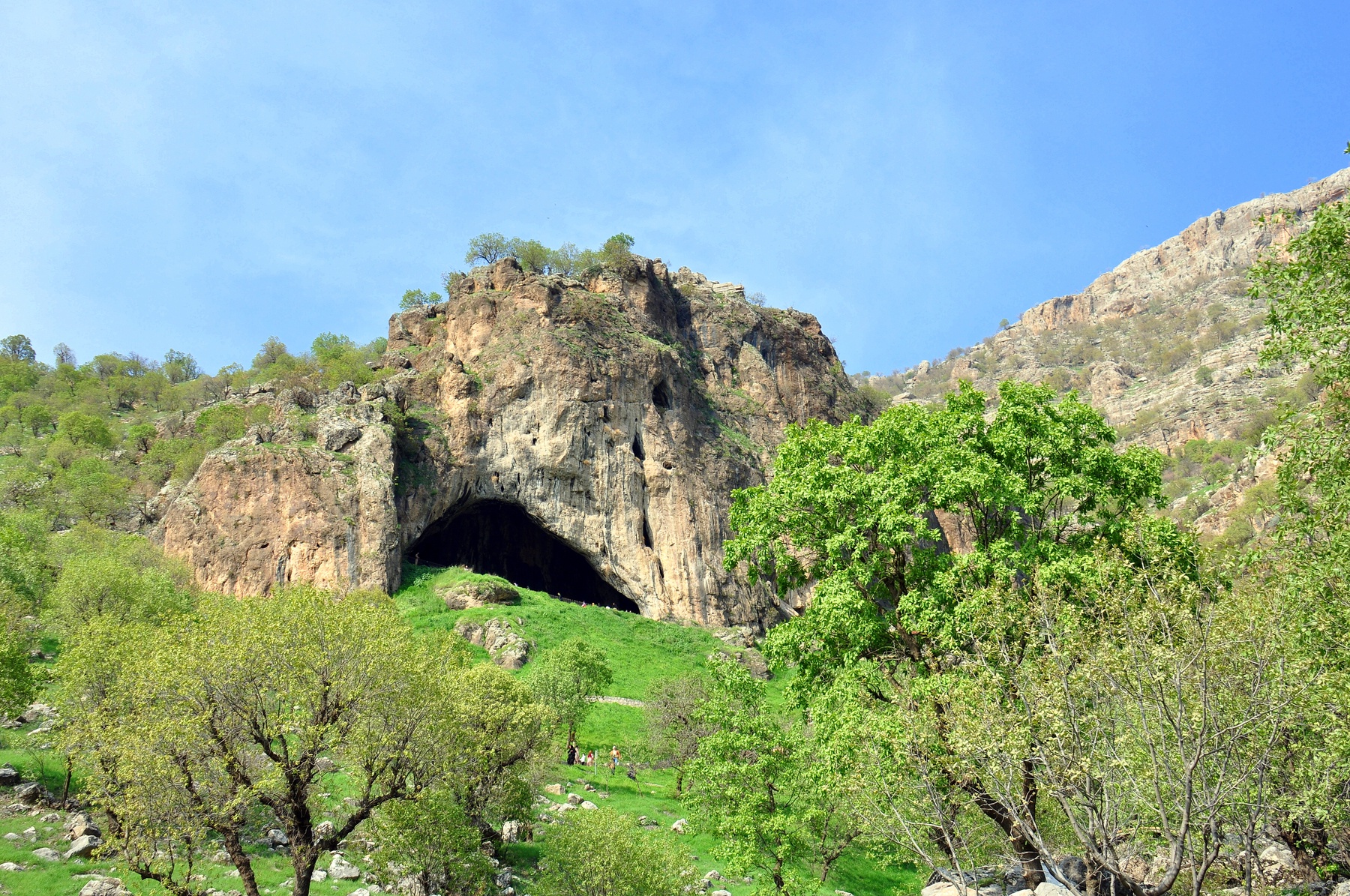
Shanidar Cave
Archaeological site in IraqWikipedia
12
MENTIONS
4
EPISODES
4
PODCASTS
Search complete. 12 mentions across 4 episodes found for "Shanidar Cave".
Sep 8, 2026

Michael NaglerHOST
They even have exemplified social coherence and compassion.
Michael NaglerHOST
There's a famous cave today called the Shanidar Cave.
Michael NaglerHOST
In what is now Iran, where a Neanderthal who passed, I think, if I remember right, about 70,000 years ago, he was found to have a broken femur.
Michael NaglerHOST
which healed.

speaker_5NARRATOR
And yet the archaeological record shows many Neanderthals survived horrific injuries, healed, and kept hunting.
speaker_5NARRATOR
There's a famous Neanderthal skeleton from Shanidar Cave in Iraq that shows exactly what this lifestyle meant.
speaker_5NARRATOR
this individual had survived multiple major injuries a crushing blow to the left side of his face that probably left him blind in one eye a withered right arm possibly from an injury or infection in childhood severe arthritis throughout his skeleton and he lived with these disabilities for years his bones show he reached his forties which was ancient by neanderthal standards what does that tell us it tells us that neanderthal groups cared for their injured and disabled someone with those injuries couldn't hunt mammoth couldn't contribute to the most dangerous and important tasks but his group kept him alive anyway fed him protected him valued him enough to let him live despite his inability to contribute to the hunt that's not primitive that's sophisticated social behaviour but there's a flip side to this story because while neanderthals were clearly capable of impressive cooperation within their groups those groups were small really small analysis of archaeological site distributions suggests most neanderthal groups consisted of maybe twenty to thirty individuals extended family units parents children maybe cousins and grandparents that's it and these groups were isolated territorial ranges reconstructed from tool stone sources suggest most neanderthal groups rarely travelled more than thirty to fifty miles from their home base they knew their territory intimately but they didn't travel far beyond it they didn't maintain the kind of long-distance trade networks that would later characterize modern human societies genetic analysis confirms this isolation neanderthal dna shows patterns consistent with small relatively isolated breeding populations inbreeding was common not because they preferred it but because there simply weren't many potential mates available if you lived in a group of twenty-five people in southern france and the nearest other neanderthal group was a hundred miles away across difficult terrain your mating options were extremely limited this created vulnerabilities small populations are fragile one bad winter one disease outbreak one string of hunting accidents and an entire group could disappear and with groups isolated from each other there was limited opportunity for survivors to integrate into other communities when a group went extinct their knowledge their specific adaptations to their territory all of that could be lost.
speaker_5NARRATOR
Compare this to what we know about early modern human hunter-gatherers.
14 MINS LATER
speaker_5NARRATOR
Archaeological sites show Neanderthals resharpening worn implements, modifying broken tools to extend their usefulness, recycling old tools to create new ones when raw materials were scarce.
speaker_5NARRATOR
this is forward thinking resource conservation the opposite of the wasteful brutish behaviour we once imagined but here's where neanderthal intelligence really shines they buried their dead not always and not in every location but frequently enough that it's clearly intentional behaviour not just bodies accidentally covered by sediment Neanderthal burial sites have been found across their range, from France to Iraq, from Gibraltar to Siberia, and these weren't just holes in the ground.
speaker_5NARRATOR
The famous Shanidar cave site in Iraq contained a Neanderthal burial surrounded by flower pollen, suggesting the body had been placed on a bed of flowers.
speaker_5NARRATOR
other sites show bodies deliberately positioned sometimes in foetal positions sometimes with limbs carefully arranged at la chapelle aux saints in france an elderly neanderthal was buried in a pit that had clearly been dug specifically for the purpose The soil showed signs of having been excavated, the body placed, and the pit refilled.

KatHOST
You can just get up someday in your forties and go to the woods and write a six series bestseller.
KatHOST
Going back to the acknowledgements, one thing she talks about here is, the other man I know only through his book, Ralph S. Selecki, the author of Shanidar.
KatHOST
The story of his excavations of Shanidar Cave and the discovery of several Neanderthal skeletons profoundly moved me.
KatHOST
He gave me a perspective of prehistoric caveman I might not otherwise have had and a better understanding of the meaning of humanity.
StephHOST
So do you think that she had this idea for something and then read Shanidar, or do you think she read Shanidar and was like, this is what I'm going to write about? I think she found Shanidar at the library.
KatHOST
I don't know what those 10 pages, it'd be fascinating to find those 10 pages she wrote when she realized she didn't know anything.
KatHOST
But I think Shanidar was probably the most important book she found in the library, at least for the first one.
KatHOST
The First Flower People came out in 1971, and it is about the excavation of the Shanidar caves in Iraq.