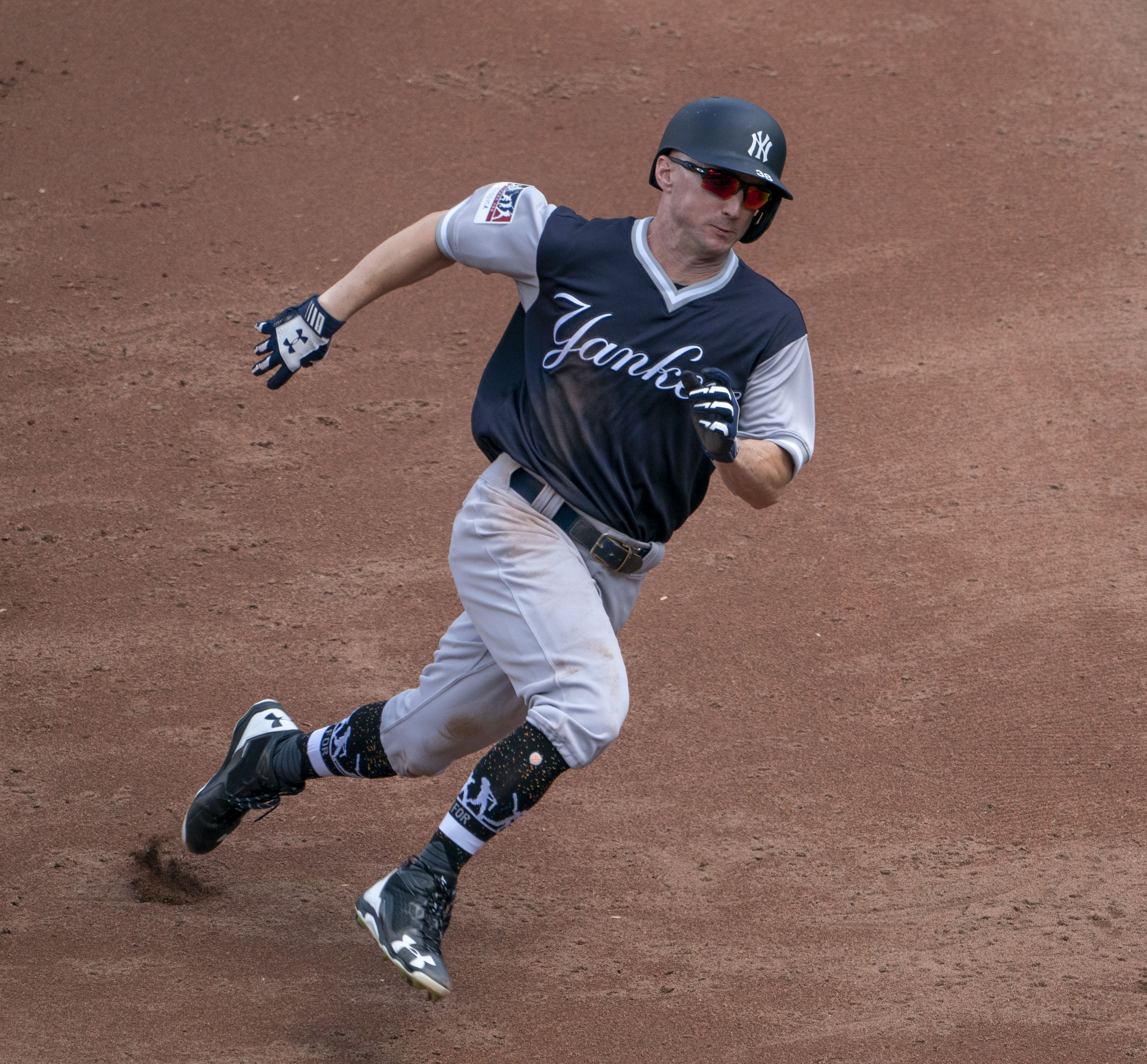
Shane Robinson
American baseball coach
3
APPEARANCES
3
PODCASTS
Sep 3, 2026


Dave FlemmingHOST
What's the key to getting a good read and a good jump for a potential base dealer?

Shane RobinsonGUEST
Just understanding that pitcher's delivery, his times to the plate, and then combining that with the catcher's pop times.
Shane RobinsonGUEST
And yeah, There's a lot that goes into it because some of it depends on what type of hitters hitting, whether it be a right handed or left handed hitter can affect some of the catchers pop times, as well as who is hitting can affect the pitchers times to home plate and and who's running so.
Shane RobinsonGUEST
You have to put all those things together and then kind of formulate a plan individually for each runner as they get on first base.
Shane RobinsonGUEST
And then knowing the situation, number of outs, how that pitcher's pitching our hitters that day, and kind of putting it all together in a quick, snippet and being ready to go and kind of rolling the dice sometimes as well.
Dave FlemmingHOST
And give us an idea of what that information tells you, like fast, slow, how that affects the decision making.
Shane RobinsonGUEST
Yeah, so I mean, we have a few plus runners on our team that can kind of push the envelope no matter what that pitcher's throwing.

Dave FlemmingHOST
What's the key to getting a good read and a good jump for a potential base dealer?
Shane RobinsonGUEST
Just understanding that pitcher's delivery, his times to the plate, and then combining that with the catcher's pop times.
Shane RobinsonGUEST
And yeah, There's a lot that goes into it because some of it depends on what type of hitters hitting, whether it be a right handed or left handed hitter can affect some of the catchers pop times, as well as who is hitting can affect the pitchers times to home plate and and who's running so.
Shane RobinsonGUEST
You have to put all those things together and then kind of formulate a plan individually for each runner as they get on first base.
Shane RobinsonGUEST
And then knowing the situation, number of outs, how that pitcher's pitching our hitters that day, and kind of putting it all together in a quick, snippet and being ready to go and kind of rolling the dice sometimes as well.
Dave FlemmingHOST
And give us an idea of what that information tells you, like fast, slow, how that affects the decision making.
Shane RobinsonGUEST
Yeah, so I mean, we have a few plus runners on our team that can kind of push the envelope no matter what that pitcher's throwing.

Shane RobinsonGUEST
So what we've got is a, um, a helium balloon, which is about two to three, probably two and a half, three meters wide, and underneath the helium balloon, a deployment parachute.
Shane RobinsonGUEST
Uh, underneath that, a little payload box, which has some Mangarakau goodies in it.
Shane RobinsonGUEST
We've created a little Mangarakau mascot, um, for the launch, dressed in his little, um, astronaut suit.
Shane RobinsonGUEST
So the students are now in, um, convoy, uh, following from the ground with their little radio team, tracking the, uh, high-altitude balloon on its, on its little path.

Kathryn RyanHOST
Did you tell us what it's made of? Did you physically actually make, um, whatever the whole little package is?