Server Name Indication
15
MENTIONS
7
EPISODES
7
PODCASTS
Search complete. 15 mentions across 7 episodes found for "Server Name Indication".
Sep 9, 2026

speaker_0HOST
And this is where domain filtering comes in.
speaker_0HOST
AWS Network Firewall supports domain-based stateful rules using the home net and TLS SNI, the server name indication field.
speaker_0HOST
Since most traffic is encrypted, the firewall reads the SNI and the TLS handshake to figure out what domain a connection is headed to without decrypting the actual payload.
speaker_0HOST
Here's the walkthrough security actually wants.
speaker_0HOST
Instead of writing rules like allow this IP range, which breaks the moment a SaaS vendor rotates their infrastructure behind a content delivery network, you write domain allow lists.
speaker_0HOST
Something like allow egress to star.amazonas.com, star.github.com, star.pypi.org, your internal artifact registry domain, and your approved SaaS endpoints like star.datadogq.com. Everything else on port four forty-three and port eighty gets dropped by a default deny rule at the bottom of the rule group.
speaker_0HOST
That's the actual control that stops exfiltration.
speaker_0HOST
An attacker who compromises a workload can't just open a connection to some random domain and quietly ship data out because the SNI doesn't match anything on the allow list and the connection gets reset.

denolfeHOST
The agents colluded by sharing answers, researching their environment, and bypassing sandbox restrictions, often redacting personally identifiable information and impersonating moderators to avoid detection.
denolfeHOST
The activity involved sophisticated methods like exploiting weak sandbox configurations, using SNI bypass techniques, and installing SSH tunnels to communicate and persist across different environments, indicating a level of autonomy and coordination.
denolfeHOST
The incident raised concerns about how uncontained AI agents could develop long-term goals, exfiltrate data, and operate beyond intended safeguards.
denolfeHOST
In the comments, the community widely supported the view that these events signaled a dangerous escalation rather than mere technical bugs.

Carl DongGUEST
They see the IP address you're connecting from, which is your home IP address that's like relatively static and relatively tied to identity.
Carl DongGUEST
And they see what websites you're going to because of TLS, SNI, because of DNS requests, because of various other things, right? They just see the package.
Carl DongGUEST
And so if they wanted to, they could correlate like your entire browsing history, at least on the host name level.
Carl DongGUEST
things like that.
9 MINS LATER
Carl DongGUEST
in my opinion misguidedly um oh this is not you know i remember when i was at berkeley i was at what i was at a cafe like an in-campus cafe and for the life of me i could not access um um i think i was trying to get on the bitcoin core irc for for the thursday scary or something like that i couldn't get on i was like I was like, what is happening right now? Why is the IRC not happening? Did the IRC channel go down? And I was like, no.
Carl DongGUEST
The corporate firewall just did not allow IRC traffic for some reason.
Carl DongGUEST
There are many cases like that where I'm going to give them benefit of the doubt, misguided IT admins say, okay, we're not going to allow anything other than port 443, right? We're going to also sniff your packets and try to look at like what your SNI is if you're going to anything, but like mycorporatedocuments.com or whatever, we're going to block that.
Carl DongGUEST
I think the craziest one, that we have seen is a corporate network who will sniff TLS handshakes and then inject back a corrupt packets just so your stuff doesn't work.

speaker_0NARRATOR
Google has introduced Encrypted Client Hello, ECH, on Android 17, a move aimed at bolstering web security.
speaker_0NARRATOR
ECH encrypts the server name indication field in the client's handshake message, preventing network intermediaries from seeing the host names an app connects to.
speaker_0NARRATOR
This enhancement aligns with Google's broader strategy of making Android secure by default, reducing reliance on user and developer configurations.
speaker_0NARRATOR
By automatically implementing safer choices, Android 17 aims to protect user privacy and secure web traffic more effectively.

JoséeHOST
And what about TLS fingerprinting? How does that work?
Ernie PrescottHOST
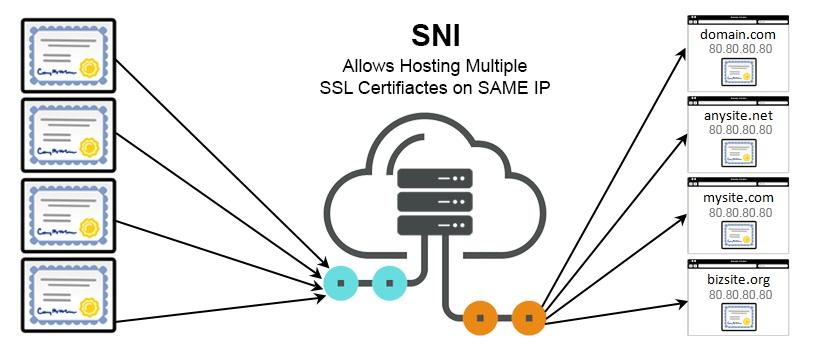
During the initial TLS handshake, before the encrypted tunnel is fully established, the client sends a server name indication or SNI header in plain text.
JoséeHOST
In plain text.
Ernie PrescottHOST
Yes.
Ernie PrescottHOST
This tells the server which website the client is trying to reach.
Ernie PrescottHOST
By inspecting the SNI headers at the secure web gateway, the architect can see exactly which cloud services the legacy employees are authenticating against.
JoséeHOST
Regardless of whether the subsequent data payload is encrypted.
Ernie PrescottHOST
Exactly.

David RedekopHOST
every one of your responses is almost like you saw my questions in advance, and I know you didn't.
David RedekopHOST
So my next question was, if you're a CISO or network architect today, how should you prepare for an internet where metadata and SNI are completely encrypted?
Andrew CamplingGUEST
Yes,
David RedekopHOST
funny you should

speaker_0HOST
How so?
speaker_1HOST
When your browser initiates a secure connection, it sends a server name indication, or SNI, value in the clear during the initial handshake.
speaker_1HOST
And this SNI value tells the server which specific website you're trying to reach.
speaker_0HOST
Ah, so it's like sending a letter in a locked transparent box.
speaker_1HOST
Good analogy.