serious mental illness
Mental disorderWikipedia
56
MENTIONS
8
EPISODES
8
PODCASTS
Search complete. 56 mentions across 8 episodes found for "serious mental illness".
Sep 15, 2026

Amy KimballHOST
...
Amy KimballHOST
if you are su- suffering from severe mental illness, you are not gonna act in a way that's rational to most people.
Abbie ChatfieldHOST
I, this is one of the biggest gripes that I have with our conversations around mental health, is that we have such productive conversations around anxiety and depression and all of these, um, quote, unquote, "palatable" mental health disorders that actually still are stigmatized-
Amy KimballHOST
Yeah

Ava CarterHOST
The main reason, though, that we wanted to talk to you guys today about oral health and mental health is that patients often...
Ava CarterHOST
when they see us as psychiatrists, they may not have a number of other contacts in their life, particularly patients who suffer severe mental illness.
Ava CarterHOST
Their psychiatrist, their therapist, their GP may be the only people that they see on a regular basis throughout most of their life.
Ava CarterHOST
And what that means is that we're an incredible point of contact for them.
Stephen KiselyGUEST
But what we have most information about is how people with diabetes mental illness have particularly poor oral health, and that stems from a number of factors.
Stephen KiselyGUEST
Partly that's due to issues such as lifestyle.
Stephen KiselyGUEST
So we know people, particularly people with severe mental illness, tend to smoke, tend to use substances, and that in their own right can aggravate oral health problems.
Stephen KiselyGUEST
They also often have limited financial means.

Oliver FreudenreichGUEST
Otherwise, GI complaints were the most common problem, not surprisingly, including constipation, which was numerically a bit higher in the semaglutide group, but not limited to the treatment group.
Oliver FreudenreichGUEST
So why is this trial important? It shows that GLP-1 agonists work in our patients with serious mental illness, something that was not a given.
Oliver FreudenreichGUEST
There was the concern that the antipsychotic would physiologically counteract the efficacy of added GLP-1 agonists.
Oliver FreudenreichGUEST
This turned out to be wrong.
Oliver FreudenreichGUEST
For a definite answer, if we can improve mortality in our patients by using these drugs, we will need long-term trials with hard outcomes, including myocardial infarction, stroke, or, and sorry to say, death.
Oliver FreudenreichGUEST
Bottom line, in the SASS trial, the GLP-1 agonist semaglutide meaningfully reduced weight- and reversed beginning metabolic abnormalities in patients with schizophrenia who were treated with olanzapine or clozapine for less than five years.
Oliver FreudenreichGUEST
This is an exciting time for the medically inclined psychiatrist, and I'm one of them, who is trying to manage patients with serious mental illness like schizophrenia holistically, paying attention to symptoms and medical morbidity and mortality.
Oliver FreudenreichGUEST
Up until now, we really only had metformin or topiramate to manage antipsychotic-induced weight gain, and neither of them worked that well.

John TorousHOST
I'm your host and web editor, Dr. John Torres.
John TorousHOST
Today, we're thrilled to be discussing a new paper just out in JAMA Psychiatry, GLP-1 Receptor Agonists, Mortality and Cardiovascular Outcomes in Serious Mental Illness.
John TorousHOST
We're about to speak with Professor Roger McIntyre, MD, the Department of Psychiatry and Department of Pharmacology and Toxicology at University of Toronto, as well as the Brain and Cognition Discovery Foundation in Toronto, Ontario, Canada.
John TorousHOST
People with serious mental illness die on average 10 to 25 years earlier than the general population.
John TorousHOST
Cardiovascular disease is the single largest driver of that gap, but for decades it has stubbornly persisted.
John TorousHOST
What if a new class of medications developed for diabetes and obesity, of course, the GLP-1 agonists are always in the news and even covered on prior podcasts here, could actually help? To find out, we're about to speak with the corresponding author of a new study just published in JAMA Psychiatry that examines outcomes of more than 1.5 million people.
John TorousHOST
So thank you for joining us, Dr. McIntyre.
John TorousHOST
And to jump in, let's set the stage.

John TorousHOST
I'm your host and web editor, Dr. John Torres.
John TorousHOST
Today, we're thrilled to be discussing a new paper just out in JAMA Psychiatry, GLP-1 Receptor Agonists, Mortality and Cardiovascular Outcomes in Serious Mental Illness.
John TorousHOST
We're about to speak with Professor Roger McIntyre, MD, the Department of Psychiatry and Department of Pharmacology and Toxicology at University of Toronto, as well as the Brain and Cognition Discovery Foundation in Toronto, Ontario, Canada.
John TorousHOST
People with serious mental illness die on average 10 to 25 years earlier than the general population.
John TorousHOST
Cardiovascular disease is the single largest driver of that gap, but for decades it has stubbornly persisted.
John TorousHOST
What if a new class of medications developed for diabetes and obesity, of course, the GLP-1 agonists are always in the news and even covered on prior podcasts here, could actually help? To find out, we're about to speak with the corresponding author of a new study just published in JAMA Psychiatry that examines outcomes of more than 1.5 million people.
John TorousHOST
So thank you for joining us, Dr. McIntyre.
John TorousHOST
And to jump in, let's set the stage.

Gregory SaathoffSOUNDBITE_SPEAKER
Correct.
speaker_5SOUNDBITE_SPEAKER
Now, you mentioned earlier, um, serious mental illness.
speaker_5SOUNDBITE_SPEAKER
What is considered to be a serious mental illness?
Gregory SaathoffSOUNDBITE_SPEAKER
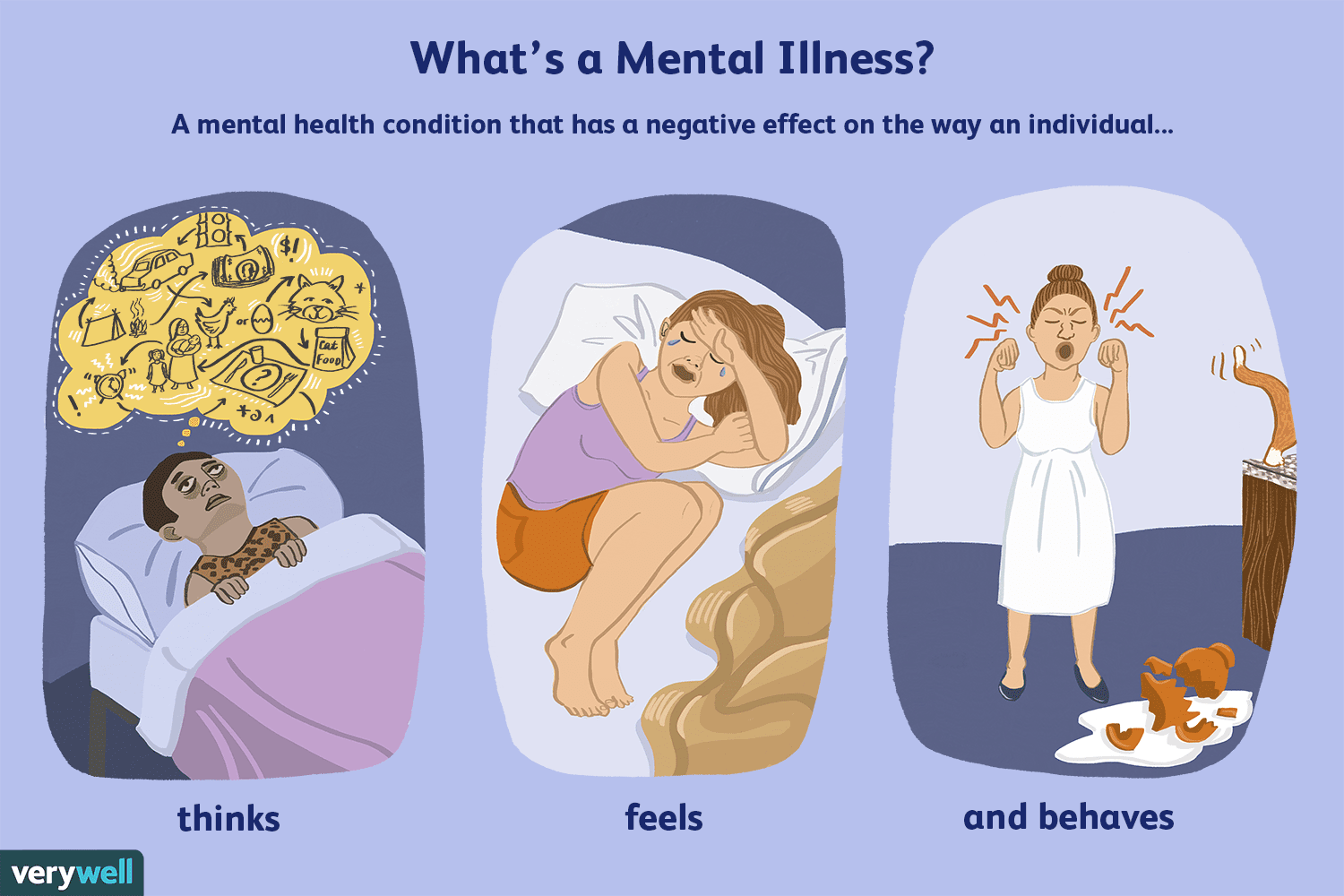
Well, serious mental illnesses affect a small, um, portion of the, the population, a smaller portion, uh, maybe four percent.
Gregory SaathoffSOUNDBITE_SPEAKER
So people who have schizophrenia, um, have a serious mental illness.
Gregory SaathoffSOUNDBITE_SPEAKER
Uh, people who have bipolar I, which is, um, manic depressive illness, um, that is a serious mental illness.
Gregory SaathoffSOUNDBITE_SPEAKER
Schizoaffective disorder is also a serious mental illness.
Gregory SaathoffSOUNDBITE_SPEAKER
So while many people can have symptoms of mental illness and can benefit from treatment, either psychotherapy or medication or some kind of combination, there are some that are just really, really profound.

SpragueSOUNDBITE_SPEAKER
And you...
SpragueSOUNDBITE_SPEAKER
So serious mental illness, is that sometimes shortened to SMI?
Gregory SaathoffSOUNDBITE_SPEAKER
Yes.
SpragueSOUNDBITE_SPEAKER
Now, is there something called any mental illness, AMI?

Mindy GreilingHOST
She's about halfway through them.
Mindy GreilingHOST
She has a daughter with schizophrenia, and she sent me an email and said y- "Your podcast, for me, is an SMI master's degree." And I just thought that was so perfect, I wanted to share it.
Mindy GreilingHOST
I think that's actually a, and Nicole is nodding her head, if any of you can't-
Randye KayeHOST
[laughs]
Mindy GreilingHOST
... are you listening instead of looking, we're an SMI master's degree, so I love that.
Randye KayeHOST
I love that too, and I just wanna say we take no credit.
Randye KayeHOST
We don't have master's degrees or MDs, so d- you know, uh, I, I think we may be an emotional master's course and just give our-
16 MINS LATER
Nicole Drapeau GillenGUEST
There are apps that can track literally the tenor, the speed, the sound of someone's voice.