Serial Peripheral Interface
16
MENTIONS
8
EPISODES
5
PODCASTS
Search complete. 16 mentions across 8 episodes found for "Serial Peripheral Interface".
Sep 11, 2026

BenjaminHOST
to be, I mean, they need to be implemented in QEMU itself.
BenjaminHOST
So, um, uh, if you want to, um, yeah, I'm trying to think of like SPI, for example, I don't think we have, um, uh, SPI support in any of the, um, the, the QEMU, um, target for express, if you would, I think it also simulates, um, things like the, uh, the RTC and the low power modes on, on the, on the CPU.
BenjaminHOST
So you can actually run a fair bit of code of the code samples that, um, Zephyr supports and the Espressif-specific samples as well on those QEMU boards.
BenjaminHOST
So yeah, it's nice to see.
6 MINS LATER
FabioHOST
It's going to eat quite a bit of resources.
FabioHOST
The problem for me is that pretty much all of the input driver, which are the ones I maintain, generate an interrupt, and then the interrupt is handled on the work queue.
FabioHOST
And the work queue is going to be either I2C or SPI for 90% of them.
FabioHOST
And it could be a problem if your work queue is busy or if your application needs the work queue to execute some other latency-sensitive stuff.

Eric SivertsonGUEST
And so we can like, I'll give you some detailed specifics.
Eric SivertsonGUEST
A lot of buses for controlling these things are on the I2C bus or I3C bus or on a SPI bus.
Eric SivertsonGUEST
we can take with the FPGA and we can look at multiple channels, I2C, I3C, SPI, all at the same time.
Eric SivertsonGUEST
And because the efficiency of being at a hardware level, we can look on a command by command basis on any of those channels.
Eric SivertsonGUEST
So let's say we have a sensor that should only be reading information from its non-volatile memory store to tell it what to do.
BenjaminHOST
This was a big change in terms of touching many areas and many files, but some people might think it's not that big of a change.
BenjaminHOST
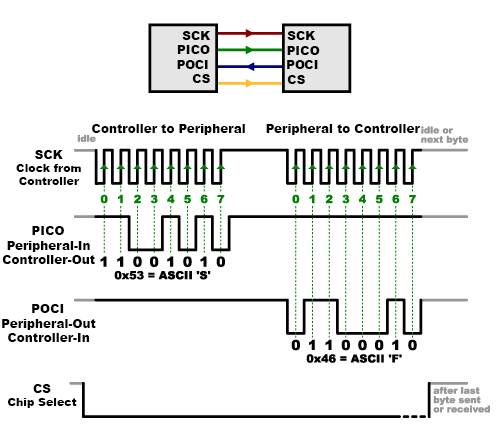
But worth noting that finally we have our SPI controller API using more inclusive terminology.
BenjaminHOST
We've been switching I2C over many years ago already, but SPI was lagging behind.
BenjaminHOST
maybe like day-to-day job and day-to-day life.
BenjaminHOST
Many people will probably still refer to the controllers and the peripherals as respectively master and slave and MOSI and MISO.
BenjaminHOST
There's a few lined up as well for VitaIO GPIO.
BenjaminHOST
SPI, I2C, all those things are basically standardized by OASIS, if I'm not mistaken.
BenjaminHOST
So it's actually pretty straightforward to add new drivers on top of the existing ring queue, whatever is the backend for VHIO.
BenjaminHOST
One thing that this will enable, which I'm actually quite excited about, I mean, there's many use cases for VHIO, but one is in QEMU, right? And so that could literally enable people to run more in their QEMU environment, just like over the last decade.
15 MINS LATER
FabioHOST
So instead of having all of the fancy modulation, you just get the amplitude of the signal in the carrier and the 90 degree phase shift.
FabioHOST
And then the idea is that you can represent any type of modulation by working on those two.
FabioHOST
And I don't, normally you, on a discrete SPI radio, you can't access the data.
FabioHOST
It may be used internally to implement the various demodulation, but it seems like this gives you access to the actual raw data,

Shantanu ShastriGUEST
And this is where my hardware security side gets excited.
Shantanu ShastriGUEST
I'll open the device and I'll start looking for things like JTAG, UART, SPI.
Shantanu ShastriGUEST
What is
Prabh NairHOST
this? What is all this?

Scott ShawcroftGUEST
But they got together and they said, like, "This is kind of, like, a lot of work to do it all together.
Scott ShawcroftGUEST
There's so many things like Wi-Fi and USB and networking, like internet stuff, that like, it would be great if we just had one source code that we could use instead of having to redo it ourselves." And so Zephyr is this real-time operating system, so it's managing what is running on the CPU within the microcontroller, but it's also doing a lot of other stuff like abstracting away I squared C and SPI and providing network stack and Bluetooth stack, all that sort of stuff, in a general way that, like, any vendor can now contribute to.
Scott ShawcroftGUEST
And so our interest in that is primarily for the fact that, like, a lot of vendors have brought in support or, or are, like, supporting their chips in Zephyr.
Scott ShawcroftGUEST
So by us building Circuit Python on top of Zephyr, we kind of get a lot of chips for free, where we don't have that much work to do to bring up I squared C or SPI or Flash or all these sorts of things.
Scott ShawcroftGUEST
We don't have to manage compilers, we don't have to manage compiler flags.
Scott ShawcroftGUEST
It's just, like, quite easy that once something is supported in Zephyr, we can get Circuit Python going in Zephyr, and it's been great.
FabioHOST
It's a shield for a new EEPROM style.
FabioHOST
It's one of those fancy, weird, hybrid SPI EEPROM things.
FabioHOST
So it's an M95, a P32.
FabioHOST
It's a shield just for a SOIC 8 chip, big shield, small chip.
FabioHOST
It used to be like, oh, you have to deal with page arrays and limited rewrite cycles.
FabioHOST
This is apparently a really, really good Flash if you want to abuse it, really.
FabioHOST
So there's a shield to test it, but it's using the JEDEC SPI driver.
FabioHOST
So just a heads up, this exists if you need it.