Semantics
Field of studyWikipedia
16
MENTIONS
12
EPISODES
10
PODCASTS
Search complete. 16 mentions across 12 episodes found for "Semantics".
Sep 5, 2026

BrettHOST
All right, I'll never remember anything again.
BrettHOST
Anti-semanticism is...
BrettHOST
You should remember.
BrettHOST
I

Herman PoppleberryHOST
risk.
Herman PoppleberryHOST
The judge's strength Semantic coherence becomes a liability when the inputs are so noisy that any coherent output is necessarily a fabrication.
Herman PoppleberryHOST
It's the hallucination problem all over again, just one level up.
CornHOST
So you need a confidence threshold at the input level, too.

Brian HendersonHOST
Why would he say that and then spend the next 10 chapters not mentioning the birth? The answer to this question comes from a word you have heard me say 101 times since you've been here and I'ma keep saying it until we memorize it and one day I'ma say it and then I'ma pass the mic around.
Brian HendersonHOST
I'ma say who wants to answer what this word means? The word is semantic range.
Brian HendersonHOST
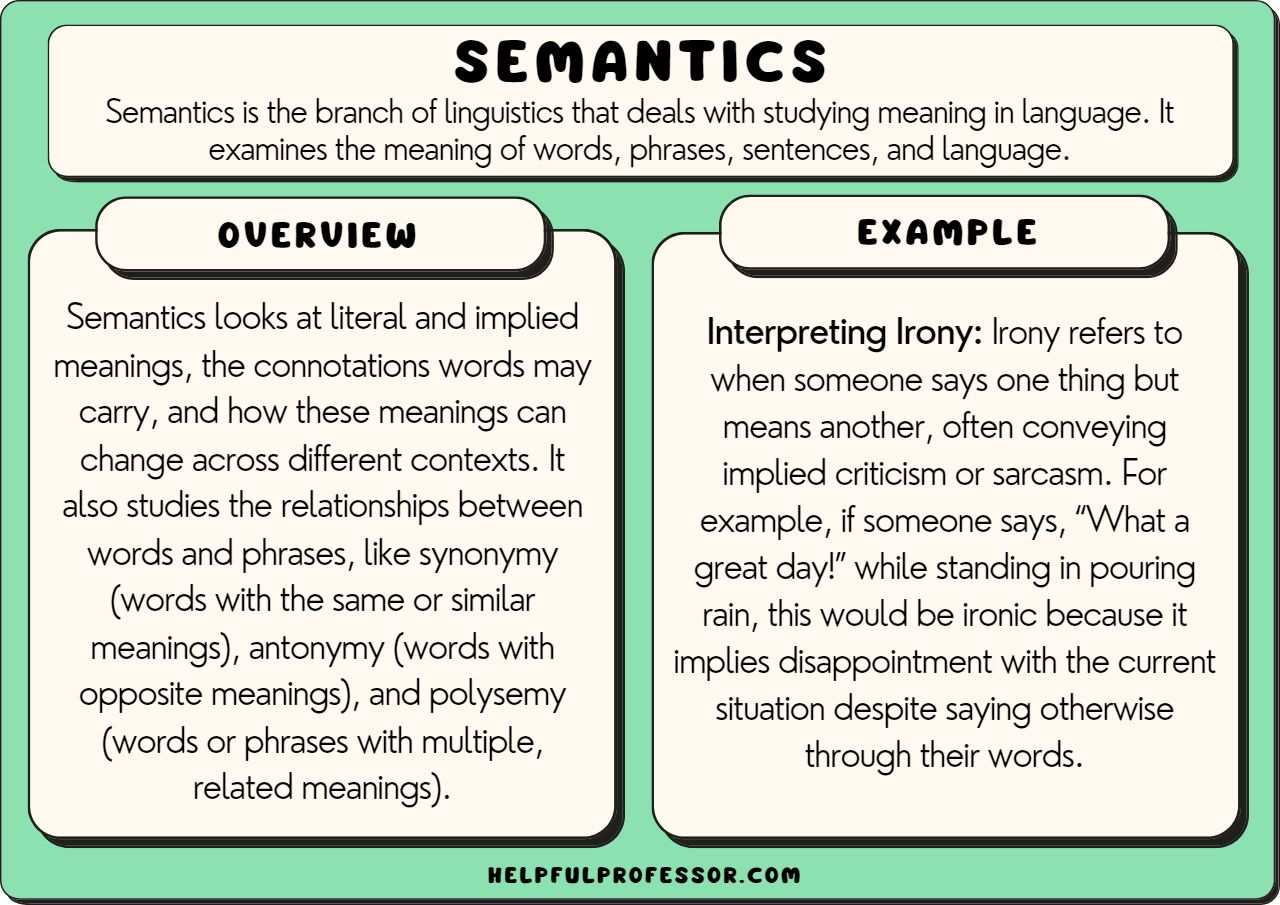
What is semantic range? Semantic range is the range of potential meanings a particular word may have depending on the context in which that word is used.
Brian HendersonHOST
So the example I always give that I got from a very helpful book is if I say I had a ball, that could mean a couple different things.
Brian HendersonHOST
I had a good time.
Brian HendersonHOST
Or I had a round, spherical object in my hand.
Brian HendersonHOST
The only way to know what meaning I intended by the word ball is to look at the surrounding context before and after and to draw a conclusion, amen? The same thing is even more true when we deal with biblical languages.
Brian HendersonHOST
Hebrew, Greek, and Aramaic often have extensive Semantic range.

Nathan S. WineHOST
We have entered- What we're calling the semantic era, a semantic algorithm.
Nathan S. WineHOST
Like, what's that? Okay, it just means meaning.
Nathan S. WineHOST
Semantic is another word for meaning.
Nathan S. WineHOST
The YouTube is no...
Nathan S. WineHOST
It's not e- the YouTube, uh, the algorithm is no longer matching videos just by interest anymore.

speaker_5SOUNDBITE_SPEAKER
uselessness, initiate the intent.
speaker_5SOUNDBITE_SPEAKER
to sharpen up its eyes binary erosion the data starts to melt the highest frequent logic is the hardest to be felt Semantic
speaker_3SOUNDBITE_SPEAKER
denial.
speaker_3SOUNDBITE_SPEAKER
Your heart-five logic ratio, feeling so heavenly.

Vaibhav ShardaGUEST
So it just makes it easier for Google or AI or LLMs to pick it up.
James DooleyHOST
yeah and then with regards to right writing comparison articles within autoblogging.ai i want to expand a little bit on you've done corey's course and and scott's done it and one or two other people have done it and we've had a lot of help from all the community within corey's semantic seo community and holistic community and what i absolutely love that within autoblogging.ai of what's being set up what you were talking about then i think use the word features that we've got different facets that's coming out right so and they're creating different pages so what you're talking about for programmatic seo right let's say that's that's one of the facets there that's being used within there where you're talking about how much does it cost so the cost and the price element is an attribute on that article and then within there then you've got then the speed and what it's being done and stuff and you're able within html tables to compare all these different attributes which is within nlp and within semantic seo exactly the information that google is trying to pass and the information the chunking parts but also the large language models and the artificial intelligence are trying to pass them those different attributes and then you're connecting the predicates so you're doing connecting the nodes and the edges together of why one is better than the other in comparison to price in comparison to speed and it's based on a very specific feature that somebody might want like programmatic seo the depth that that's doing within our blogging.ai for the comparison articles is what's differentiating from being ai slop to being wow this is no information gain this is no verifiable facts this is no the best article there is out there that there is that's comparing a versus b versus c versus your brand and having that information when someone starts talking within the white act community about you need you don't want to do ai slop you want information gain this is exactly what auto blogging is being set up to do it's just people don't like the idea of it being auto automatic But it's the amount of input and the amount of prompts that's being put in there.
James DooleyHOST
Like, there's thousands and thousands and thousands of lines of prompts to make certain that the micro semantics that every single pixel, that every single letter, that every single sentence and paragraph and heading makes a difference, that feeds, there's no fluff, there's no AI slop.
James DooleyHOST
And that's why I love creating the articles, the comparison articles in autoblogging.ai.

Jason NagelsGUEST
Yeah, I think the role of AI in improving interoperability is a little TBD, but there are real things that are happening and tangible efforts that are being made.
Jason NagelsGUEST
I think back with our levels of interoperability, foundational, structural, and semantic.
Jason NagelsGUEST
Semantic is a tricky one.
Jason NagelsGUEST
And typically, what I had mentioned before, when you're retrieving something from a regional repository and data massaging has to happen, maybe it's going to change the name or the patient's name or the procedure name.
Jason NagelsGUEST
Mm-hmm, mm-hmm.

Tom KellyHOST
That's true
James SeltzerHOST
... never been a more annoying person to play a trivia game with on a weekly basis than Mr. Pedantic, Semantic, I'm-gonna-be-annoying-about-every-little-word-that-you-use Hammer.
James SeltzerHOST
Like, I mean, you've heard.
Tom KellyHOST
I could see that.
Tom KellyHOST
That's true
James SeltzerHOST
... never been a more annoying person to play a trivia game with on a weekly basis than Mr. Pedantic, Semantic, I'm-gonna-be-annoying-about-every-little-word-that-you-use Hammer.
James SeltzerHOST
Like, I mean, you've heard.
Tom KellyHOST
I could see that.
Nathan S. WineHOST
But the big thing to understand is the new algorithm, so to speak, that's really been unfolding over the last year and a half to two years, we are in what's called the semantic era.
Nathan S. WineHOST
Of the YouTube algorithm.
Nathan S. WineHOST
Semantic just means meaning.
Nathan S. WineHOST
So we're in the meaning era of the algorithm.
Nathan S. WineHOST
Hang with me.
10 MINS LATER
Nathan S. WineHOST
And I, I hate to use this word, like, quality comments, but just, like...
Nathan S. WineHOST
It's quality comments because people are commenting what's resonating.
Nathan S. WineHOST
Semantic era, meaning era, why it matters.
2 more episodes mention Semantics.
Create an account to see the whole feed, search across every transcript, and follow the entities you care about.