Scientific method
58
MENTIONS
16
EPISODES
16
PODCASTS
Search complete. 58 mentions across 16 episodes found for "Scientific method".
Nov 23, 2026

Jonathan BirchHOST
I'm Professor Jonathan Birch.
Jonathan BirchHOST
It's a real pleasure to welcome you to this event on investigating moral status, part of the LSE's public lecture program hosted by my center, the Jeremy Collar Center for Animal Sentience, and also part of our Philosophy Live series hosted by the LSE's Department for Philosophy, Logic, and Scientific Method.
Jonathan BirchHOST
What does it take for a being, another animal, an AI system, an organoid, to matter morally for its own sake? What is it for them to have moral status? If I throw a rock at my neighbor's window and smash it, I've wronged my neighbor by destroying something that meant something to them.
Jonathan BirchHOST
But I haven't wronged the window.

MattHOST
Does science have a problem with proving things full stop, would you say, Stephen? Physically, particularly.
Steven YoungGUEST
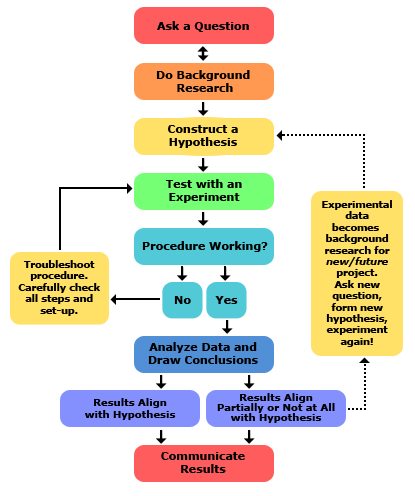
Yeah, I think, like, you know, because there's the scientific method, right, which is observe, hypothesize, and test, right? So you observe nature, you hypothesize what's going on, which is like using your imagination, and then you test your hypothesis by doing experiments.
Steven YoungGUEST
And, you know, some aspects of science do still use the scientific method.
Steven YoungGUEST
But a lot of modern science has actually they've just cast out the observation part and cast out the testing part.
Steven YoungGUEST
And they just let you hypothesize and you just do theories and analysis and run simulations and things.
Steven YoungGUEST
And it gets treated as if it's so high and mighty and so complex and wonderful that it just can't be wrong.
Steven YoungGUEST
But when you look at it, it's like it doesn't actually relate to reality because it doesn't have the...
Steven YoungGUEST
It's not something you can observe, and it's not something you can test, right? So it doesn't fit the scientific method.

Timothy BellamahGUEST
Now, when Thomas was active in his intellectual in his teaching and in his writings, he was living at the moment, a moment very, very close to the very inception of what we could call science in the modern sense of the term.
Timothy BellamahGUEST
And by this I mean he was... a very near contemporary to one of the famous initiators of what we take for granted as the scientific method.
Timothy BellamahGUEST
And this would be Robert Grossetest, who was active in what's now the UK until his death in 1253.
Timothy BellamahGUEST
And he was an exact contemporary of a German Dominican thinker by the name of Albertus Magnus or Albert the Great.

Annalise ArmstrongHOST
I've heard before that this is a type of logic.
Annalise ArmstrongHOST
And I know that another thing that has come down to us through logic is the scientific method.
Annalise ArmstrongHOST
Tell me about the scientific method and how this is supposed to help us.
Annalise ArmstrongHOST
OK.
Mark JamesGUEST
The scientific method is, at heart, it's a basic four-step process that we go through.
Mark JamesGUEST
Firstly, we make an observation.
Mark JamesGUEST
We see something happening in the world.

Gregory McNiffHOST
You touched on so many themes in your book.
Gregory McNiffHOST
I want to talk to you about, like, you know, diva electrons and, you know, the scientific method.
Gregory McNiffHOST
It seems like your family, to some extent, is a source of this desire to explain and make accessible for all audiences.
Gregory McNiffHOST
I mean, you clearly have some very...
16 MINS LATER
Catherine HeymansGUEST
I'm just saying this is an interesting parallel that we can draw.
Gregory McNiffHOST
No, definitely.
Gregory McNiffHOST
I want to move on to the scientific method.
Gregory McNiffHOST
You say if you could pass on one piece of knowledge, it would be the scientific method.

Gregory McNiffHOST
You touched on so many themes in your book.
Gregory McNiffHOST
I want to talk to you about like, you know, diva electrons and, you know, the scientific method even.
Gregory McNiffHOST
It seems like your family, to some extent, is a source of this desire to explain and make accessible for all audiences.
Gregory McNiffHOST
I mean, you clearly have some very, your children seem, it's not precocious.
17 MINS LATER
Catherine HeymansGUEST
I'm just saying this is an interesting parallel that we can draw.
Gregory McNiffHOST
Definitely.
Gregory McNiffHOST
I want to move on to the scientific method.
Gregory McNiffHOST
You say if you could pass on one piece of knowledge, it would be the scientific method.

Gregory McNiffHOST
You touched on so many themes in your book.
Gregory McNiffHOST
I want to talk to you about like, you know, diva electrons and, you know, the scientific method even.
Gregory McNiffHOST
It seems like your family, to some extent, is a source of this desire to explain and make accessible for all audiences.
Gregory McNiffHOST
I mean, you clearly have some very, your children seem, it's not precocious.
15 MINS LATER
Catherine HeymansGUEST
I'm just saying this is an interesting parallel that we can draw.
Gregory McNiffHOST
Definitely.
Gregory McNiffHOST
I want to move on to the scientific method.
Gregory McNiffHOST
You say if you could pass on one piece of knowledge, it would be the scientific method.

Gregory McNiffHOST
You touched on so many themes in your book.
Gregory McNiffHOST
I want to talk to you about like, you know, diva electrons and, you know, the scientific method even.
Gregory McNiffHOST
It seems like your family, to some extent, is a source of this desire to explain and make accessible for all audiences.
Gregory McNiffHOST
I mean, you clearly have some very, your children seem, it's not precocious, right? whether they like it or not seem to have a very strong understanding of physics I'll leave that to you but the big one or the first one I want to touch is the book seems written from a physics perspective as the point of departure but throughout the book you acknowledge that math is sort of the universal language and you know everything basically in some cases even i mean quantum the math is uh driving the answer even if we don't understand it so my question is what is the relationship as you view it between physics and math in answering this type of question I
14 MINS LATER
Catherine HeymansGUEST
I'm just saying this is an interesting parallel that we can draw.
Gregory McNiffHOST
Definitely.
Gregory McNiffHOST
I want to move on to the scientific method.
Gregory McNiffHOST
You say if you could pass on one piece of knowledge, it would be the scientific method.

Shane HurdGUEST
But I can't emphasize it enough.
Shane HurdGUEST
The scientific method is the process in which science is performed.
Shane HurdGUEST
It can build on previous knowledge and develop a more sophisticated understanding of its topics of study over time.
Shane HurdGUEST
So I like to illustrate.
Shane HurdGUEST
Then we mastered electricity.
Shane HurdGUEST
electricity, and then finally we were able to split the atom, right? All of those things were steps in the process to where we are now.
Shane HurdGUEST
And that's a result of the scientific method.
Shane HurdGUEST
And that method involves the process of making an observation, right? And then you make a conclusion about that, which we call a hypothesis.

Guy MacphersonHOST
method.
Judith A. SwackGUEST
Yes, scientific method.
Judith A. SwackGUEST
And of course, that's scientific curiosity.
Judith A. SwackGUEST
So that's why I'm actually the originator of healing from the body level up, because I...
6 more episodes mention Scientific method.
Create an account to see the whole feed, search across every transcript, and follow the entities you care about.