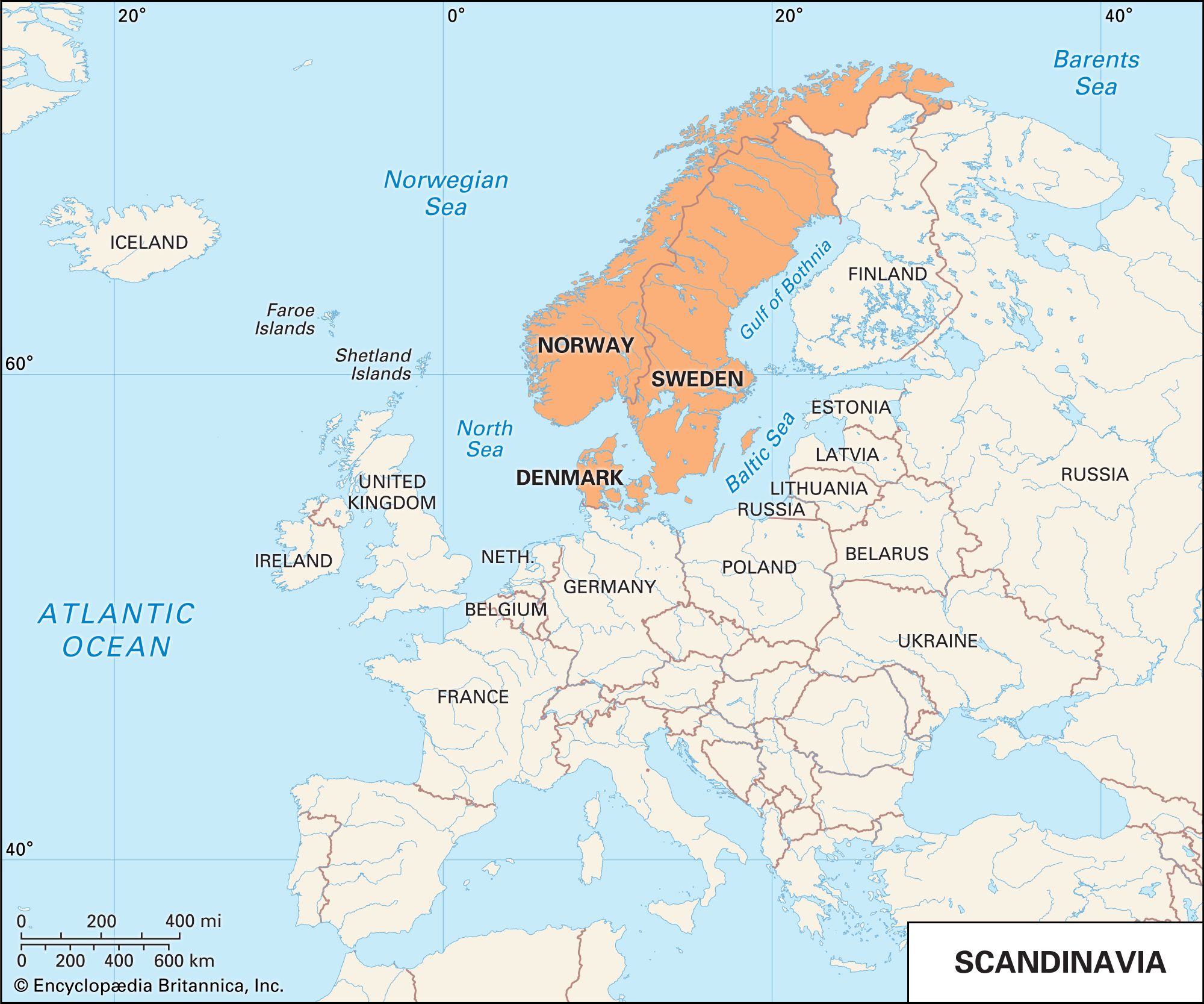
Scandinavia

Scandinavia

Region in EuropeWikipedia

Search complete. 4816 mentions across 2488 episodes found for "Scandinavia".

Sep 14, 2026

Tim O'CallaghanHOST
1:30
So if that sounds like something you'd enjoy, please subscribe and turn on your push notifications for wherever you get your BBC podcasts, so you never miss an episode.
Tim O'CallaghanHOST
1:39
We're going back to World War II and the occupation of the Scandinavian country, Norway, by Nazi Germany, and this is the story of how teachers in Norway aided their country's resistance, not through sabotage or fighting, but by refusing to teach Nazi propaganda to their pupils.
Roald HansenSOUNDBITE_SPEAKER
1:58
[gentle music] I remember the early morning of that day in April 1940 when the Germans attacked us.
Tim O'CallaghanHOST
2:03
That's the voice of Norwegian school teacher Mr. Roald Hansen speaking to the BBC in 1944.
Caggie DunlopHOST
38:42
Mm-hmm.
Marisa PeerGUEST
38:42
You know, in Scandinavia, you self-select your lessons, so kids go to the lessons where they're most gifted.
Marisa PeerGUEST
38:48
Coders go to coding, linguists go to language, and they've got a much happier nation-
Caggie DunlopHOST
38:53
Mm
VAUDIENCE
67:56
Too upper
Mo TwisterHOST
67:56
... out there in Scandinavia where you're, like, upper Norway or upper Sweden-
VAUDIENCE
67:59
Like Norway, no
Mo TwisterHOST
67:59
... upper Finland.
Rebecca GereGUEST
22:34
No, and there's such a body of research coming through.
Rebecca GereGUEST
22:36
I was listening to a podcast about research that's just been done in Scandinavia around changing sand pits to mud pits.
Rebecca GereGUEST
22:43
Right, okay.
Rebecca GereGUEST
22:43
And they've just, yeah, replaced all the sand pits with mud pits and they've actually tracked the children's blood and they've done like, sampled the impact on the gut and how to improve their gut health and their immunity.
Adam Scott GlasspoolHOST
20:12
And it premiered at the Cannes Film Festival.
Adam Scott GlasspoolHOST
20:16
in May 2000, and then was released in September 2000 in Scandinavia and the UK.
Adam Scott GlasspoolHOST
20:21
They waited until October 2000 for the US release.
Adam Scott GlasspoolHOST
20:24
It stars Björk, as far as I'm concerned.
WilkinHOST
21:10
She looked past me to something none of us could see.
WilkinHOST
21:13
Second team this week, isn't it? Her accent was Scandinavian, voice rasped from dehydration.
WilkinHOST
21:20
I knelt, and she flinched back.
WilkinHOST
21:22
Name.
Mike BrownHOST
56:39
I might be, I might be off.
Mike BrownHOST
56:42
It's somewhere in Scandinavia, [laughs] I'm sure of that.
Mike BrownHOST
56:46
However, Matthew, where is Kyle situated and what does Kyle do for a living?
Matthew StocktonHOST
56:53
So Kyle is, um, he actually is in Scandinavia.
Mike BrownHOST
56:59
Okay.
Mike BrownHOST
57:00
Whereabouts?
Matthew StocktonHOST
57:00
Um, all over in Scandinavia.
Mike BrownHOST
57:02
Oh, all over.
Darren MarlarHOST
96:50
Other visitors have seen the figure but only late at night and describe it as having a truly menacing aura.
Darren MarlarHOST
96:56
Could this presence be a manifestation of the Black Death itself? Scandinavian ghost stories tell of an eerie figure, Pesta, the personification of the Black Death itself.
Darren MarlarHOST
97:09
This hideous, shriveled figure appears at houses touched by the disease.
Darren MarlarHOST
97:13
If she carries a rake, some family members may survive.
Hank GreenHOST
10:28
Between these three extremes, we've got biomes that require more or less water combined with highish or lowish temperatures.
Hank GreenHOST
10:34
These are your moderate or temperate biomes, and they include temperate grasslands like you find in the North American prairie, or temperate deciduous forests found over much of Europe and North America, and taigas or coniferous forests found across Canada, much of northern Russia and Scandinavia.
Hank GreenHOST
10:49
So of all these biomes in the middle experience pretty moderate temperatures most of the time, the availability of water
Ryan ReynoldsADVERTISER
10:54
must be what makes them different from each
MarkHOST
13:26
It sort of went out the window probably in the late 80s after intense pressure from Lynx and Greenpeace and the Animal Liberation Front and various other groups.
MarkHOST
13:35
So it's easy to think that fur just isn't a thing anywhere anymore, but it's actually very, very big in places like the Scandinavian countries in Russia and Eastern Europe, where it's much colder and they have a longer tradition of wearing fur coats.
MarkHOST
13:48
So if you walk around the streets of, say, Kiev or Moscow or somewhere, loads of people are wearing fur.
MarkHOST
13:54
So I think it's very interesting that there's a discussion going on at the moment about it, and there's a good chance that we would see it being banned in the European Union at some point in the near future, which would be great.

2,478 more episodes mention Scandinavia.

Create an account to see the whole feed, search across every transcript, and follow the entities you care about.

We value your privacy

We use cookies to understand how you use our platform and to improve your experience. Click “Accept All” to consent, or “Decline non-essential” to opt out of non-essential cookies. Read our Privacy Policy.