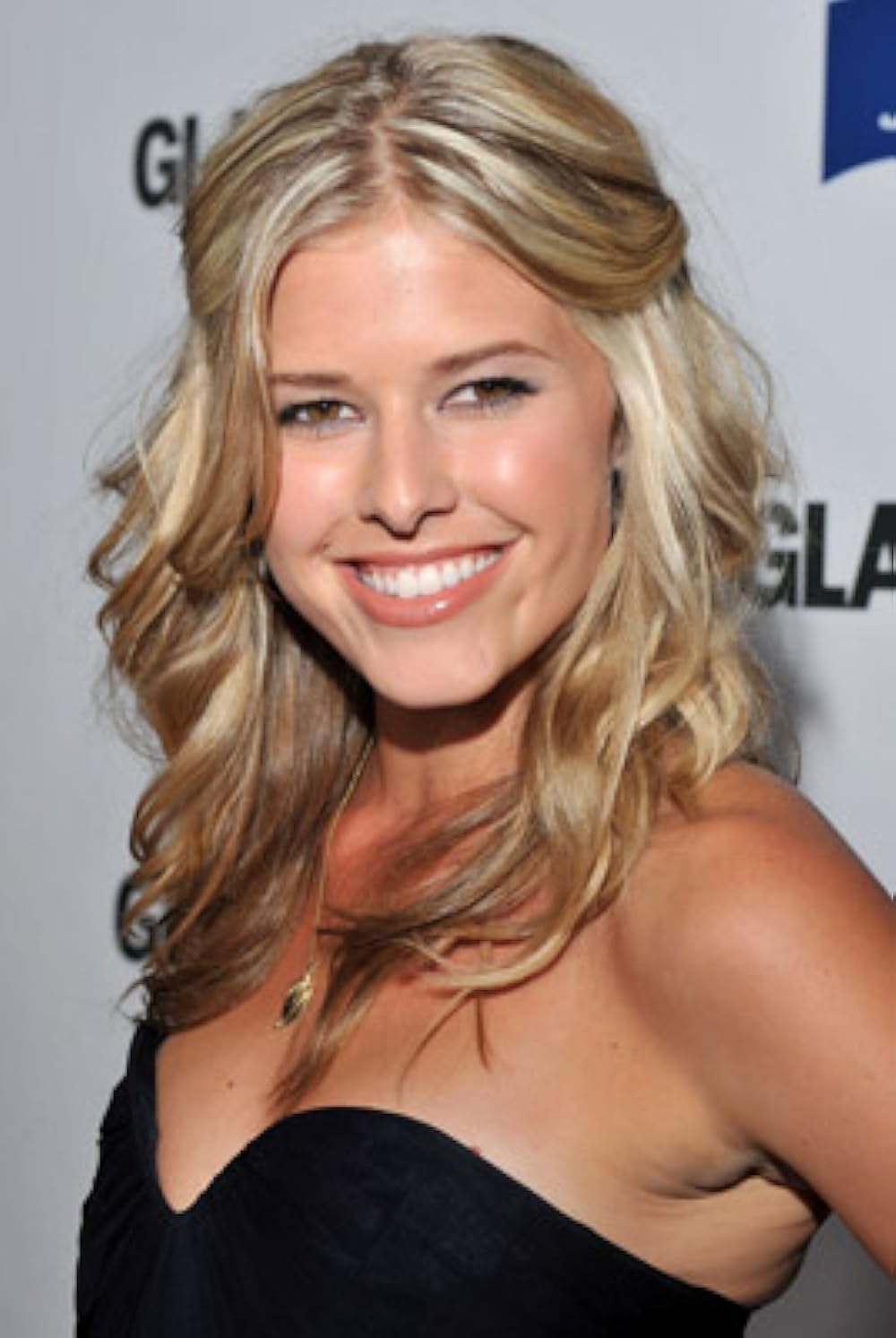
Sarah Wright
American actress and author
16
APPEARANCES
14
PODCASTS
Sep 4, 2026


Adi BolañosCORRESPONDENT
So what should campers know before they head out if they're worried about a fire nearby or scared that one might start while they're out?

Sarah WrightGUEST
Yeah, so I think the first thing to do is to just check in with where you're going.
Sarah WrightGUEST
And if you're really worried about it, you can call up the ranger station, and local rangers will usually have all of the information about any fires that are burning nearby.
Adi BolañosCORRESPONDENT
What do I do in that case? Well, this has actually happened to me twice.


Sarah WrightGUEST
I think it's also important to say that sometimes there is bad behaviour as well.
27 MINS LATER


Sarah WrightGUEST
This is Sarah, and this is why I didn't bring this up, because I couldn't quite get the particulars also, but I was in BK's talk as well.
Sarah WrightGUEST
Working at the beginning to grapple with the norms of the class, and this is not about grading, but more about how we're all going to approach the course and the material and where we're allowed to critique was a big thing there.
Sarah WrightGUEST
Critiquing the mathematics, critiquing the methods of learning, critiquing the community that they're working in.
Sarah WrightGUEST
So it wasn't about building buy-in for any particular grading system, but a buy-in to focus on learning, I would say, was evident there.
Sarah WrightGUEST
... yeah, pick up on the, when we were talking about how much, when we're grading homework percentage-wise, I think what a lot of our, all, a lot of our alternative grading systems let us do is look at the grade, whether it's, as building up versus subtracting.
Sarah WrightGUEST
And I think even, even if it's not actually changing the grades that come out and the DFW rate, just the language we're using that we have to use when we're grading this way is a safety thing.

21:56
And I'd love for you to talk a little bit more about the highlight policy and regulatory efforts that Utah Clean Energy has led, um, and those that really helped make this program possible.
Sarah WrightGUEST
Well, I think f-for this program, we were able to take the mayor's, um, vision and work with her team to, um, help craft legislation, because understanding the regulatory framework and how things could go wrong is really important to get the words right in the legislation that enabled this back in twenty sixteen.
Sarah WrightGUEST
Um, and then I think, you know, we recently have been working with our Public Service Commission to help them understand the urgency, and filed a, a case on this, the urgency of adding the renewables now.
Sarah WrightGUEST
Because developers that have taken the steps to commence construction, even though the Trump administration has taken away those tax credits, they have until twenty twenty-nine to build those projects.
Sarah WrightGUEST
And so we were able to, I think it was instrumental in helping the commission move more quickly on a process that's taken ten years.
Sarah WrightGUEST
So it's hard to say more quickly, but to move now to enable, um, Salt Lake City and the other cities, Ogden and many others, to, um, be able to move forward and get that five hundred megawatts of energy flowing.
10:40
And are these beach hazard w- warnings more common in the summer versus the winter?
Sarah WrightGUEST
Yeah, so what, um, NWS meteorologists told me is that in the summer they're much more common for these south-facing beaches.
Sarah WrightGUEST
So when the tropics are getting bad weather, like, you know, right now, that will hit southern California especially hard.
Sarah WrightGUEST
The Santa Cruz area is really a high-risk area because it has so many south-facing beaches.
Sarah WrightGUEST
And then if you look at, at the map at, at places like Half Moon Bay, you know, Surfers Beach is, is south-facing.
12:19
Can you explain just, like, how these two forces sort of work together and why they happen at the same time?

Sarah WrightGUEST
So when I met this patient, I had just started at like a community health type of a setting.
Sarah WrightGUEST
And I had invested in some technology after having, you know, followed your recommendations and tutelage for several years.
Sarah WrightGUEST
So I had gotten a microscope so that I could look at things and I had been doing the salivary testing for a while.
12 MINS LATER
Sarah WrightGUEST
parks for the time being, like just with all the crowds? No, I wouldn't say that.
Sarah WrightGUEST
Some tips that I would have is just go on off-peak hours, maybe bring things that help you be more flexible.
Sarah WrightGUEST
So if you have a camp spot or a hotel reservation, leave your car there and bring or rent a bike so that you can get around the valley without having to rely on your car and finding parking everywhere.

speaker_4ADVERTISER
Mortgage Automator, powering the future of private lending.
Sarah WrightGUEST
One of the things that I totally, I mean, you expect it, but you don't expect it.
32 MINS LATER


Sarah WrightGUEST
And look, if you've never been to Yosemite or if you've had these plans for months, you should go.
Sarah WrightGUEST
But, you know, the summer right now in particular, like the snow has almost melted.
32 MINS LATER

Leslie McClurgHOST
I want to know, how did that experiment go? What did you find? How much did it cost?

Anna SussmanCORRESPONDENT
Lily B and Lucia stayed together wing by wing for years and years, until the morning Sarah woke up and put the kettle on, looked out the window for the turkeys and the deer, and then looked up to the perch Lily B and Lucia sat on and noticed something wasn't right with Lucia.
Sarah WrightGUEST
And I, I went, "Oh, no." And the next morning she was on the bottom of the cage.
Anna SussmanCORRESPONDENT
You're looking at him in the eyes? Or-

10:55
What are guidelines people need to keep in mind for when, uh, nature calls?
Sarah WrightGUEST
Yes, so there's this handy tool called a trowel, and you should always have one.
Sarah WrightGUEST
It's basically like a mini shovel for your poop, and most regulations here in California are to bury your poop six to eight inches deep in a hole, and you wanna be at least 200 feet away from any water sources.
Sarah WrightGUEST
And it's important that, you know, you dig deep enough, you go in the hole, you cover it up, and try to do it, like, a- also away from where anyone might be camping or anything like that.
Sarah WrightGUEST
Here on the West Coast, the climate is so dry that that toilet paper is not going to be decomposing at a reasonable [laughs] rate.
13:05
[upbeat music] Okay, so if people are interested, uh, where might they get started with some of this this summer?


Natalie GochnourHOST
How does climate affect affordability? And you guys can take that in whatever order you want, but what's the climate message when it comes to affordability?
Sarah WrightGUEST
Well, I will say that most of the solutions from the energy sector, which is where I focus, are more affordable than our other fossil fuel energy resources.
Sarah WrightGUEST
And the volatility and cost that we're seeing right now, anything that we can decarbonize, what I call fuel-free resources, which are also risk-free as far as volatility, that helps with affordability.
Sarah WrightGUEST
And the other thing around affordability is when we solve for any big problem, for development, for the data center, for affordability, if we can think with climate solutions in mind the whole way through, we can find the least cost, least risk solutions, not just for the current problem, but for the long-term problems.
Sarah WrightGUEST
So I think that when people say we can't do this because it's not affordable, they're not looking at all the costs.
13 MINS LATER
Natalie GochnourHOST
So let's pretend like, uh, someone from the Utah 2034 comes to you, Sarah, in retirement and says, "Give me advice." What do you tell them?
Sarah WrightGUEST
You know, first I would say that we have to embody our climate and our environmental systems as one of the main pillars of, of working for the Olympics.
Sarah WrightGUEST
W- our climate scientists on staff said this winter, and for those of you that aren't here, we had the worst winter ever.

Phil KehoeHOST
I know you had mentioned, uh, retrofitting buildings, but what other sort of solutions, I mean, in addition to retrofitting, excite you for, uh, cutting these sorts of emissions and also maybe keeping housing affordable and comfortable?
Sarah WrightGUEST
Um, I will- retrofitting is one of the harder areas to get to, and it's really important, so I don't wanna, um, minimize that.
Sarah WrightGUEST
And the building that we're in right now is a retrofitted building in downtown Salt Lake City that is a zero-emission building.
Sarah WrightGUEST
Um, we, uh, received a grant from the Governor's Office of Economic Opportunity here to give grants and engineering assistant for home builders, production home builders, to build super efficient, um, all electric, um, zero energy-ready homes.
7 MINS LATER

Sarah WrightGUEST
... which is, [laughs] um, I get to write about parks and outdoors and recreation.
Sarah WrightGUEST
I get to write about the... my favorite hiking trails and kayaking and, like, truly everything related to enjoying the outside here in the Bay Area in particular, and I also follow, like, the news with national parks.
14 MINS LATER
Sarah WrightGUEST
But for the whole month of April, people for the first time were allowed to get married at the San Francisco Public Library, and they did, and it was beautiful.


Cecilia LeiHOST
Sarah Wright is the Outdoors Engagement reporter for KQED who's been covering the story.
Sarah WrightGUEST
On Tuesday at around eleven thirty AM, first responders in Tahoe received notification, a nine one one call, essentially, from skiers who had been in an avalanche up near Donner Summit.
Sarah WrightGUEST
They were out on a three-day trip to one of the backcountry huts back there and were returning on their final day, uh, when they got caught in the big slide.
Sarah WrightGUEST
The first thing you should do is try to build up as much speed as you possibly can and then angle away from the sliding snow.
Sarah WrightGUEST
If you get caught, the first attempt would be to try to grab onto something stable, like a tree.
Sarah WrightGUEST
If you can't do that, try to swim your way out of the snow, and you're gonna have to do this while you and the snow are moving because as soon as it stops and you stop, it becomes concrete.