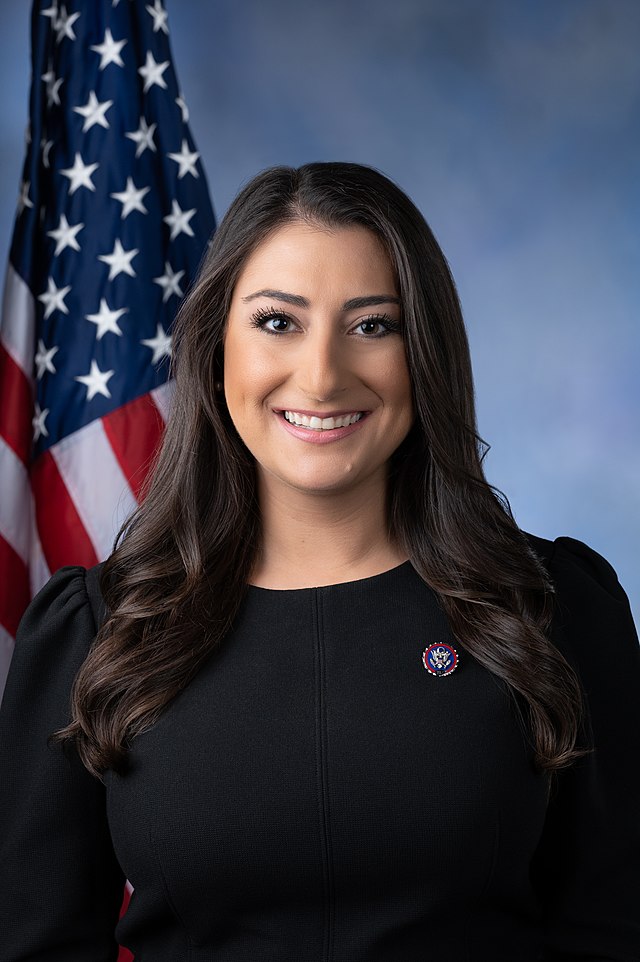
Sara Jacobs
Former United States Representative
16
APPEARANCES
15
PODCASTS
Sep 10, 2026


Landry SigneHOST
What do you see as the most promising U.S.-Africa opportunities and how can U.S. best take advantage for these opportunities?

Sara JacobsGUEST
Look, I think we're in a really interesting moment for U.S.-Africa relations because a lot of the actions of the Trump administration, I would say, have really hurt our engagement, right? The cuts to USAID, the cuts to foreign assistance have left many Africans feeling like the U.S.
Sara JacobsGUEST
At the same time, I think that it's an important moment to really double down on this from aid to trade model and really make sure that we are treating our African partners like partners, not like recipients of aid.
Sara JacobsGUEST
And I was really struck that a lot of what we heard from African countries after the aid cuts was how they didn't want to be dependent on aid forever, right? There was not quite the sort of backlash that we thought we were going to see.
Sara JacobsGUEST
And so I do think it's important that we really treat our African partners like partners.
Landry SigneHOST
Can you explain to our listeners why this is such an important priority for global security and for U.S. interests?


Kate GlavanHOST
I'm curious if you when you're at work in Congress, you know, do you feel that generational gap every single day? How is it working with older colleagues? Do they understand the concerns that you have as a younger member? Or what is that like?
Sara JacobsGUEST
We were in a meeting and I made a Mean Girls reference and no one knew what I was talking about.
Sara JacobsGUEST
I was like, will you stop trying to make Fetch happen? And they just looked at me like I was insane.
12 MINS LATER
Kate GlavanHOST
Have you found a lot of community through that? Like, is the right attacking you like crazy for talking about egg freezing? Like, what has that been like on social media?


Alex WittHOST
That said, are you seeing increased ICE activity near San Diego and the environs area there?
Sarah JacobsGUEST
Obviously, San Diego is a border community, so everything that happens on immigration and border at the national level impacts us very directly.
Sarah JacobsGUEST
And, you know, one of the things that's most frustrating is that Almost none of the people that they're picking up have criminal backgrounds.
Alex WittHOST
Is Congress going to investigate all these alleged issues? And where do you start? What do you hope to


Jacob WardHOST
What does-- what can, can, uh, AI in theory do right now that is not being, uh, regulated or even really touched by federal agencies in the one-- in the way one might expect?
Sara JacobsGUEST
And look, this is I think, uh, this bill is a very, like, practical first step, but it is a first step, and there's a lot more we need to do to address how AI is impacting our lives and going to impact our lives.
Sara JacobsGUEST
But what this bill would do is it would basically give each agency in the federal government the ability to ensure that our laws are being enforced even when AI is the one making those decisions.
Sara JacobsGUEST
Right now, they're tasked with ensuring that all of our laws around employment discrimination are being abided by, but they don't necessarily have the tools to do that when it's an AI resume screener, um, that may be doing something discriminatory that we don't even really know or an AI video interview tool that may be sy- like systematically down-ranking people with disabilities, even if it has nothing to do with their ability to do the job, which would be against the Americans with Disabilities Act, right? So this would give agencies like the EEOC the ability to ensure that in the areas they already enforce laws around safety and rights, that they have the tools they need to, to do it, even when it's AI making those decisions.
13 MINS LATER
Jacob WardHOST
I'm, I'm curious, like, how often do those interests kinda get into the room with you?


Rebecca SananèsHOST
So tell us about the decision, what it protects, why you did this in the context of this anniversary.
Sarah JacobsGUEST
And I remember being just so like viscerally angry that these nine justices thought they knew more about like my body and my health care than I did.
Sarah JacobsGUEST
And so we started working on a number of different pieces of legislation to try and address this.
Sarah JacobsGUEST
And one of them is this right to contraception, because as you might have seen in the actual Dobbs decision, they mentioned the justices mentioned the other things they thought should be overturned and Griswold, the right to contraception.
12 MINS LATER


RichHOST
[laughs]
Sara JacobsGUEST
Um, but you know, what that means is obviously I use technology in a way that many of my colleagues don't.
Sara JacobsGUEST
Uh, and I have been thinking a lot about AI and the impact it's having on our lives.
Sara JacobsGUEST
Um, and so this bill that we introduced is really about how AI is already in so many aspects of our lives, and making sure that the basic rights and safety protections that we should already have, that are already in law, are in place even when AI's the one making those decisions.
Sara JacobsGUEST
So, you know, to give you an example, right? I know a lot of young people, um, a lot of people, when they're applying for jobs, right, it goes into some black hole.
Sara JacobsGUEST
It's AI who's screening the resumes, it's AI who's doing the video interviews, and then it's, like, five steps until you actually get to a real person.
30 MINS LATER
TimHOST
Yep.

Dina DollHOST
Do you think any of your Republican colleagues are going to stand up and s- uh, enforce that red line, despite this new branding?
Sara JacobsGUEST
And, you know, I think this rebranding is frankly insulting to our troops and insulting to the American people, because the American people know what they're experiencing.
Sara JacobsGUEST
They're experiencing the cost of groceries going even higher than they were before, and them not being able to make ends meet because of this war of choice that is not making us any safer.
Sara JacobsGUEST
You cannot spin what people are actually feeling and what people are actually seeing.
6 MINS LATER
Dina DollHOST
How do you still feel as if Congress can beHow, how can you still believe in the potential of Congress when you have been there perhaps during its most dysfunctional time?

13:30

Where do you think it should go? Do you think there's bipartisan support for that? A-and what is Congress's role in shaping that and driving that forward?
Sara JacobsGUEST
I mean, if you had told me in December of twenty twenty-four that introducing a bill saying that no funds can be used to change USAID like that were done in a non-statutory way would be controversial, I would have thought you were crazy.
Sara JacobsGUEST
And we've seen this illegal gutting of USAID, and I think it's clearly illegal and really problematic in terms of Congress's role and how we make sure that, you know, laws that Congress passes, statute that Congress creates actually get enforced.
Sara JacobsGUEST
And I think, you know, while I don't know exactly what that looks like, I think that brings up a whole other conversation about what kind of structural reforms we need to make sure that Congress can actually enforce and implement the laws that we are passing.
16 MINS LATER
30:12
What, particularly in this issue space, foreign affairs and national security, would you like to see Congress move towards at a, as a body, as a legislative body? If it gets a majority that wants to reassert itself as an institution, what will that take in the set of issue spaces? Is it, uh, you know, a state authorization bill? Is it a change to the War Powers Resolution? What would be your top-tier items to have Congress focus on if we get to one of these reform moments like we had, you know, after the Vietnam War?

14:45
Where do you think it should go? Do you think there's bipartisan support for that? A-and what is Congress's role in shaping that and driving that forward?
Sara JacobsGUEST
I mean, if you had told me in December of twenty twenty-four that introducing a bill saying that no funds can be used to change USAID like that were done in a non-statutory way would be controversial, I would have thought you were crazy.
Sara JacobsGUEST
And I think it's clearly illegal and really problematic in terms of Congress's role and how we make sure that, you know, laws that Congress passes, statute that Congress creates actually get enforced.
16 MINS LATER
31:27
What, particularly in this issue space, foreign affairs and national security, would you like to see Congress move towards at a, as a body, as a legislative body? If it gets a majority that wants to reassert itself as an institution, what will that take in the set of issue spaces? Is it, uh, you know, state authorization bill? Is it change of the War Powers Resolution? What would be your top tier item to have Congress focus on if we get to one of these reform moments like we had, you know, after the Vietnam War?

speaker_5ADVERTISER
Actual cost and coverage may vary by plan.
Sara JacobsGUEST
Well, frankly, um, you know, I called on and pushed the Biden administration to do more to end, um, the conflict.
Sara JacobsGUEST
And we did see that when the Biden administration did apply leverage to, to Bibi Netanyahu, one, one single shipment of bombs that they didn't send, humanitarian assistance then got into Gaza.
Sara JacobsGUEST
And so I do think it's important that we use our leverage, um, with all of our partners and allies, and treat all of our partners and allies equally and to the same standard.
Sara JacobsGUEST
We already have laws around n- not being allowed to send weapons to countries that are impeding humanitarian assistance, and those should have been enforced under the Biden administration and now.


Sara JacobsGUEST
So actually, before I was in Congress, I worked in international conflict resolution in, um, the State Department and the UN.
Sara JacobsGUEST
So I've actually worked in countries that are even more torn apart than our country is right now, as hard as that is to believe.
Sara JacobsGUEST
And these protests, these marches, are a really important part of doing that because they show people that they're not alone.
Sara JacobsGUEST
They build community, and they also send a really important signal to this administration that they do not have the will of the public with them.
12 MINS LATER


Allison GillHOST
'Cause of what happened to Raffensperger and Rusty Bowers and other people who defied him, right?
Sara JacobsGUEST
I- but I think, you know, I have to work with these people, so I try and attempt to have the most generous interpretation of people's behavior, and if I'm giving them the most generous interpretation, whether they, you know, deserve it or not, their constituents voted for Donald Trump, right? Their constituents, a lot of polling shows, are actually really happy with what's happening right now because even if they don't like everything that's going on, they like that something is happening.
Sara JacobsGUEST
They felt like nothing changed, nothing happened under the Democrats, and at least something is happening.
Sara JacobsGUEST
And so that's why a big part of this and what I really emphasize with folks is that we need to change public opinion, and we need public pressure because until these folks start hearing from their own constituents, they're not gonna change their behavior, and that means we need to really humanize this issue and talk about what it really means on a human impact, not, like, our institutions, our democracy.
Sara JacobsGUEST
Those of us who care about that already agree with us, right? But to bring more people into the fold, to bring more people into the coalition, we need to be talking about the real human impact, the real human stories, and then when people who voted for Trump realize that his policies are hurting them, we have to not tell them, "I told you so." We have to welcome them into the coalition because we are gonna need everybody to push back, especially people who live in these Republican districts.
Sara JacobsGUEST
And look, like, mea culpa on Democrats' part, we did not do a good enough job of distinguishing ourselves as the party wanting to make things better, right?


Sarah JacobsGUEST
Look, if this is really an off-ramp that he's taking, then I'm very happy for that because the idea of annexing Greenland makes no sense.
Sarah JacobsGUEST
But from all of the public reporting we've seen about this framework, um, it doesn't seem like we're getting anything that we wouldn't have already gotten from the existing treaties that we have in place with Denmark.
Sarah JacobsGUEST
Um, and so all of this saber-rattling, all of this lack of trust with our allies-- You know, when I was there, I heard from Greenlandic families who told me that their kids couldn't sleep, and we've seen world leaders start to call out how they no longer trust the United States as an ally.
Sarah JacobsGUEST
We saw the biggest protest in Danish history against the United States while I was there.
Sarah JacobsGUEST
All of that appears to be so that we could get something that we already were, would be able to get under the existing frameworks, and this is classic Trump, right? He sets the fire, and then he claims to put it out and wants to get credit for it.
48:00
Moving forward, even if there's a Democratic administration that, uh, that succeeds this administration, and we are able to restore a lot of the alliances that have been, that have been frayed or broken, I mean, doesn't the rest of the world see that as like, "Okay, so we're just gonna bounce back and forth between, you know, this lunatic right-wing fringe that wants to, you know, usher in a second era of imperialism, and then, you know, [chuckles] a Democratic administration that, that understands the importance of NATO, and, and depending on what person wins, uh, a presidential election, is gonna determine whether, you know, r- China can invade Taiwan, and, and Russia can invade Ukraine, and the United States can invade other nat- NATO allies or not?" I mean, how, how does that, how does that help us with any long-term alliances, looking beyond just every four years of a presidential election?


Greg SargentHOST
Well, Congresswoman, I want to ask you about the personal dimension of this issue that, uh, y- it's, it's a personal issue to you, right? Can you talk about that part of it?
Sara JacobsGUEST
Um, and I've seen firsthand how much happier and healthier my siblings are when they've been able to get the gender-affirming care that they need, and let's be clear.
Sara JacobsGUEST
Gender-affirming care is not only surgery, right? It's someone using the correct pronouns.
7 MINS LATER
Greg SargentHOST
Do you sense that out there? And what's your take on the debate among Democrats right now about how to talk about this stuff?

Sarah JacobsGUEST
seeing?Look, one of the things about this whole issue about immigration is that I often find the closer you live to the border, the actually less partisan it gets, right? Like, even Republicans in San Diego know how important immigrants are to our economy here, right? To our workforce.
Sarah JacobsGUEST
It's much harder to fearmonger when you're actually living this day-to-day than when you're far away and just seeing what they show you on Fox News or something else.
Sarah JacobsGUEST
And so, I will say, like, I have been so incredibly proud of our community in San Diego across the board standing up and saying, "This is not okay." You know, we, I've had people who I know are lifelong conservatives, lifelong Republicans who have started speaking up and saying, "This is not okay.

Ben MeiselasHOST
H- how is it gonna impact your district, uh, Eastern San Diego, the surrounding areas, um, and, and, and in general what's your reaction to this as the Senate's made it worse?
Allison GillHOST
What, what have we done? What good have we done?" So talk about how what we did on Saturday is impacting, like, for example, what you're seeing in, in the halls of Congress.
Sara JacobsGUEST
So, um, as you know, my background is in post-conflict countries, in, um, you know, fragile democracies, and we know in other countries when you can get 3.5% of the population mobilized, you're able to make change.
Sara JacobsGUEST
And so, that's why it was so important, because what this administration wants us to feel is that we are alone in what we're feeling, that we, that we are powerless, that we are helpless, and that everything they're doing is inevitable.
Sara JacobsGUEST
And st- and showing up and being in community with so many people across the country just goes to show that it is not true, that we do, we, there are, the majority of this country doesn't feel that way.
Sara JacobsGUEST
And it, it reinforced our rights, right? Freedom of speech, freedom of assembly, freedom to dissent.
6 MINS LATER
Allison GillHOST
And I know you sit on the Armed Services Committee and Foreign Affairs Committee, and I know you're gonna be busy, uh, in the coming days w- with this, but what are your, uh, top line thoughts about what's happening with, with that conflict?