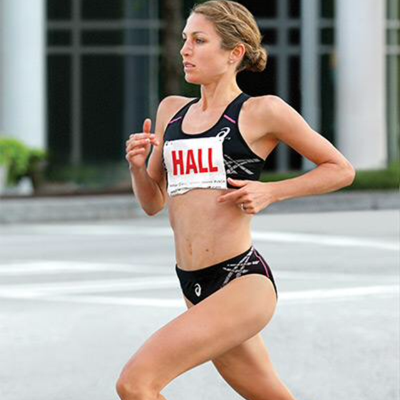
Sara Hall
American runner
7
APPEARANCES
7
PODCASTS
Jul 20, 2026

Whitney HeinsHOST
Is it within the bounds of you still being able to love your family well? Do you have benchmarks for how you make sure that you're still loving them well and pursuing your sport as much as you can?

Sara HallGUEST
So, you know, like there's a lot of my competitors are like living in training camps, right? Like away from their, like they have families are like away from their families all week, like a training camp and like just eat, sleep, run, and just having every, like having their meals prepared for them.
Sara HallGUEST
But I think I think for me, I've come to the point like I wouldn't want that because I don't want to miss out on a lot of things.
23 MINS LATER
Whitney HeinsHOST
So I have to ask, because I know people listening are going to want to know, as a master's runner, are there any supplements in particular that you live and die by that you think have really helped you?

ScottyHOST
Yeah.
Sara HallGUEST
And, and also, like, just feeling like I don't have to give them all of my time every day.
Sara HallGUEST
Like, I can, like, have this, and it, it's, like, makes me come alive, which, like, is so good for them to see something that makes me come alive.
Sara HallGUEST
Like, again, model to them so many things of hard work and discipline, all these things.
Sara HallGUEST
But also, like, um, I still have so much, like, quality time with them that I carve out, and I think it's, it's more about, for me, quality over quantity, right? Like, it's not like I'm just at their beck and call all day long, but it's like I really focus on enjoying them.
Sara HallGUEST
And, like, that's been a journey of figuring out, 'cause for a while I was just helping them with school, helping them with all these things, and, like, I didn't actually enjoy any of that stuff, really.
15 MINS LATER
ChrisHOST
Yeah

Sara HallGUEST
And it was really incremental, and I think, um, it, it was awesome because improvement's addictive, [laughs] even small improvements.
Sara HallGUEST
But, um, but the, like I fought for each of those minutes with innovating what I'm doing, and I share a lot of that stuff in the book of the things I learned along the way.
Sara HallGUEST
But for me, it was a process of loving, um, that innovation of the craft and experimenting, and like Ryan likes to experiment too, and so, um, so yeah, it was I think just showing people that, um, don't put limits on yourself, and if you love the process enough that it's worth it in itself, then you never know where it's gonna lead.
Sara HallGUEST
'Cause for me at every stage it was kind of like, yeah, I ran 230 or whatever, but like that doesn't really justify like doing this when I have four kids and-
7 MINS LATER


Floris GiermanHOST
But can you share? Because I think just getting into your mind and what was going through you can be quite helpful to other athletes as well who are experiencing challenges in races.
Sarah HallGUEST
London I really see as like the defining moment of my career thus far, and it's almost like a microcosm for my career.
Sarah HallGUEST
Like everything that happened in the lead up and in the race itself, it like sums up the career basically.
Sarah HallGUEST
But yeah, so, um, the 2020 Olympic marathon trials happened in Atlanta in end of February right before COVID came out, and I had the fastest marathon in the US in 2019, and so I was 37 years old.
Sarah HallGUEST
I was like, "This is my last shot." Like, um, and I had really high hopes for being able to make that team.
16 MINS LATER
Floris GiermanHOST
Like, I'm, I'm curious to hear a little bit more about what you feel has worked well.


Chris ChavezHOST
I guess, what did it really take for you to kind of break out of that and then start to, you know, step into your own, like you just described, like the hero of your own story? Like, when did that, how long did that process sort of take?
Sara HallGUEST
Like, I'm thankful for so much of what I got in the church and, and from my parents, and, but there was really traditional gender roles in there as well.
Sara HallGUEST
And I think in-In the Christianity I grew up with, um, you know, a woman-- what's praised is, like, being a servant, like, serving your family, being selfless.
Sara HallGUEST
And I think there's a lot of real, like beauty in that, right? And as a professional athlete, having more selflessness is good, right? Because so much of your life revolves around yourself, so you do wanna find ways to be selfless.
11 MINS LATER
Chris ChavezHOST
Those trips to Ethiopia all throughout your career, I guess, w-you know, when you were training, understanding how, you know, the girls lived, and, you know, you, you were coming in there, what was it that Ethiopia, I guess, showed you about the running world, um, that you don't necessarily get in Flagstaff, Crested Butte, or these big running hubs that we have here in the United States?

Angie SpencerHOST
And of course, in a profession like running where it's driven by performances and trying to set fast times, how did you develop a healthy identity?
Sara HallGUEST
You know, I didn't realize-- I didn't have words for it at the time, but of like even anxiety or like that I was putting my identity in success and really depending on that for my self-worth and love and belonging coming from being successful.
Sara HallGUEST
But yeah, looking back, it, I, I... all of a sudden I realized, you know, at a young age when I started getting criticism online anonymously that anytime I failed, like, y- I made that connection that if I fail in running, like I can lose what every teenage girl wants, which is love and belonging from people.
Sara HallGUEST
And, and it just planted that seed in my heart that continued with poor coaching or, yeah, different things reinforcing that.
Sara HallGUEST
And, and it, I really just got to the point where I, I knew in my head about the unconditional love of God, but it took a lot of failure for it to like actually be integrated in my heart and to really experience it.
13 MINS LATER
Angie SpencerHOST
How did you get connected with that country originally? And, you know, talk about how that connection has continued over the years.


Ali FellerHOST
When you think back to that, to your first marathon and to who you were at the time, can you talk a little bit about what that Sarah was like and what you see in her now?
Sara HallGUEST
Um, you know, I'd, I'd kind of had a up and down track career before that, and then I was training, you know, in Ethiopia for that marathon, like visiting the girls at the time, like we hadn't adopted them yet.
Sara HallGUEST
Um, and so, so yeah, I was, um, actually just, just felt full of hope for that, that like I could maybe have some of the exciting moments Ryan had in his career in the marathon, like just being able to do some of the same workouts that I'd watched him and Meb and Dina do.
37 MINS LATER
Ali FellerHOST
Can you talk a little bit more about that story in the book of, of reaching out and saying, "What's going on with the shoes?"