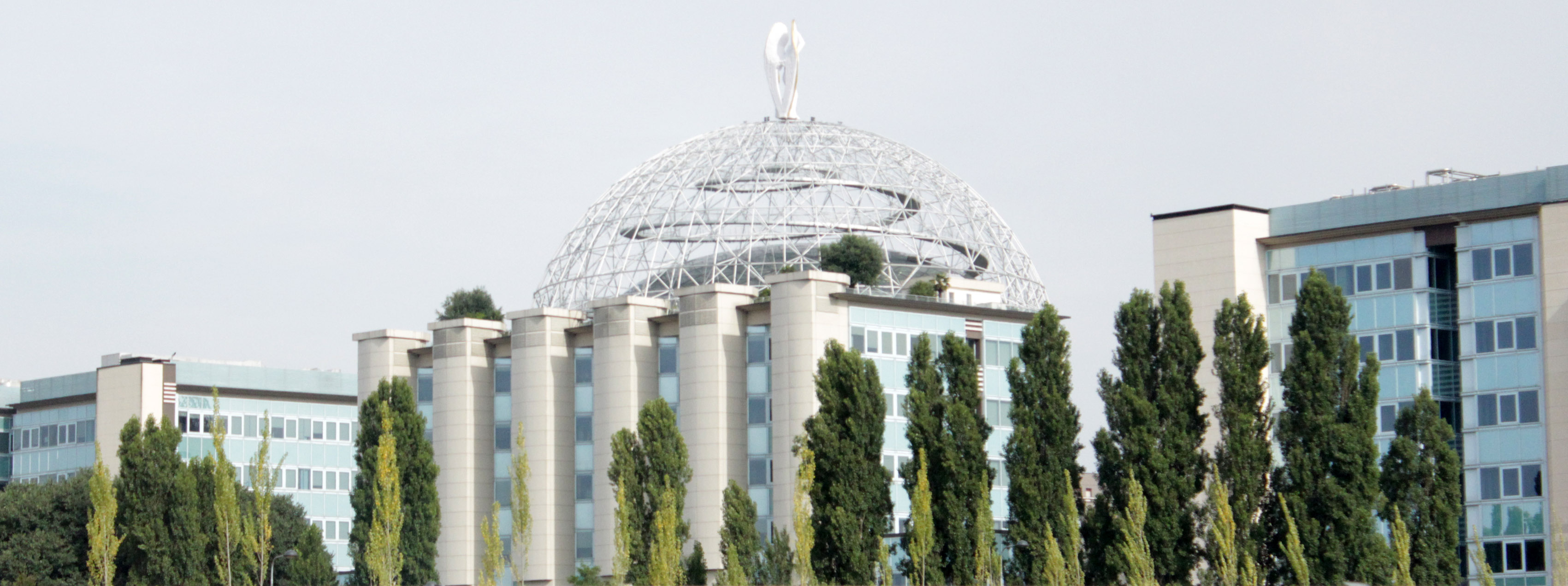
San Raffaele Hospital
HospitalWikipedia
8
MENTIONS
7
EPISODES
7
PODCASTS
Search complete. 8 mentions across 7 episodes found for "San Raffaele Hospital".
Sep 7, 2026

Pedro RamirezHOST
Excellent.
Pedro RamirezHOST
So, moving on to a question by Costanza Saponaro in San Raffaele in Italy.
Pedro RamirezHOST
She's asking, preventing CIN2 plus lesions and above all, cervical cancer should be the main goal of topical HPV treatments.
Pedro RamirezHOST
However, based on the existing evidence and your clinical experience, what do you think about the potential psychological benefit of these products in reducing anxiety among women?

Alberto BrigantiGUEST
So I believe that this is another weapon that we may have in our armamentarium to, again, facilitate surgeries in some patients and high risk of bleeding, right? I don't think that anybody is proposing this approach for all patients, but of course, in selected patients, I believe that makes absolute sense.
Declan MurphyHOST
And in your practice then, LB, do you have a view on when you use TXA in San Raffaele then?
Alberto BrigantiGUEST
Absolutely.
Alberto BrigantiGUEST
No.

Sophie RossHOST
She had, like, fully made it in the fashion industry.
Sophie RossHOST
And in 2020, she and her then husband, Fedez, raised 3 million euros in 24 hours through a fundraiser to support the San Raffaele Hospital in Milan during the COVID-19 pandemic in Italy.
Sophie RossHOST
I remember this, and it was, you know, that was very, very, very amazing of them.
Christy NoelHOST
'Cause Italy was one of the first countries, like, it was New York and, and, and Italy that were hit really, really severely with, with COVID in the beginning weeks.

Neil LoveHOST
This is medical oncologist Dr. Neil Love.
Neil LoveHOST
On February twenty-sixth at the two thousand and twenty-six GU Cancer Symposium in San Francisco, we held a CME meeting moderated by Dr. Terence Friedlander from the Helen Diller Family Comprehensive Cancer Center in San Francisco, and faculty members Dr. Matt Galsky from the Tisch Cancer Institute in New York City, Dr. Andrea Necchi from the IRCCS San Raffaele Hospital in Milan, Italy, and Dr. Shilpa Gupta from the Taussig Cancer Institute in Cleveland, Ohio.
Neil LoveHOST
Included in the meeting were a series of pre-recorded video case presentations by Dr. Elizabeth Plimack from the Fox Chase Cancer Center in Philadelphia and Professor Thomas Powles from the Barts Cancer Institute in London, who met with me prior to the meeting.
Neil LoveHOST
These cases were discussed by the faculty panel, beginning with Dr. Plimack.

Neil LoveHOST
This is medical oncologist, Dr. Neil Love.
Neil LoveHOST
On February twenty-sixth, at the two thousand and twenty-six GU Cancer Symposium in San Francisco, we held a CME meeting moderated by Dr. Terence Friedlander from the Helen Diller Family Comprehensive Cancer Center in San Francisco, and faculty members Dr. Matt Galsky from the Tisch Cancer Institute in New York City, Dr. Andrea Necchi from the IRCCS San Raffaele Hospital in Milan, Italy, and Dr. Shilpa Gupta from the Taussig Cancer Institute in Cleveland, Ohio.
Neil LoveHOST
Included in the meeting were a series of pre-recorded video case presentations by Dr. Elizabeth Plimack from the Fox Chase Cancer Center in Philadelphia, and Professor Thomas Powles from the Barts Cancer Institute in London, who met with me prior to the meeting.
Neil LoveHOST
These cases were discussed by the faculty panel, beginning with Dr. Plimack.

Deepa GrandonHOST
It's Dr. Fulvio Salvo.
Deepa GrandonHOST
He tr- he has trained and practiced at leading medical institutions around the world, um, including San Raffaele Hospital in Italy, Cleveland Clinic Abu Dhabi, and he now serves as a clinical immunologist and allergist in Cairns, Australia.
Deepa GrandonHOST
And throughout his career, he has cared for patients with complex immune disorders while gaining a very unique global perspective on how genetics, environment, nutrition, lifestyle, modern medicine, all of these influence our immune health.
Deepa GrandonHOST
So today we'll discuss what secondary immune deficiency really is, how to recognize it, and the surprising ways nutrition and lifestyle shape our immune system, what are clinicians learning about medications like GLP-1 receptor agonist, and what every listener can do to support a healthier immune system.

Tatyana StorozhenkoHOST
And, uh, Dr. Saeidi works an- at the intersection of, uh, gut microbiome and cardiovascular aging.
Tatyana StorozhenkoHOST
Dr., uh, Cesare Canepari from the San Raffaele and Telethon Institute for Gene Therapy, where he's working, uh, on using, uh, gene therapy and, uh, genome editing to cure FH.
Tatyana StorozhenkoHOST
And Dr. Berkan Kurt from University Hospital Aachen.
Tatyana StorozhenkoHOST
Uh, he's currently cardiology resident and clinician scientist working on inflammation and, uh, cardiometabolic disease.
Soheil SaeediGUEST
Uh, we also, um, um, characterize and formulate, uh, microbiome-based strategies, uh, to tackle cardiovascular aging and diseases.
Cesare CanepariGUEST
Thank you for the invitation.
Cesare CanepariGUEST
Uh, I'm Cesare Canepari, and I'm a post-doc in San Raffaele in Milan.
Cesare CanepariGUEST
Uh, we focused on, uh, gene therapy, mainly to the liver, and, uh, we recently started working on, uh, hypercholesterolemia, so we published a work, uh, on LDLR gene transfer to the liver by lentiviral vectors to tackle the pediatric population of affected by the most severe form of hypercholesterolemia, which is the homozygous form.