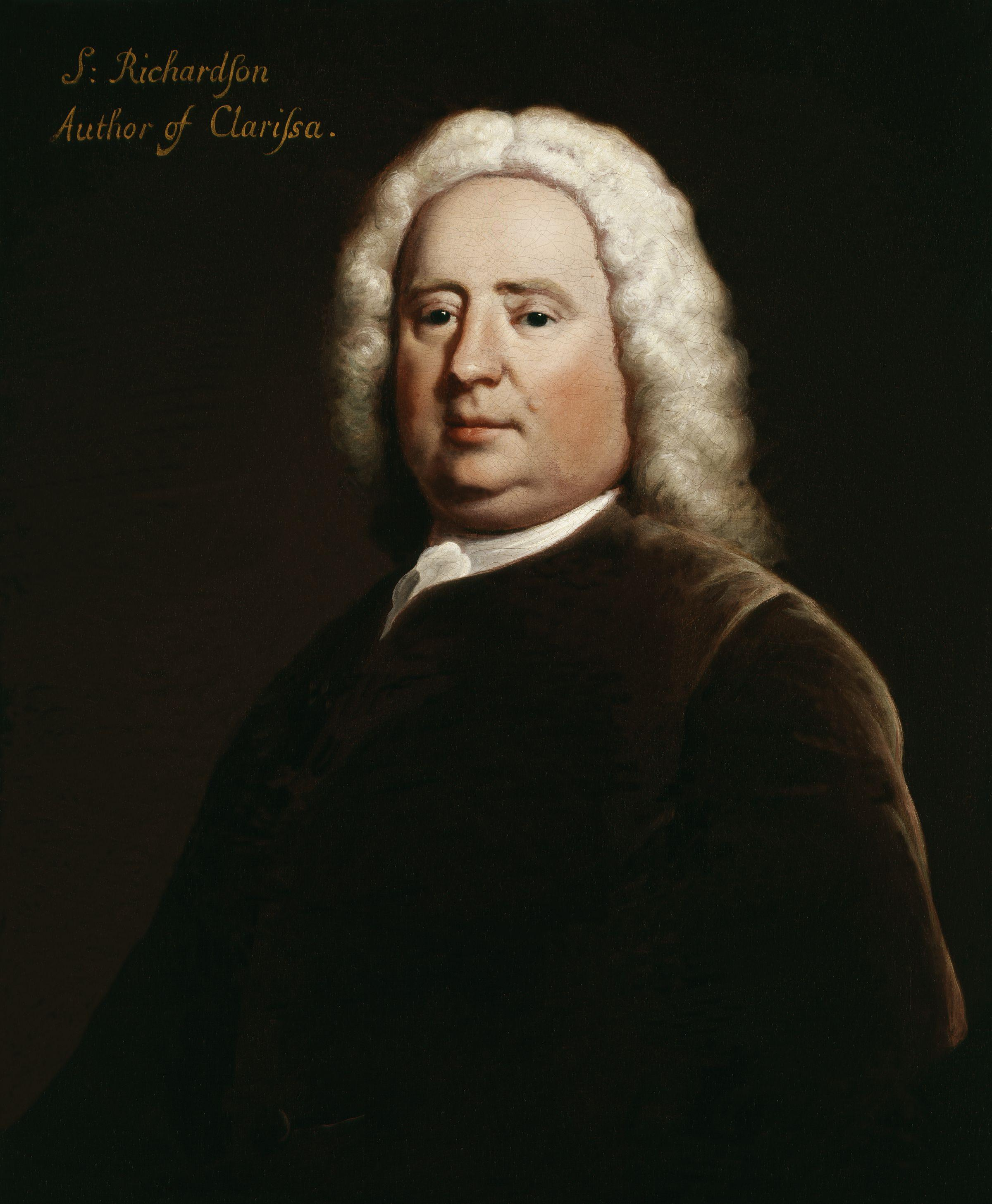
Samuel Richardson
English writer and printerWikipedia
39
MENTIONS
12
EPISODES
11
PODCASTS
Search complete. 39 mentions across 12 episodes found for "Samuel Richardson".
Oct 2, 2026
5 Reasons to Read “Dracula” by Bram Stoker
S
3:40speaker_3HOST
It comes from the word epistle, which just means letter, and our source notes that Stoker was not the first to do this.
S
3:46speaker_3HOST
I mean, Samuel Richardson built massive 18th century novels out of letters.
S
3:50speaker_2HOST
Oh, right.
S
3:51speaker_3HOST
Mary Shelley used nested documents for Frankenstein.
Sense & Sensibility - Jane Austen
R
23:07Rupert FordhamHOST
There's an earlier idea of sentiment, which I think meant sort of sympathy and connected to social action.
R
23:17Rupert FordhamHOST
And it kind of built on that, didn't it? So I know that Samuel Richardson's Clarissa, written 60 years, 70 years before this, that that stimulates the reader's sympathy for a virtuous and persecuted protagonist.
R
23:32Rupert FordhamHOST
But by the time it gets to Jane Austen, Sensibility, you're almost thinking it's all drama queens, aren't you? I think so.
C
23:38Charlie FordhamHOST
I think so, yeah.
THE INVISIBLE COLLEGE: Charlotte Brontë’s Jane Eyre
J
9:02John PistelliHOST
Uh, and it kind of had that status by the time I got to, uh, uh, college in the early 2000s.
J
9:10John PistelliHOST
And so at the beginning of this episode, you were just listening to the person I sort of jokingly call friend of the pod, this is not a person who knows I exist, uh, is Nancy Armstrong, the author of Desire and Domestic Fiction, the kind of classic, extremely interrogatory Foucauldian Marxist analysis of the domestic realist novel, more or less from Samuel Richardson to Virginia Woolf, though centered in the 19th century, of how...
J
9:43John PistelliHOST
Well, I'll, I'll explain the argument in a moment.
J
9:46John PistelliHOST
But, uh, she was saying, uh, there, uh, and I thought it was an interesting autobiographical aside in an interview with her from 2014 from a, uh, uh, the College of Humanities at BYU.
P
Unknown podcast
Lectures on the Harvard Classics Part 1-Charles William Eliot; William Allan Neilson
Sep 26 · 8 Mentions
T
479:22T. R. LoveNARRATOR
But after all allowance for this has been made, many of the elements of effective storytelling remain common to both novel and play.
T
479:32T. R. LoveNARRATOR
Defoe and Richardson.
T
479:34T. R. LoveNARRATOR
The two chief claimants for the credit of founding the modern English novel are Daniel Defoe and Samuel Richardson.
T
479:42T. R. LoveNARRATOR
Defoe's stories depend for their unity chiefly upon the personality of the leading character.
T
479:48T. R. LoveNARRATOR
They are usually series of episodes strung along the thread of the hero's or heroine's life.
T
480:08T. R. LoveNARRATOR
His most notable characteristic is a singular realism, achieved by a skillful selection of matter-of-fact details which produces a circumstantial effect like that of a modern newspaper report.
T
480:22T. R. LoveNARRATOR
But realism, clever as it is, is mainly external, and comparatively little in the way of insight into character or motive is to be found in most of his stories.
T
480:34T. R. LoveNARRATOR
The great works of Richardson, Pamela, Clarissa Harlowe, and Sir Charles Grandison, are novels without question.
A Wacky, But Oh-So Lovable Classic
J
3:50Jay RuudHOST
He didn't know that it was going to be still being read here 250 years later.
J
3:58Jay RuudHOST
Stern's fellow novelist, Samuel Richardson, wrote that he could only describe Stern's volumes as execrable.
J
4:07Jay RuudHOST
Oh, wow.
J
4:10Jay RuudHOST
It was translated into German by 1769.
Interiority is a Real Word
M
25:02Meg RosenthalHOST
I took a... summa cum laude i i went to queen's university shout out queens shout out charlotte great english program um but i took a british literature class where we oh so fun and we um we read several early novels when like the novel was first being kind of developed and invented and um One of the first novels that accessed interiority was like in the 1700s.
M
25:30Meg RosenthalHOST
And we read it was called Pamela by Samuel Richardson.
M
25:34Meg RosenthalHOST
I am going to fact check this before I post this video, but I'm fairly certain this is novel was written in epistolary form, so it was like a series of letters.
M
25:42Meg RosenthalHOST
So it almost read like a diary.
P
Unknown podcast
Early Hanoverians-Edward Ellis Morris
Sep 18 · 8 Mentions
P
415:12Pamela NagamiNARRATOR
Perhaps Robinson Crusoe and the numerous shorter tales which Defoe gave somewhat earlier to the world may from one side dispute the claim, but these are too deficient in sentiment and in variety of human interests to be rightly classed as novels.
P
415:30Pamela NagamiNARRATOR
Samuel Richardson was the first novelist.
P
415:33Pamela NagamiNARRATOR
His three novels, Pamela, Clarissa Harlow, and Sir Charles Grandison, differ from novels of our day chiefly in their length and in being written in a series of letters.
P
415:44Pamela NagamiNARRATOR
Richardson was not the man who would have been expected beforehand to turn novelist.
P
415:49Pamela NagamiNARRATOR
He was a London printer's apprentice whose diligence was rewarded by a partnership and later by a fortune.
P
415:56Pamela NagamiNARRATOR
He was the first printer of the journals of the House of Commons.
P
416:01Pamela NagamiNARRATOR
In character, he was kind and benevolent, but very vain, fonder of the society of ladies than of men, and especially greedy of the flattery of women.
P
416:12Pamela NagamiNARRATOR
Accident, it is said, first made Richardson a novelist.
Sense & Sensibility Chapter 31
F
30:57Frances DuncanHOST
I kind of get it.
E
31:00Emma DunningHOST
In Sir Charles Granderson, which is Samuel Richardson's novel that Jane Austen loved, One of the defining features of Sir Charles Grandison is that he will not duel.
E
31:12Emma DunningHOST
He doesn't consider it to be honourable.
F
31:17Frances DuncanHOST
It's one of the things for people of a certain caste that if you don't duel when you are challenged, people look down on you.
TMR 32.1: “Masterstroke of Digressive Skill” [Tristram Shandy]
C
6:53Chad PostHOST
Yeah, yeah, yeah.
C
6:54Chad PostHOST
Like Samuel Richardson
B
6:56Brian WoodHOST
also.
B
6:57Brian WoodHOST
So meta, right? Like, Dear Reader.
P
Unknown podcast
Habeas Corpus – Can the Government Lock You Up Without Explaining Why?
Sep 12 · 1 Mention
S
8:35speaker_2UNKNOWN
Literature is another domain where Britain's influence is unmistakable.
S
8:39speaker_2UNKNOWN
Samuel Richardson's Pamela might be the first full novel, but it was Dickens, Austen, Brontë, and later Tolkien who turned storytelling into an art form.
S
8:49speaker_2UNKNOWN
Their novels not only entertained but shaped ideas about class, morality, and empire that still echo in contemporary media.
S
8:57speaker_2UNKNOWN
Let's not overlook something as seemingly trivial, tea with milk.
2 more episodes mention Samuel Richardson.
Create an account to see the whole feed, search across every transcript, and follow the entities you care about.