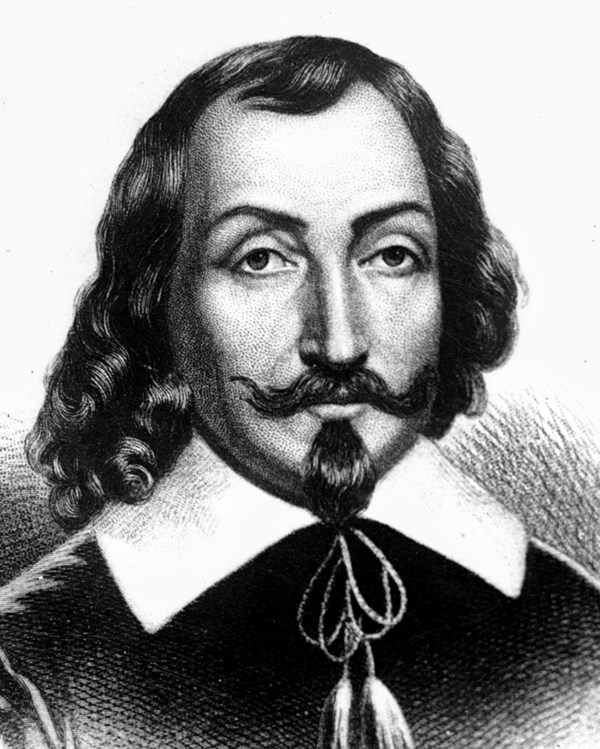
Samuel de Champlain
Explorer and former Governor of New FranceWikipedia
72
MENTIONS
16
EPISODES
15
PODCASTS
Search complete. 72 mentions across 16 episodes found for "Samuel de Champlain".
Sep 19, 2026

speaker_3NARRATOR
Their language was different from that of the Algonquins, with whom they were ever at war.
speaker_3NARRATOR
The wildflowers were in bloom in June 1609, when Samuel Champlain sailed up the St. Lawrence to join a war party against the Iroquois.
speaker_3NARRATOR
he had resolved to make the algonquins his allies and through them and with the aid of the jesuit priests he would lay the foundations of the empire of new france the war party sailed up the richelieu or the st john carried their canoes past the rapids launched them once more and came out into the lake which bears the name of the intrepid explorer two frenchmen accompanied champlain and there were twenty-four canoes carrying sixty warriors who had put on their feathers and filled their quivers with arrows the woods were full of game and the lake was swarming with fish so that there was no lack of provisions at daybreak they hauled their canoes up on the beach and secreted themselves so that no iroquois might discern them but when the sun went down they launched their canoes and stole on in silence over the peaceful waters it was ten o'clock in the evening They were near Crown Point when they heard the dip of other paddles, and beheld a fleet of Iroquois canoes moving northward.
speaker_3NARRATOR
A hoop wilder than the howling of a pack of wolves rent the air, and the Iroquois pulled for the shore to prepare for battle.
speaker_3NARRATOR
Like the Algonquins, they had bows, arrows, and tomahawks.
speaker_3NARRATOR
The Algonquins were only 64, while the Iroquois were more than 200.
speaker_3NARRATOR
In splendid order, which was the admiration of Champlain, the Iroquois advanced to wipe out the Algonquins at a blow.
speaker_3NARRATOR
The Algonquins opened their ranks and the Iroquois beheld Champlain, a being in human form with the sunlight gleaming from his breast.

Greg BoothroydGUEST
And, um, the point had been fashioned into a very odd land form.
Greg BoothroydGUEST
Instead of being shaped like a point, uh, the previous designer had, um, created this huge hill, and on top of the hill was this, uh, figure of Samuel de Champlain.
Greg BoothroydGUEST
And Samuel de Champlain was up there, uh, uh, in a kind of triumphant pose.
Greg BoothroydGUEST
And, uh, as you can imagine, that doesn't sit well with current thinking about e- explorers and, uh, people that, uh, traveled to Canada-
Jonathan JacobsHOST
Yep
Greg BoothroydGUEST
... and colonized it.
Greg BoothroydGUEST
And so, um, uh, when we, uh, redesigned the point, our first intuition was to reshape the land so that it was more like a point.
Greg BoothroydGUEST
Um, but the competition required us to keep Samuel de Champlain where he was.

BrianHOST
Whether the Abenaki themselves ever pointed at the lake and used that word for a particular animal is a question that has never truly been answered.
BrianHOST
Then there's Samuel de Champlain who put his name on the lake in sixteen oh nine and who according to nearly every tourist pamphlet and half the books on the subject saw the monster that same year.
BrianHOST
But he didn't actually see a monster.
BrianHOST
What Champlain wrote about was a fish about five feet long and as thick as a man's thigh with a head like a pike's and long jaws full of teeth.

Larry WilsonNARRATOR
Their language was different from that of the Algonquins, with whom they were ever at war.
Larry WilsonNARRATOR
The wildflowers were in bloom in June 1609, when Samuel Champlain sailed up the St. Lawrence to join a war party against the Iroquois.
Larry WilsonNARRATOR
he had resolved to make the algonquins his allies and through them and with the aid of the jesuit priests he would lay the foundations of the empire of new france the war party sailed up the richelieu or the st john carried their canoes past the rapids launched them once more and came out into the lake which bears the name of the intrepid explorer two frenchmen accompanied champlain and there were twenty-four canoes carrying sixty warriors who had put on their feathers and filled their quivers with arrows the woods were full of game and the lake was swarming with fish so that there was no lack of provisions at daybreak they hauled their canoes up on the beach and secreted themselves so that no iroquois might discern them but when the sun went down they launched their canoes and stole on in silence over the peaceful waters it was ten o'clock in the evening They were near Crown Point when they heard the dip of other paddles, and beheld a fleet of Iroquois canoes moving northward.
Larry WilsonNARRATOR
A hoop wilder than the howling of a pack of wolves rent the air, and the Iroquois pulled for the shore to prepare for battle.
Larry WilsonNARRATOR
Like the Algonquins, they had bows, arrows, and tomahawks.
Larry WilsonNARRATOR
The Algonquins were only 64, while the Iroquois were more than 200.
Larry WilsonNARRATOR
In splendid order, which was the admiration of Champlain, the Iroquois advanced to wipe out the Algonquins at a blow.
Larry WilsonNARRATOR
The Algonquins opened their ranks, and the Iroquois beheld Champlain, a being in human form with the sunlight gleaming from his breast.

Craig BairdHOST
French explorers, missionaries, soldiers, merchants, and settlers were moving into the vast territory that stretched along the Saint Lawrence River, through the Great Lakes, and down towards the Mississippi.
Craig BairdHOST
In 1608, Samuel de Champlain established a settlement at Quebec, and from there, the French presence in North America gradually expanded, but there were growing pains.
Craig BairdHOST
From slow population growth to war with England and the First Nations, New France struggled to find its footing.
Craig BairdHOST
80 years of hard work and determination began to pay off, and by then, the population of the colony was approaching 10,000 people, made up of farmers and merchants, artisans, soldiers, and more.
Mark AffeldHOST
Today is a day full of Canadian history.
Mark AffeldHOST
On this day in 1616, Samuel de Champlain arrived in France with a map of what was then known as New France.
Mark AffeldHOST
Former wife of Prime Minister Pierre Trudeau, Margaret Trudeau, was born in Vancouver on this day in 1948.
Mark AffeldHOST
And in 1994, Vancouver produced animated television series Reboot, premiered in America on ABC.

Sean NewmanHOST
you put on a really good show maybe you could tell the people where we are because I'm like I'm going to try and explain this and I'm going to be I'm going to butcher it you know old town Quebec is what I'm told
Vincent MongeonGUEST
Yeah, we are in the old town, and we're just beside the statue of Samuel de Champlain, the founder of the oldest city of North America, Quebec City, 1608.
Vincent MongeonGUEST
And we're just beside the Château Frontenac.
Vincent MongeonGUEST
And just in front of the statue, there's the street theater show place, the Pitch, we call it.

Joe BurimaHOST
Japanese forces formally surrendered on this day back in 1945 in Tokyo Bay, bringing World War II to a close.
Joe BurimaHOST
And on this day back in 1604, Samuel de Champlain began exploring the Bay of Fundy.
Joe BurimaHOST
He was searching for the ideal site for a permanent settlement.
Joe BurimaHOST
And, as always, on this day, we air this episode of Today in Canadian History.

KalindaNARRATOR
It will suffice to say that fortune attended his later ventures upon the seas, and that he died in 1594 from a wound he received in a naval battle off the coast of France.
KalindaNARRATOR
End of chapter 2 Chapter 3 of Historical Tales, Volume 1, American This LibriVox recording is in the public domain Recording by Kalinda Historical Tales, Volume 1, American by Charles Morris Chapter 3 Champlain and the Iroquois On a bright May morning in the year 1609, at the point where the stream then known as the Rivière des Iroquois, and which has since borne the various names of the Richelieu, the Chambly, the St. Louis, the Sorel, and the St. John, poured the waters of an unknown interior lake into the channel of the broad St. Lawrence, there was presented a striking spectacle.
KalindaNARRATOR
Everywhere on the liquid surface, canoes, driven by the steady sweep of paddles wielded by naked and dusky arms, shot to and fro.
KalindaNARRATOR
Near the shore, a small shallop, on whose deck stood a group of armed whites, had just cast anchor and was furling its sails.
KalindaNARRATOR
Not long had the whites been there before the native hunters of the forests came to gaze with wondering eyes on those pale-faced strangers with their unusual attire and surprising powers of architecture.
KalindaNARRATOR
And quickly they begged their aid in an expedition against their powerful enemies, the confederated nations of the Iroquois, who dwelt in a wonderful lake region to the south, and by their strength, skill, and valor had made themselves the terror of the tribes.
KalindaNARRATOR
Samuel de Champlain, an adventurous Frenchman who had already won himself reputation by an exploration of the Spanish domain of the West Indies, was now in authority at Quebec, and did not hesitate to promise his aid in the coming foray, moved perhaps by that thirst for discovery and warlike spirit which burned deeply in his breast.
KalindaNARRATOR
The Indians had told him of great lakes and mighty rivers to the south, and doubtless the ardent wish to be the first to traverse these unknown waters was a moving impulse in his ready assent.

Dan ArthHOST
translated as sparkling water both cite the name's origin in the indigenous languages spoken around the lake long before the united states or canada existed the province of ontario later took its name from the lake rather than the other way around French and European mapmakers used several names for the lake before Ontario prevailed, according to a 1955 journal article on Great Lakes place names.
Dan ArthHOST
1632, Samuel de Champlain called it Lac Saint-Louis.
Dan ArthHOST
1635, Jesuit missionary Jean de Brubuf called it the Lake of the Iroquois.
Dan ArthHOST
And in 1639, Dutch geographer Johann Delight used Ontario.
6 more episodes mention Samuel de Champlain.
Create an account to see the whole feed, search across every transcript, and follow the entities you care about.