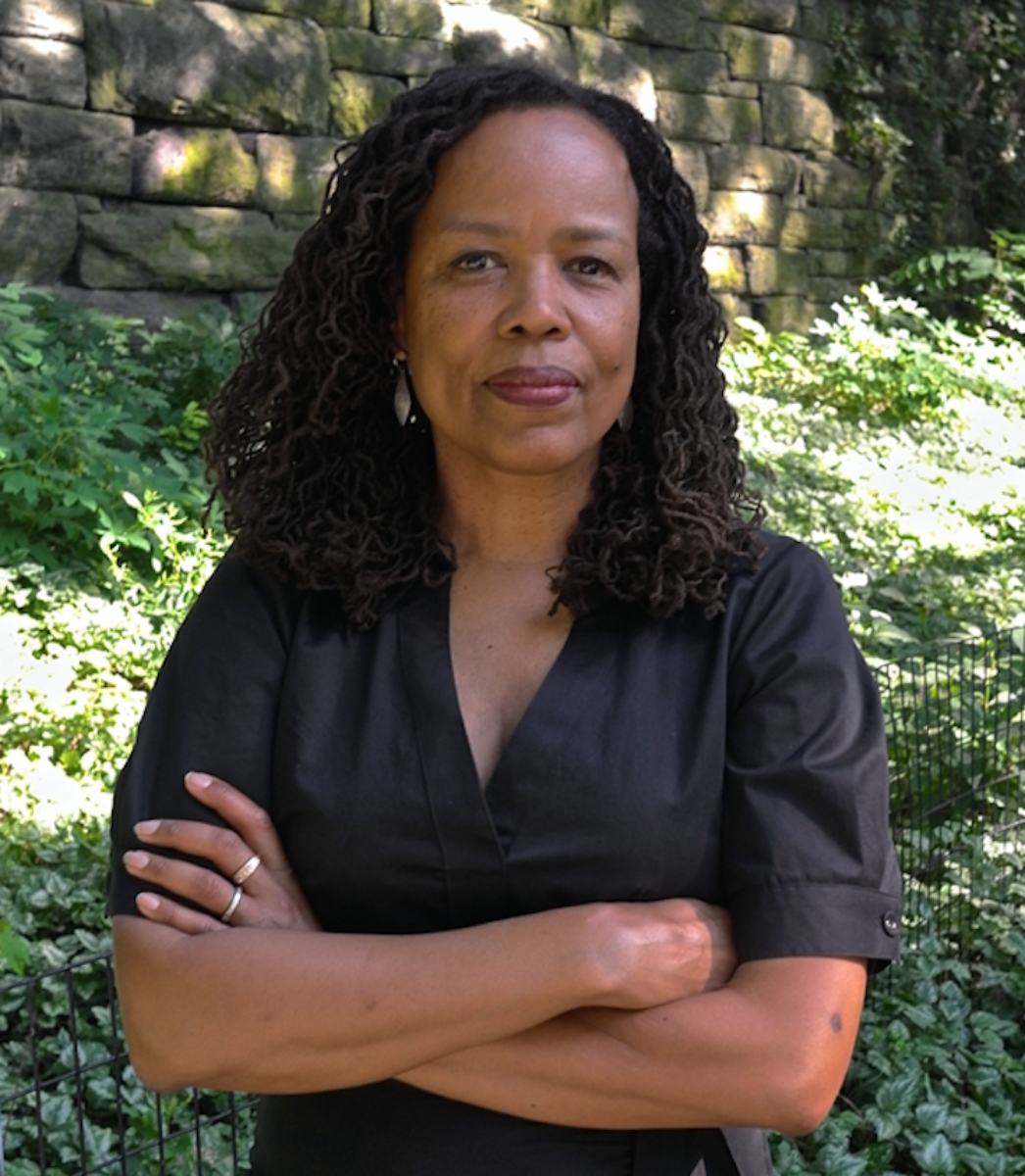
Saidiya Hartman
American academic and writerWikipedia
11
MENTIONS
9
EPISODES
6
PODCASTS
Search complete. 11 mentions across 9 episodes found for "Saidiya Hartman".
Sep 28, 2026

Claudia HirtenfelderHOST
But at the same time, kind of appreciating that the logics that work were often working to control humans and animals in similar ways.
Claudia HirtenfelderHOST
Uh, and of course, uh, I know Saidiya Hartman has written about, uh, the transatlantic slave trade, right? And how slaves who were moved across the ocean were often recorded in ledgers as numbers, right? Two slaves, three slaves, and this is the same way in which animals who were moved across oceans were recorded and who died, who, who was actually...
Claudia HirtenfelderHOST
So in this way, it's a kind of, it's a, it's a very tangible way to see how their histories are entangled and how similar logics were used to control humans and animals.
Claudia HirtenfelderHOST
And your examples are so, so interesting.

Ambrose GillickHOST
What's it doing? What's it for?
Mabel O. WilsonGUEST
Well, the collective, uh, of which I'm, uh, a part of was a, a group formed by Saidiya Hartman and Tina Campt.
Mabel O. WilsonGUEST
Uh, I think at the time Tina was at Barnard College across the street from Columbia.
Mabel O. WilsonGUEST
Saidiya's my colleague at Columbia.
10 MINS LATER
Mabel O. WilsonGUEST
And one of the things in retrospect that I realized that we were dealing with was a difficult archive of slavery-
Ambrose GillickHOST
Mm
Mabel O. WilsonGUEST
... which are things, these, these are some of the questions that Saidiya Hartman's work is great for.
Mabel O. WilsonGUEST
Like, what do you do when their evidence isn't there, or the evidence about the per- there's no name.

Edna BonhommeGUEST
Yeah,
Lola OlufemiMODERATOR
I think of him and I also think of C.L.R. James and Saidiya Hartman, that really textured approach to thinking about the granular and cellular level of experiencing kind of historical event.
Lola OlufemiMODERATOR
And I think you do that so well in the book.
Lola OlufemiMODERATOR
And in the book, you describe all of these moments of kind of interpolation, these moments where you recognize yourself or you're being recognized as a black subject by state bodies or by the government.

Alexis Wells-OghoghomehGUEST
You know, I'm a historian, so I do it this way, and I don't really marshal this type of evidence because I'm a historian.
Alexis Wells-OghoghomehGUEST
Um, and you have someone like a Saidiya Hartman who, um, beautifully and quite, you know, incisively called out, um, the ways that these, these disciplinary, um, uh, silos, um, not only are designed to silence, but they also keep us away from accessing the types of questions and, and experiences that we really want to elevate in the work.
Alexis Wells-OghoghomehGUEST
Um, so, uh, I was trained by, um, in, in both areas.
Alexis Wells-OghoghomehGUEST
So I situate myself really equally in both.
48 MINS LATER
Alexis Wells-OghoghomehGUEST
It's always interesting what continues to resonate.
Ashley NewbyHOST
Mm-hmm.
Alexis Wells-OghoghomehGUEST
Um, and, um, I think that there are certain, like, we, you know, we can't talk about contemporary Black studies without Saidiya Hartman.
Alexis Wells-OghoghomehGUEST
One of the things she does really well, she just writes incisively, concisely.
Mabel O. WilsonGUEST
And so particularly if it's coming out of the West and the West's kind of project, the racial capitalism, and its epistemic, you know, sort of project of, like, the modern liberal subject and so on, that we have to understand how those things shape our way of knowing the world and being in the world, right? And so my scholarship and my practice, for sure, are impacted by that, and I'm always looking at Black Studies in order to sort of advance that.
Mabel O. WilsonGUEST
And I've been really great... opportunity that I had was to join a collective that was organized by Tina Camp and Saidiya Hartman, Practicing Refusal Collective.
Mabel O. WilsonGUEST
And we've probably been meeting for about 10 years.
Mabel O. WilsonGUEST
And it's just a really sort of wonderful group of people with Christina Sharp and Dion Brand, Alex Wahaly, Tavion Yongo, Hazel Carby.

Namwali SerpellGUEST
I can't think of any work of nonfiction of hers that is a kind of interpretation of history in that way.
Namwali SerpellGUEST
What she's trying to do is collect these details and then vivify them through fiction, through the imagination, which is kind of a remarkable early version of what now Saidiya Hartman calls critical fabulation.
Namwali SerpellGUEST
You create out of history.
Donovan HohnHOST
Yes.
Brandon ByrdGUEST
You know, because, because it was both, right? You have to have the same conversation about whether, uh, you are, uh, not using every tool in the toolkit, uh, whether you are not, uh, whether you are in community with the broader body of scholarship about, uh, Black life and thought that would help you scholarly.
Brandon ByrdGUEST
So that's things like, um, uh, as an example, uh, you know, I, I take great, and, you know, as many others do, uh, uh, lessons and encouragement, um, you know, from the work of somebody like Saidiya Hartman, uh, even though she's doing something, uh, you know, is different.
Brandon ByrdGUEST
Like, um, you know, I'm thinking of, like, "Venus in Two Acts," which is much more, uh, theoretical than, you know, what, um, you know, my, my work has, has looked like.
Brandon ByrdGUEST
Uh, but, you know, Lord knows that's, that's informed, uh, you know, what, what I've done, right? And, uh, yeah, there's many other examples of, you know, scholars, theorists, you know, who I can name too as, as having that, that impact.

Autumn BreonGUEST
So I wanted to somehow fill in the blanks from all these gaps that are left, all the archival silence.
Autumn BreonGUEST
And how Saidiya Hartman talks about critical fabulation.
Autumn BreonGUEST
So basically using a combination of research, but also speculating a little bit.
Autumn BreonGUEST
to imagine something beyond these super biased archival gaps that we have.
Yvonne ChireauGUEST
I was teaching Black women in religion at Swarthmore, and I was looking for a text to use.
Yvonne ChireauGUEST
So I picked up—I've used Saidiya Hartman's work before, mainly— Lose Your Mother, I think.
Yvonne ChireauGUEST
So her latest book or her recent book was on women in New York.
Yvonne ChireauGUEST
It was called Wayward Lives.