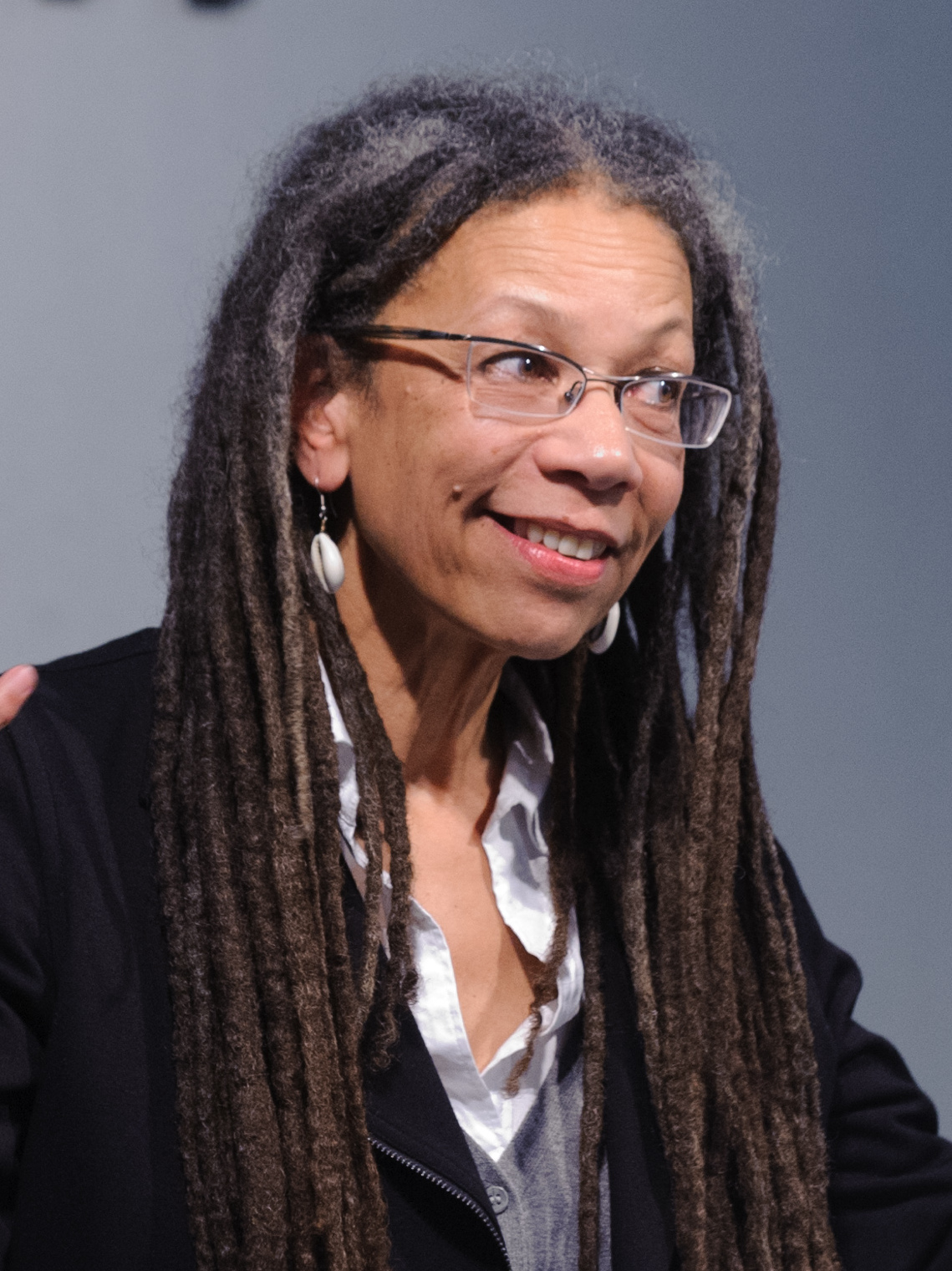
Ruth Wilson Gilmore
ResearcherWikipedia
9
MENTIONS
9
EPISODES
8
PODCASTS
Search complete. 9 mentions across 9 episodes found for "Ruth Wilson Gilmore".
Nov 12, 2026

Kelly HayesHOST
We have to keep building movements that can challenge these forces and reshape what's politically possible.
Kelly HayesHOST
And when we think about the elites in Silicon Valley, we need to remember that, as Ruth Wilson Gilmore tells us, when an existing set of social relations cannot be replicated, struggle occurs.
Kelly HayesHOST
Our enemies are struggling right now.
Kelly HayesHOST
They're reorganizing.

Dujie TahatHOST
or just past it all is because Will and Grace was on the air like a decade before that.
Dujie TahatHOST
And you kind of, you know, and there's a long tradition, like the only reason we talk about or in 2020 abolition was being talked about as a mainstream idea is because Ruth Wilson Gilmore and like Toni Morrison and Audre Lorde were like thinking about the ideas and putting it into the culture like decades prior to that.
Dujie TahatHOST
So the flip side of the short-term political communication cycles are these sort of like long-term cultural, where like there is no clear utility to each piece of art that is made.
Dujie TahatHOST
However, in the sort of like totality of the thing, like the ideas that we put forth right now are the ideas that will be used, are the communications frameworks that will be used for future change.

speaker_0HOST
Prisons and jails in the US are designed to harm people based on an assumption of guilt, and these institutions systematically disable people's ability to defend themselves and to organize together to fulfill their needs.
speaker_0HOST
a reflection and amplification of the Astaire society of, quote, organized abandonment, unquote, to steal that phrase from abolitionist geographer Ruth Wilson Gilmore.
speaker_0HOST
I mean, even like pointing back to what you had said before about people taking care of each other and sharing medications or sharing food or comfort, like that's often prescribed.
speaker_0HOST
That's often illegal inside of prisons.
Kelly HayesHOST
Whatever fantasies or talking points they're throwing at us, that's all wrapping paper for a project where capitalism is sort of redistilled.
Kelly HayesHOST
Or as Ruth Wilson Gilmore would say, the next round of capitalism saving capitalism from capitalism.
Kelly HayesHOST
In an era of catastrophic change, AI is being positioned as the basis for a reorganization of social and economic relations, using particular platforms and products to make human beings easier to isolate, control, disorient, and swap in and out of various labor roles.
Kelly HayesHOST
So we know that in the business world, there's been a lot of excitement at the top about AI products because of the potential to eliminate jobs.

Keegan Cook-FinbergGUEST
as this structure of capitalism that privileges certain forms of life and labor by imposing forms of death on other life and labor.
Keegan Cook-FinbergGUEST
So Ruth Wilson Gilmore is really important for this, or Lisa Lowe and Grace Hong.
Keegan Cook-FinbergGUEST
And in the book, that term helps me clarify how poetry in general is related to political economy.
Keegan Cook-FinbergGUEST
And the book starts in the 60s when a suite of policies that supported this uneven, and by uneven here I mean racialized and westernized notion of the public arrived.

Keegan Cook-FinbergGUEST
You know, as this structure of capitalism that privileges certain forms of life and labor by imposing forms of death on other other life and labor.
Keegan Cook-FinbergGUEST
So Ruth Wilson Gilmore is really important for this or, you know, Lisa Lowe and Grace Hong.
Keegan Cook-FinbergGUEST
And in the book, that term helps me clarify how poetry in general is related to... political economy.
Keegan Cook-FinbergGUEST
And the book starts in the 60s when a suite of policies that supported this uneven, and by uneven here I mean racialized and westernized notion of the public arrived.

Keegan Cook FinbergGUEST
And my use of the term is especially sort of influenced and directly tied to scholars who have defined it as this structure of capitalism that privileges certain forms of life and labor by imposing forms of death on other life and labor.
Keegan Cook FinbergGUEST
So Ruth Wilson Gilmore is really important for this, or Lisa Lowe and Grace Hong.
Keegan Cook FinbergGUEST
And in the book, that term helps me clarify how poetry in general is related to political economy.
Keegan Cook FinbergGUEST
And the book starts in the 60s when a suite of policies that supported this uneven, and by uneven here I mean racialized and westernized notion of the public arrived.

Keegan Cook-FinbergGUEST
as this structure of capitalism that privileges certain forms of life and labor by imposing forms of death on other life and labor.
Keegan Cook-FinbergGUEST
So Ruth Wilson Gilmore is really important for this, or Lisa Lowe and Grace Hong.
Keegan Cook-FinbergGUEST
And in the book, that term helps me clarify how poetry in general is related to poetry.
Keegan Cook-FinbergGUEST
political economy.

Keegan Cook-FinbergGUEST
You know, as this structure of capitalism that privileges certain forms of life and labor by imposing forms of death on other other life and labor.
Keegan Cook-FinbergGUEST
So Ruth Wilson Gilmore is really important for this or, you know, Lisa Lowe and Grace Hong.
Keegan Cook-FinbergGUEST
And in the book, that term helps me clarify how poetry in general is related to... political economy.
Keegan Cook-FinbergGUEST
And the book starts in the 60s when a suite of policies that supported this uneven, and by uneven here I mean racialized and westernized notion of the public arrived.