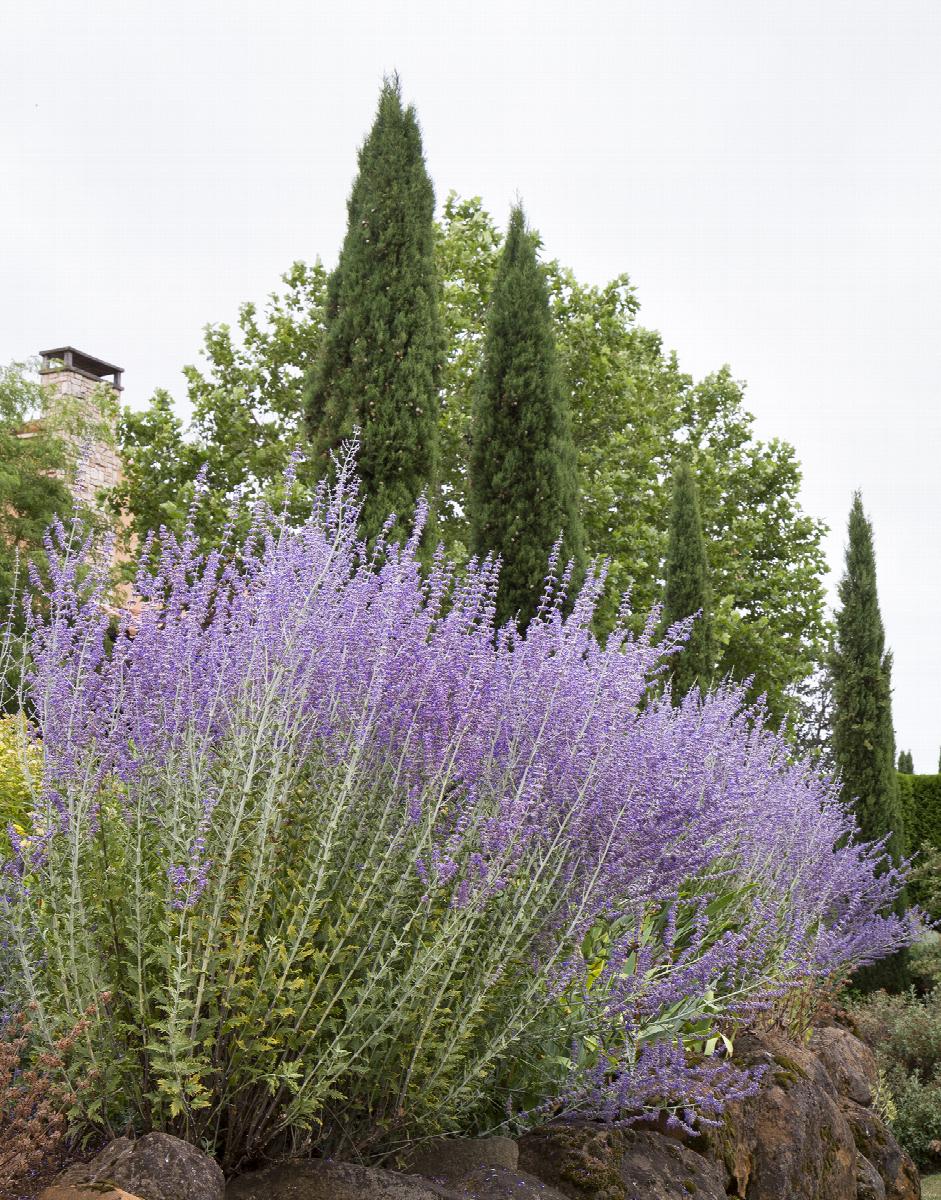
Russian sage
PlantWikipedia
14
MENTIONS
5
EPISODES
2
PODCASTS
Search complete. 14 mentions across 5 episodes found for "Russian sage".
Sep 17, 2026

Ken LaneHOST
Yeah.
Ken LaneHOST
This is a companion plant to Russian sage, some of your salvies, like you mentioned.
Ken LaneHOST
It doesn't get as tall, and it's not as weedy.
Ken LaneHOST
It's far easier to care for, to maintain.
Ken LaneHOST
The reason it's not so weedy, it doesn't send off stuff.
Ken LaneHOST
seed everywhere, which means it blooms better and it keeps its space.
Ken LaneHOST
It doesn't tend to want to run across the yard and lift up your rock and do issues like Russian sage does.
Ken LaneHOST
It's a messy plant.
Ken LaneHOST
Good full sun.
Ken LaneHOST
A companion plant to that frequently, and I use them often in the same garden, is Russian sage.
Ken LaneHOST
You'll see a real tall, blue, spiky, kind of hip-high, blue, spiky plant.
Ken LaneHOST
Those two are companion plants to each other.
Ken LaneHOST
So your autumn sage and Russian sage.
Ken LaneHOST
Anytime you hear the word sage, you know you got a good plant because it has this sagey herbal smell to it, which means two things.
Ken LaneHOST
Probably the pollinators are going to love it.
Ken LaneHOST
Good full sun.
Ken LaneHOST
A companion plant to that frequently, and I use them often in the same gardens, is Russian sage.
Ken LaneHOST
You'll see a real tall, blue, spiky, kind of hip-high, blue, spiky plant.
Ken LaneHOST
Those two are companion plants to each other.
Ken LaneHOST
So your autumn sage and Russian sage.
Ken LaneHOST
Anytime you hear the word sage, you know you got a good plant because it has this sagey herbal smell to it, which means two things.
Ken LaneHOST
Probably the pollinators are going to love it.
Ken LaneHOST
So you put that out there.
Ken LaneHOST
Russian sage is probably the number one sold perennial.
Ken LaneHOST
They're not going to eat those either because it's got that sagey kind of herbal scent to it.
Ken LaneHOST
So you want to be real strategic.

Stacey HirvelaHOST
So we have one last one here.
Stacey HirvelaHOST
Kaiser writes, can I divide or split a Russian sage before winter? How do I just cut it in half? And I thought this was a good question for our seize the day fall task show.
Rick VuystHOST
Yeah.
Rick VuystHOST
Yeah.
Rick VuystHOST
Exactly.
Rick VuystHOST
Yeah.
Stacey HirvelaHOST
So I would say, you know, the thing about Russian sage, yes, it is semi woody like a lavender or a butterfly bush, and that can make it hard to divide.
Stacey HirvelaHOST
But Russian sage also gets very, very large and it's a very durable plant.