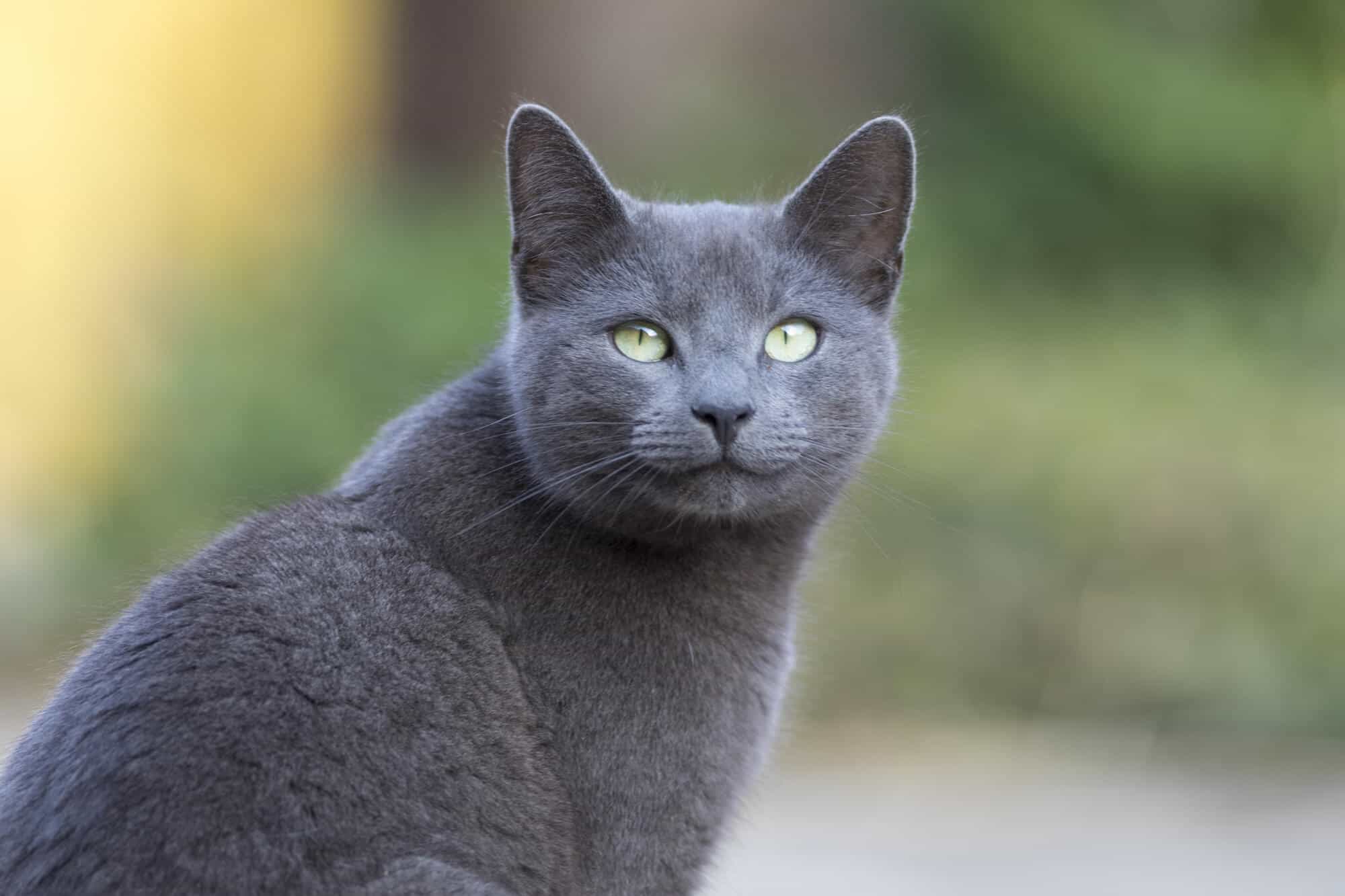
Russian Blue
Cat breedWikipedia
13
MENTIONS
10
EPISODES
9
PODCASTS
Search complete. 13 mentions across 10 episodes found for "Russian Blue".
Sep 17, 2026

Kate RitchieHOST
He's saying that people will steal your pets.
Kate RitchieHOST
Like, if you've got an expensive like Russian Blue or something-
FitzyHOST
Oh, yeah, they do
Kate RitchieHOST
... they'll get your, they'll get, they'll get your cat-

Mike CarruthersHOST
So when you say cats evolved into house cats, and r- well, did they evolve or were they bred?
Rod PhillipsGUEST
No, they evolved.
Rod PhillipsGUEST
There's no, uh, there's no evidence that, that people bred cats until, you know, maybe 2 or 300 years ago, uh, when particular breeds like Siamese, Burmese, Angoras, and, uh, Russian Blues and so on, uh, you know, there, there are now, you know, dozens of, of, of, you know, what are called purebred cats or, or recognized breeds of cats.
Rod PhillipsGUEST
You know, and they, they developed, you know, independently.
Rod PhillipsGUEST
Um, in the...
FitzyHOST
Oh, some sort of...
Kate RitchieHOST
Like a blue Russian or something? No, like an
FitzyHOST
inbred mongrel of a thing that has been dragged into the
WippaHOST
street.

AdamHOST
named Cassius.
AdamHOST
It was like a Russian blue.
AdamHOST
It was a badass cat.
AdamHOST
And it was cool.

DougHOST
Basically then goes on to ask some questions about foods and those things.
DougHOST
She's about five years old, part Russian blue.
DougHOST
Currently using some cheap supermarket pouches and dietary stuff.
DougHOST
so I suppose the question is is she going about things the right way from treats diet what should she be looking for

speaker_14NARRATOR
The whites must also be pure in color and should have blue eyes.
speaker_14NARRATOR
The blue shorthair has caused a great deal of discussion in England, where it was first exhibited under the title of Blue Russian.
speaker_14NARRATOR
It was eventually decided to classify all blues as blue shorthairs, and to discard the name of Russian, as these latter became too scarce to have a class to themselves, and there were so many bred in England that it was decided as more appropriate to classify all under the one heading.
speaker_14NARRATOR
these conditions existed for several years then the breeders of russians founded a club and classes were again provided for blue russians apart from the blue shorthairs blues are usually kept for show purposes only in england and are not nearly so plentiful as house pets as they are in this country where they are called maltese they are usually a larger finer type of cat than any other variety and have in many cases unusually massive heads needless to say the color of the coat is a very important item it should be of a light slate gray color with no white hairs tabby markings or shadings at the roots of the hair considering the number of really good specimens of this variety that there are in this country anyone taking up the breed as a specialty should have no difficulty in establishing a fine strain the cream shorthairs should of course come under the self-color heading but unfortunately they are so few and far between that it has been impossible up to the present to establish them especially without markings if only people with a love for shorthairs would go thoroughly in for an unique variety like the cream they would be surprised at the result of their trouble and would do much to popularize shorthaired cats cream short hairs should be a pale fawny colour with eyes as near brown as possible and of course the general points such as shape head formation etc should be the same for all other varieties with the exception of course of the siamese and abyssinian although coming under the short-haired heading is distinctly a foreign variety brown silver and blue tabbies should have their ground color brown silver or blue according to class with black markings to preponderate the red tabby is an exceedingly beautiful variety if carefully bred and should be as deep a red color as possible with markings of an intensely deep chocolate these cats have been bred to such a point of excellence that their brilliancy of coloring looks almost artificial in judging short-haired tabbies the markings count first and these should not only be distinct but the two sides of the cat's body should match in number shape and distinctness of marks the face should be well marked up the forehead continuing over the top of the head down the neck and there should be distinct markings each side of the face under the eyes technically called the cheek swirls the chest also should be marked in circular stripes like necklaces these being usually termed the lord mayor's chains the eyes of tabbies are of great importance in the reds browns and blues they should be deep orange and this rule formerly applied to the silver tabby but i believe certain judges now equally approve of deep green in this variety There were some years ago a good many gray tabbies, but these have almost completely disappeared from the show bench, the silver tabby being so much more showy from the fact of the contrast between its pale silver ground and rich velvety black markings.
speaker_14NARRATOR
End of section 7
speaker_6NARRATOR
CHAPTER XIX.

Thea SalamehGUEST
you tell us a little bit about yourself? So as you know, my name is Thea and you can't tell it that much, but I really love cats and I am also a big ASMR fan and I'm also a very big back.
Thea SalamehGUEST
So my favorite species of a cat would be a Russian Blue.
Thea SalamehGUEST
So the reason why I really like Russian Blues is because their fur, it's not like they have a giant wool of fur which would take so hard to shower.
Thea SalamehGUEST
And because I hide them and they're super nice to me.
Thea SalamehGUEST
How long can I live? So I know cats can live for an average life, for an average years, for the average years of 13 to 14 years for the average cat.

speaker_15NARRATOR
The whites must also be pure in color and should have blue eyes.
speaker_15NARRATOR
The blue shorthair has caused a great deal of discussion in England, where it was first exhibited under the title of Blue Russian.
speaker_15NARRATOR
It was eventually decided to classify all blues as blue shorthairs, and to discard the name of Russian, as these latter became too scarce to have a class to themselves, and there were so many bred in England that it was decided as more appropriate to classify all under the one heading.
speaker_15NARRATOR
these conditions existed for several years then the breeders of russians founded a club and classes were again provided for blue russians apart from the blue shorthairs blues are usually kept for show purposes only in england and are not nearly so plentiful as house-pets as they are in this country where they are called maltese they are usually a larger finer type of cat than any other variety and have in many cases unusually massive heads needless to say the color of the coat is a very important item it should be of a light slate gray color with no white hairs tabby markings or shadings at the roots of the hair considering the number of really good specimens of this variety that there are in this country anyone taking up the breed as a specialty should have no difficulty in establishing a fine strain the cream shorthairs should of course come under the self-color heading but unfortunately they are so few and far between that it has been impossible up to the present to establish them especially without markings if only people with a love for shorthairs would go thoroughly in for an unique variety like the cream they would be surprised at the result of their trouble and would do much to popularize shorthaired cats cream short-hairs should be a pale fawny colour with eyes as near brown as possible and of course the general points such as shape head formation etc should be the same for all other varieties with the exception of course of the siamese and abyssinian although coming under the short-haired heading is distinctly a foreign variety brown silver and blue tabbies should have their ground color brown silver or blue according to class with black markings to preponderate the red tabby is an exceedingly beautiful variety if carefully bred and should be as deep a red color as possible with markings of an intensely deep chocolate these cats have been bred to such a point of excellence that their brilliancy of coloring looks almost artificial in judging short-haired tabbies the markings count first and these should not only be distinct but the two sides of the cat's body should match in number shape and distinctness of marks the face should be well marked up the forehead continuing over the top of the head down the neck and there should be distinct markings each side of the face under the eyes technically called the cheek swirls the chest also should be marked in circular stripes like necklaces these being usually termed the lord mayor's chains the eyes of tabbies are of great importance in the reds browns and blues they should be deep orange and this rule formerly applied to the silver tabby but i believe certain judges now equally approve of deep green in this variety there were some years ago a good many gray tabbies but these have almost completely disappeared from the show bench the silver tabby being so much more showy from the fact of the contrast between its pale silver ground and rich velvety black markings the
speaker_11NARRATOR
CHAPTER XIX.
speaker_11NARRATOR
HOW TO RAISE THE SHORT-HAIRED PET KITTEN.

Jennifer FournierNARRATOR
The whites must also be pure in color, and should have blue eyes.
Jennifer FournierNARRATOR
The blue short-hair has caused a great deal of discussion in England, where it was first exhibited under the title of Blue Russian.
Jennifer FournierNARRATOR
It was eventually decided to classify all blues as blue short-hairs, and to discard the name of Russian, as these latter became too scarce to have a class to themselves, and there were so many bred in England that it was decided as more appropriate to classify all under the one heading.
Jennifer FournierNARRATOR
These conditions existed for several years.
Jennifer FournierNARRATOR
Then the breeders of Russians founded a club, and classes were again provided for blue Russians apart from the blue short-hairs.
Jennifer FournierNARRATOR
Blues are usually kept for show purposes only in England, and are not nearly so plentiful as house pets as they are in this country, where they are called Maltese.
Jennifer FournierNARRATOR
They are usually a larger, finer type of cat than any other variety, and have in many cases unusually massive heads.

JosephHOST
The cat was roaming around fucking dying.
JosephHOST
They found it, they took it into their home, and now the original people are like, we paid a breeder $150 for a genuine Russian blue.
JosephHOST
Then we weren't able to get in contact with the breeder because we are bad parents.
JosephHOST
So give me the cat back, bitch.