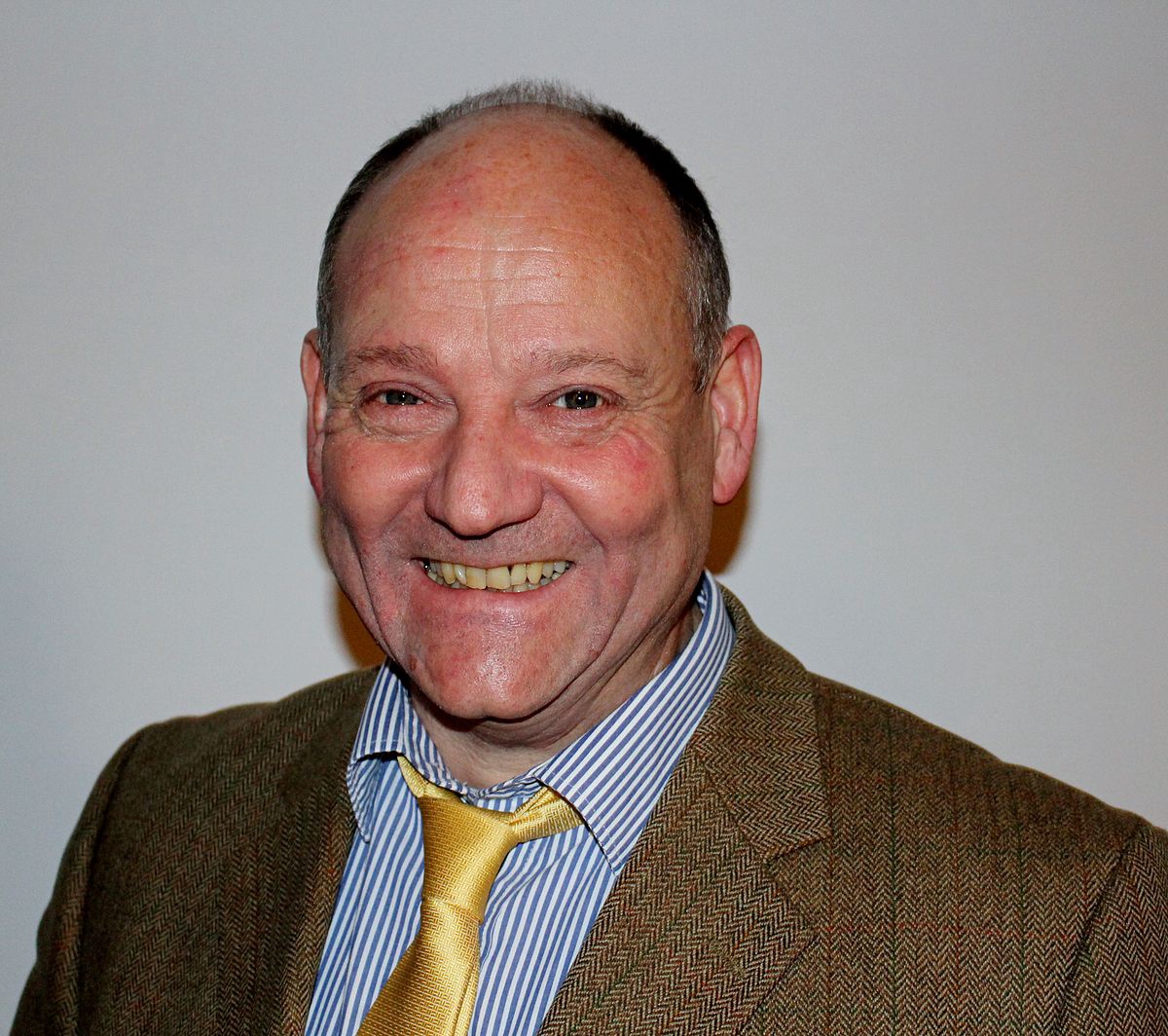
Russell G. Foster
British professorWikipedia
7
MENTIONS
3
EPISODES
3
PODCASTS
Search complete. 7 mentions across 3 episodes found for "Russell G. Foster".
Nov 3, 2026

Laura FosterHOST
Now, it's only an hour, but how smug did you feel the other day when the clocks went back? For me, that extra hour of sleep was delightful.
Laura FosterHOST
But it got us thinking about what health benefits and consequences there can be from changing the clocks every spring and autumn, and gave us a perfect excuse to call up Professor Russell Foster, no relation, who is Director of the Sleep and Circadian Institute in Oxford.
Laura FosterHOST
Russell, I hear you're a man with rhythm, circadian rhythms.
Laura FosterHOST
Can you tell us a little bit about it?
6 MINS LATER
Russell FosterGUEST
I think that if you can accommodate the sleeping habits of your partner, then it shows a flexibility of mind and attitude, which means that all the other stuff that's thrown at you is easier to deal with.
Russell FosterGUEST
Who knows?
Laura FosterHOST
Thank you, Professor Russell Foster, who had some good health advice there, but also some good relationship tips.
Laura FosterHOST
Multi-talented experts on this programme.

Greg PotterHOST
Let's start with the brain.
Greg PotterHOST
We spoke about the importance of daylight for setting the central clock in your circadian system, your body clock system, in our episode with Professor Russell Foster.
Greg PotterHOST
The reason is that your internal clock doesn't tick at precisely 24 hours.
Greg PotterHOST
On average, it's about 24.2 hours, so you have to reset it each day, otherwise it would drift over time, and several months later you would have gone an entire cycle around the 24-hour clock.

Richard GeeringGUEST
Well, he, he, he, we aren't that close because he did, I didn't see much of him.
Richard GeeringGUEST
But when, um, my college joined Imperial College, there was one man in particular called Professor Russell, uh, Russell Foster, who's now a professor at Oxford, but he was one of the professors at, I don't know, no, he might've been a reader actually at Imperial, and he came down and took me under his wing and h- helped me, welcome me into Imperial and because I was, I hadn't got a PhD, a clinician is a very oddball in an academic environment.
Richard GeeringGUEST
You know, I was the only person in the common room without a PhD, and I felt really, you know...
Richard GeeringGUEST
I didn't, they didn't make me feel uncomfortable, but I felt inadequate because I hadn't got a PhD, and Russell was really kind to me.
Richard GeeringGUEST
And I was looking, I had to find about 60, two lots of 30, small student projects every year for them to do in their final year, and Russell helped me with lots of them, and he w- is basically interested in circadian rhythm, and this is where you guys should be interested in circadian rhythm.
Richard GeeringGUEST
You are already doing and aware of everything I'm gonna say, but the microbiome will back you up because there is circadian rhythm in the bacteria in the gut, and they will do things variously to you over the day because they have their own circadian rhythm And they're now un- elucidating the molecular clock that drives the circadian rhythm.
Richard GeeringGUEST
And prior to this, I tried to get hold of Russell, and I've looked in the b- he's produced a very small generalized book on circadian rhythm recently, and I had a quick flip through.
Richard GeeringGUEST
I couldn't actually find any reference to the microbiome, so I'm gonna try and get hold of him, because his guys or his research people must be doing something on this.