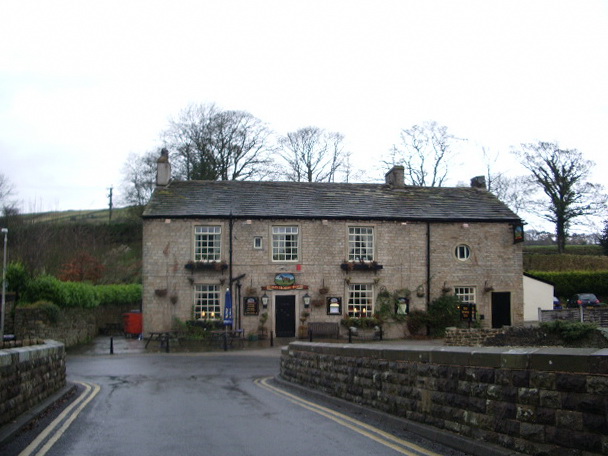
Roughlee
Village in EnglandWikipedia
2
MENTIONS
1
EPISODES
1
PODCASTS
Search complete. 2 mentions across 1 episode found for "Roughlee".
Aug 19, 2026

David WalesNARRATOR
We can hear it speak, and it looks out at us with a thousand appealing eyes.
David WalesNARRATOR
End of chapter 12 chapter thirteen of lancashire characters and places by thomas newbigging rough lee in the immediate neighbourhood of brandwood though situated in the township of lenches is the hamlet of rough lee in picturesque and pleasant nook on the hillside sheltered from the easterly winds by the friendly shoulders of a considerable elevation and looking far away down the irwell valley along which, and over the grassy slopes on either side, it commands a varied and extensive view.
David WalesNARRATOR
In the thirteenth, fourteenth, and fifteenth centuries, when the waste of brandwood was the property of the abbots of Stanlaw and Wally, the scenery embraced in a view of the landscape from Ruff Lee was widely different from that which its present prospect comprehends.
David WalesNARRATOR
where now the railway winds through the vale the shrieking whistle of its iron horse awaking the echoes on every side then the glossy coat of the antlered deer as in the heyday of its pride it flashed across the glade to thicker covert or gambolled on the declivities was the chief moving attraction that arrested the eye now where the gaunt chimney belches forth its dense black coils of smoke the forester's fire as it consumed the windfall of the previous winter sent up into the clear air of spring its gauzy wreaths of thin blue vapour and instead of a landscape dotted with upland farms and a valley threaded with long rows of substantial dwellings their vicinity alive with the hum of youthful voices busy at play or the cheerful ringing laughter of the factory lasses relieved from their daily toil a few solitary homesteads were all that gave signs of human habitation in this quiet and pleasant spot within the forest of rossendale overlooking the valley it is said was erected a house or chapel for the purposes of religious worship By whom founded, however, and by whom used, no record, so far as we can learn, exists to determine.
David WalesNARRATOR
The roof supported by crux, two large stone troughs, at each door one.
David WalesNARRATOR
A large stone pulpit was demolished when the building was converted to its present use, in the ruins of which some beads were found.
David WalesNARRATOR
at present it is occupied in two cottages the property of mr joffham of chester it is situate at lensch in the parish of berry and forest of rossendale distant from the nearest part of brandwood about a quarter of a mile fragments of stones bearing inscriptions have been dug out of the soil in its vicinity the place originally may have been used as a hermitage or dwelling an offshoot of the parent abbey of whalley where the monk or monks in charge of the property of the church in this neighbourhood took up their abode and afterwards as the population of the district began to increase it probably was adapted to the performance of divine worship there is reason if not corroborative evidence in support of this for it will scarcely be doubted that the ecclesiastics of those times would be fully alive to the necessity of providing the means of religious edification to the people in their charge who were far removed from the great centres of the imposing ceremonials of the church true the site of the chapel was without the limits of their landed possessions in that district but this fact does not militate against the present conjecture the waste of brendwood was a bleak and uninviting tract of country having none of the characteristics of those neighbourhoods usually chosen for the erection of religious structures in past days and the monks with that unerring instinct which led them to pitch their tents in favoured localities with regard to scenery shelter and general convenience would not fail to note the superior position of the site in question to any other within their own dreary domain in rossendale thus much for rough lee one of those spots of local interest of which just sufficient is known to arouse but not enough to satisfy the enquirer's curiosity too little to give it a fixed habitation in the history of the district or determine its influence on the current of events it is like one of those spirits said to haunt old homesteads content with its own knowledge of the past it resists all prying attempts to wring from it a recital of its story a quaint old place that the imagination finds no difficulty in peopling with forms of a bygone time Such a home of the imagination, it must probably remain.
David WalesNARRATOR
Some Lancashire Characters and Incidents if we would find the unadulterated lancashire character we must seek for it on and near to the eastern borders of the county where the latter joins up to the west riding of yorkshire roughly a line drawn from manchester in the south through bolton and blackburn and terminating at clitheroe in the north will cut a slice out of the county palatine equal on the eastward side of this line to about one-third of its whole area and it is in this portion that the purest breed of lancashire men and women will be found a more circumscribed area still embracing oldham bury rochdale the rossendale valley and the country beyond to burnley and colne contains in large proportion the choicest examples of lancashire people and it is within this narrower limit that john collier tim bobbin first of all then oliver with whom i was well acquainted in the fifties and later waugh brierly and other writers in the vernacular have placed the scenes of their stories and sketches and found the best and most original of their characters the authors i have specifically named are themselves good examples of that character waugh paramountly so distinguished as they are by a kindly hard-headedness a droll and often broad wit which exhibits itself not only in the quality of their writings but also in their modes of expression and a blending in their nature of the humorous with the pathetic lending pungency naturalness and charm to their best work the peculiarities to which i have referred are due to what in times past was the retiredness of this belt of the county its isolation its comparative inaccessibility its immunity from invasion as the coast of any country is approached the breed of the inhabitants will be found to become more and more mixed losing to a large extent its distinctive characteristics and it is only by an incursion into the interior that the unadulterated aborigines are found in their native purity here these conditions no longer exist with anything like the old force excepting it may be in some obscure nook out of sound of the locomotive whistle and of these there are still a few left though not many the old barriers of time and distance have been obliterated the means and incentives to migration have become so easy and great that our besom bens and abathyeaks are grown as scarce as spade guineas or as the wild roses in our lancashire hedges and will e'er long exist only in the pages of our native humorists we owe ungrudging thanks to the writers in the vernacular for the treasures with which during the last thirty or forty years they have adorned our lancashire literature for having taught us so much of homely wisdom in the quaint tongue of our people and opened up to us in wider measure than we previously knew the bright common sense and humour that are enshrined in their hearts they have shown us how rich in resource is the dialect of the county compacting and crystallising its proverbs and phrases and have proved how capable it is of giving expression to the natural affections it is only of comparatively recent years that we have been able to appreciate the wealth of the dialect in these respects all the material was in existence before but it needed the cunning hand of the master to make literature of it to weave up the warp and woof and present them to us in an embodied form a good deal of the humour of our lancashire writers is of the rollicking kind no doubt it does not always belong to the school of high culture but we have got the characters true to the life and he is a fastidious critic or worse who would prefer a counterfeit presentment to the genuine portrait in the course of a lifetime spent chiefly in lancashire i have come in contact with many of its odd characters in the rossendale district especially with which i have been familiar for many years i knew some of the quaint old inhabitants long since passed away whose remarks as well as their reminiscences recounted to me interested and amused me as some of which i have been trying to recall and here i may say that from a considerable acquaintance with waugh's writings i have observed that in his prose sketches wherever his references to rossendale occur they are in his choicest pieces the very mention of the name seems to open up within his mind a fine vein of poetic inspiration which is reflected on the page for example in his sketch of doolsgate and in the old fiddler in his letters written during the cotton famine where he speaks of the dane lay rocks in the barrel organ and others it must be admitted however that the old charms of rorality and originality as i once knew them are now less felt in rossendale the narrow valley is crowded with mills and houses the smoke of whose chimneys pollutes the atmosphere and from a rural community with its peculiar officers and quaint old-world customs it has been parcelled out into a couple of gawky burros whose legs and arms long and lanky are out of proportion to the body to which they respectively belong some years ago also they were imported into the district to meet the exigencies of the cotton trade a large number of families from the south country foreigners they are called and this element i am not speaking disparagingly of it has necessarily had its effect in modifying the character of the inhabitants bull-baiting was formerly a common sport in rossendale as in other parts of the country a stake was fixed in the centre of the baiting ground to which the bull was tethered by a rope when its canine tormentors were let loose upon it amidst the yelling of a brutalised mob i once curiously enough in my own experience met with an example of the actual memory of the pastime having survived to a recent date an old rossendale man one day attended a camp-meeting held in a field at sharneyford some distance away and on afterwards enquiring if he got to the meeting in time yea was his reply i geet thee just as they were teeing th bull to the stake meaning that the preacher was just about opening the services rossendale was by no means singular in its relish for this degrading practice the late john harland in his introduction to the manchester court leet records recounts the fact that in manchester in former times amongst the heaviest fines or as they were called emersments on the butchers were those for selling bull beef the bull not having been previously baited to make the flesh tender enough for human food a significant commentary this on the morals and civilisation of our forefathers to the introduction of water and steam-power machinery in the earlier part of the century there were no stronger or more bitter opponents than the rossendale folks in the early days in many of the larger houses were hand machines for the carding spinning and weaving of woollen whilst nearly every one of the smaller houses had its hand loom and when the factory system began to be introduced into the district and water-power was employed in turning the machinery the strong prejudices of the inhabitants found vent in the form of a prayer which in seasons of drought ran thus the lord send rain to till the ground but do not turn the engines round the woolen carding engines are here referred to these being put in motion by the water-wheel but times of extreme drought in rossendale are not of frequent occurrence the hills bring down the rain and in the barley times as the famine times at the beginning of the century were called the people had a saying that there was plenty of porridge waiter in rossendale if there were only the meal to put into it here home mill in the rossendale valley was one of the first mills as well as the most important mill in the district it belonged to a quaker firm and was built at the end of last century the chimney of this mill which was erected at a later date is a curiosity it resembles a champagne bottle with its broad base quickly gathered in near the centre and tapering to the summit the cap of the structure is an exact copy of a quaker's broad-brimmed hat without doubt intended by the humorist of a builder to exemplify the religious tenets of the members of the firm the ram which surmounts the belfry typical of the woollen manufacture was executed by an ingenious workman named john nuttall and bears an admirable likeness to the original an architect from a neighbouring town criticising it freely and trying to display his superior taste expressed the opinion that the model of the ram as designed was all very well done excepting the horns whereupon nuttall naively replied that whatever the merits of the body of the animal the horns were just as god had made them as a matter of fact they were an actual pair of ram's horns that he had used the power loom breaking riots of eighteen twenty six or another exemplification of the bitter feelings that were evoked by the application of steam power to the turning of machinery the rioters in rossendale made havoc with the new-fangled looms which they believed would ruin their trade as hand-loom weavers and take the bread out of their mouths their mode of procedure on attacking a mill was to place a guard outside then the ringleaders entered first they cut out the warps and destroyed the reeds and heels and then with a few well-aimed blows they demolished the looms on the cry being raised the soldiers are coming one old fellow cried out never mind lads we met as we'll be shot by the soldiers as clem by the maisters i have mentioned this circumstance by way of introducing long george the constable of bakeup during those disturbed times an eccentric character whom i knew well george stood six feet two in his stockings hence the prefix long to his name it was but little that george and his myrmidons could do to prevent the mischief and so with the instinctive sagacity of the watch they wisely kept aloof from the scenes of outrage and spoliation long george was a familiar figure in bacup for many years after being superseded in his duties of constable by the police as we now have them at the beginning of his time when he was village constable he lived in lanehead lane on one wintry night cold and stormy the snow drifting heavily a night when folk could hardly keep their nightcaps from being blown off some young fellows determined they would play a trick on george so they waited until they knew he had got well into bed and then they went up to his house in the lane and thundered at the door george got up put his head out of the window and saw two or three snow-covered figures down below whatever done you want chaps at this time and eat he called out one of them shouted back in reply george you're wanted down at the dragon yonder first thing what's the matter there asked george there's about twenty of em yonder fainting over rook and if they don't look sharp and come down and sunder em there'll be one half of em kilt but george was not to be caught as easily as they imagined he saw through the trick that was attempted to be played on him and ruminating for a moment answered i'll tell you what you mun do chaps what mun we do george they asked go your ways back to the dragon said george and lay em out o the tables as many on em as gets kilt in the morning i'll come down and count em and with that he crashed the window down again leaving the discomfited jokers to find their way back to the bar parlour at the dragon as best they might latterly george did duty as a bailiff attending auction sales keeping the door and handing the drink round to the thirsty bidders He wore a blue coat with metal buttons, knee breeches and brown stockings, with a pair of clogs at least fourteen inches in length, and a sole an inch and a half thick.