Rotating savings and credit association
3
MENTIONS
2
EPISODES
2
PODCASTS
Search complete. 3 mentions across 2 episodes found for "Rotating savings and credit association".
Sep 8, 2026

Michael NaglerHOST
There is, I'm happy to cite, an American Grameen Bank.
Michael NaglerHOST
You may or may not be aware of this bank, which was begun in Bangladesh, which is not a highly capitalized, top-down kind of organization, charges high rates of interest, but a new phenomenon, which is called a ROSCA, a Rotating Credit and Savings Association.
Michael NaglerHOST
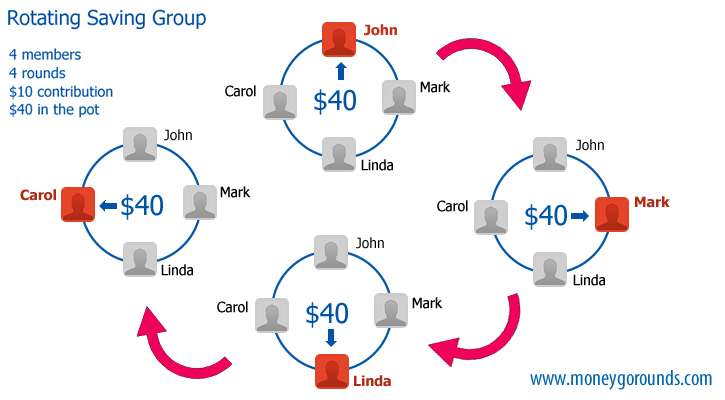
So it is an informal community savings circle, pioneered often by minority groups, where each member contributes regular amounts of money each week or each month to a shared fund.
Michael NaglerHOST
And then on a rotating basis, those members will receive a lump sum that they can use for things like tuition, emergency health care, or down payment on a house.

Caroline Shenaz HosseinGUEST
Yeah, that's a good question.
Caroline Shenaz HosseinGUEST
Okay, so ROSCAs are defined as these membership informal collective institutions.
Caroline Shenaz HosseinGUEST
They go by, usually not the name Raskas, that's a real academic term, but it kind of pinpoints the validity of these institutions and why they should be studied.
Caroline Shenaz HosseinGUEST
But people that you meet may not know them as Raskas, but if you call them in their vernacular, which is something... that people use every day.
29 MINS LATER
Caroline Shenaz HosseinGUEST
mutual aid associations, collectives, informal, ROSCA-type groups that are also a part of the third sector ecosystem but are not considered, I guess, worthy enough or trustful enough to be counted as something that should be public-facing.
Caroline Shenaz HosseinGUEST
And also, in some ways, they're competing with more formal, non-profit philanthropy type of institutions who often have links to private sector and the state, and many are doing good works, but they often have to fit with certain deliverables that are within the confines of either donors or proposals, right? in ways that more radical alternative parts of the solidarity economy, who are detached from state and private sector, do not.
Caroline Shenaz HosseinGUEST
So cooperatives and credit unions and these ROSCAs or mutual aid groups, women's groups, whatever, queer, LGBTI type of community-focused groups may be able to tap into more kinds of thinking and platforms that don't ordinarily have to fit with formal institutions.
Caroline Shenaz HosseinGUEST
And it may be in their interest not to.