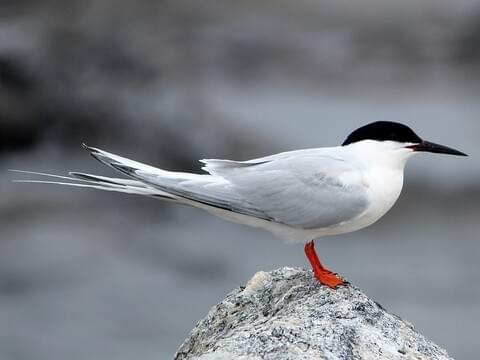
Roseate tern
BirdWikipedia
7
MENTIONS
2
EPISODES
2
PODCASTS
Search complete. 7 mentions across 2 episodes found for "Roseate tern".
Sep 14, 2026

Niall HatchGUEST
So it's one of these global travellers, the longest distance migrant in the world.
Niall HatchGUEST
One of the main birds, though, that Broderich tern protects through our work with the National Parks and Wildlife Service is a rare species called the roseate tern.
Niall HatchGUEST
And that's Europe's rarest breeding seabird.
Niall HatchGUEST
And Ireland is home to roughly 90% of the European breeding population.
Niall HatchGUEST
So it's very important for us to try and safeguard that species particularly.
Niall HatchGUEST
The vast majority of them nest on an island called Rockabill off the coast of North County, Dublin.
Niall HatchGUEST
And we have nesting boxes for the roseate terns there.
Niall HatchGUEST
But those terns, they don't nest by themselves.

Pamela NagamiNARRATOR
When disturbed from their eggs, the Arctic Tern becomes very noisy and rise in fluttering crowds above the sacred spot, continuing to fly to and fro, screaming anxiously until the intruder retires.
Pamela NagamiNARRATOR
Roseate Tern.
Pamela NagamiNARRATOR
It is with some hesitation that I include this species, the Sterna Dugalli of Montague, in the present work, because if it really does visit our coasts now to breed, it is so exceedingly rare and local that any ordinary observer of bird life by the sea could scarcely hope to meet with it.
Pamela NagamiNARRATOR
It is interesting to remark that the roseate tern was first made known to science from a skin that was sent to Montague from the Cumbrae Islands in the Firth of Clyde.
Pamela NagamiNARRATOR
It was subsequently found breeding on the Farn Islands by Selby.
Pamela NagamiNARRATOR
It formerly bred on the Scilly Islands, as well as on Fawlney and Walney, but so far as I can ascertain, there is no direct evidence that it breeds at any of these places now.
Pamela NagamiNARRATOR
It may be distinguished from the common tern by its rosy under plumage, but as this is very apt to fade, a still more infallible distinction, according to Mr. Saunders, is the white inner margin to the primaries.
Pamela NagamiNARRATOR
The roseate tern is a very late migrant, not reaching its breeding places until towards the end of May.