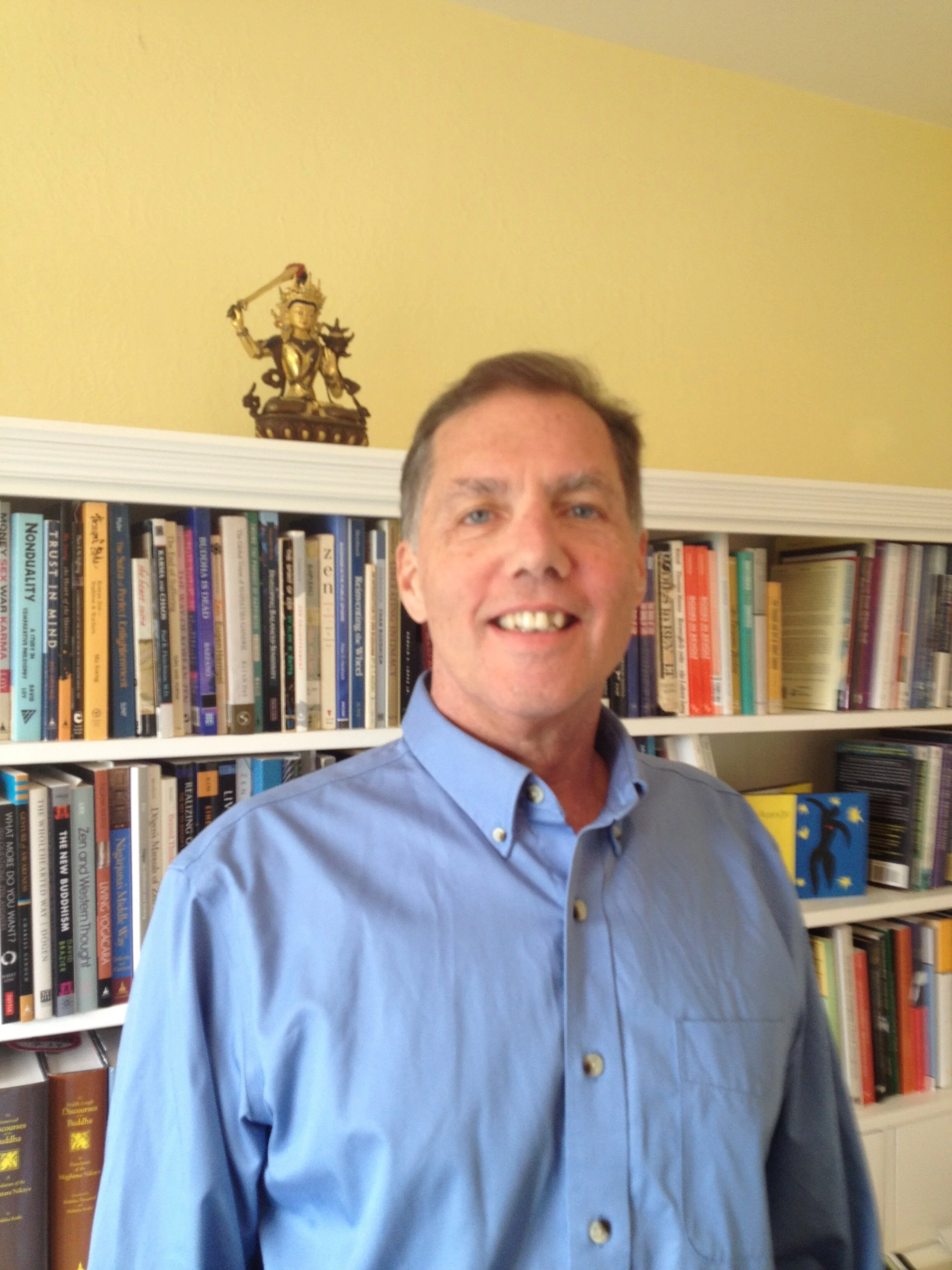
Ronald E. Purser
EconomistWikipedia
8
MENTIONS
6
EPISODES
6
PODCASTS
Search complete. 8 mentions across 6 episodes found for "Ronald E. Purser".
Nov 18, 2026

Scott TusaHOST
Welcome to the Buddhist Wisdom Podcast.
Scott TusaHOST
I'm joined here by Ron Purser.
Scott TusaHOST
Big warm welcome.
Scott TusaHOST
Hey, Ron, how's it going? Great.

Bruce AldermanGUEST
And if you deepen into those qualities of joy and enjoyment, they can begin to open into feelings of abundance and generosity and I think participatory relation with what surrounds you, which again, it's not an automatic thing in my view, but it can be worked with in an intelligent and creative way to open up into a a fuller sense of, again, a participatory way of being with the world and with others that is, you know, grounding for compassion.
Bruce AldermanGUEST
So, to me, it, you know, Kunye, if you focus on it, not only just as, you know, something that Ron Purser would, you know, criticize, for instance, as, you know, mindfulness or whatever turned into just stress relief, To really go into it deeply, it opens you up into at least an invitation to participate more deeply with the world, not only with your own sensation and body.
Bruce AldermanGUEST
And so in that sense, it's inherently intersubjective.
Matthew O'ConnellHOST
Great.

Bruce AldermanGUEST
And if you deepen into those qualities of joy and enjoyment, they can begin to open into feelings of abundance and generosity and I think participatory relation with what surrounds you, which, again, it's not an automatic thing in my view, but it can be worked with in an intelligent and creative way to open up into a place a fuller sense of, again, a participatory way of being with the world and with others that is, you know, grounding for compassion.
Bruce AldermanGUEST
So to me, it, you know, Kum Nye, if you focus on it, not only just as, you know, something that Ron Purser would, you know, criticize, for instance, as, you know, mindfulness or whatever turned into just stress relief.
Bruce AldermanGUEST
To really go into it deeply, it opens you up into at least an invitation to participate more deeply with the world, not only with your own sensation and body.
Bruce AldermanGUEST
And so in that sense, it's inherently intersubjective.

Bruce AldermanGUEST
It really lives at the edge of inquiry and learning and seeing what you can unfold in your own experience through careful attention to the body and its patterns and rhythms.
Matthew O'ConnellHOST
That's interesting because it resonates with a similar message that Ron Purser gave when he came on to talk about his last two books.
Matthew O'ConnellHOST
And that's kind of part of the side project of Tartang Toku, right? Which is to make some of these treasures accessible to the general public without asking them to sign up to a set of beliefs or a religious tradition, which is...
Matthew O'ConnellHOST
I mean, it's interesting.
41 MINS LATER
Bruce AldermanGUEST
And there's a quality to the relaxation and the subtler levels of relaxation feel like joy, joy itself being a relaxed state.
Bruce AldermanGUEST
And if you deepen into those qualities of joy and enjoyment, they can begin to open into feelings of abundance and generosity and I think participatory relation with what surrounds you, which again, it's not an automatic thing in my view, but it can be worked with in an intelligent and creative way to open up into a a fuller sense of, again, a participatory way of being with the world and with others that is, you know, grounding for compassion.
Bruce AldermanGUEST
So, to me, it, you know, Kunye, if you focus on it, not only just as, you know, something that Ron Purser would, you know, criticize, for instance, as, you know, mindfulness or whatever turned into just stress relief, To really go into it deeply, it opens you up into at least an invitation to participate more deeply with the world, not only with your own sensation and body.
Bruce AldermanGUEST
And so in that sense, it's inherently intersubjective.

Cori HaydenHOST
Okay, so please join us for all of those events, and for now, let's go back to today's events.
Cori HaydenHOST
I'm gonna introduce the panelists in the order in which they will appear, and I do wanna say that unfortunately, Martha Lincoln from SF State is unable to be here due to illness, but her and, but and, her colleague Martha Kenney, other Martha, will be sharing
Martha KenneyGUEST
Martha Lincoln's comments as well as Martha Kenney's comments.
Cori HaydenHOST
Okay, a few notes on our presenters.
40 MINS LATER
Martha KenneyGUEST
But witnessing the arrival of friendly compacts between generative artificial intelligence corporations and higher education leaders over the last year and a half, I have a sense that the university world is fully abandoning our collective mission and values and commitments.
Martha KenneyGUEST
On the strength of quite nebulous and predatory promises, university leaders like the Cal State University Chancellor are going through the looking glass and taking all of them with us.
Martha KenneyGUEST
As our CSU colleague Ronald Purser wrote in an essay for Current Affairs last year, Cal State's AI deal has effectively written the next chapter of the long sad story of public higher education's demise.
Martha KenneyGUEST
AI and higher ed is an odd crossover, not least because generative AI has been touted as a threat to the university system's entire existence.

Michael Todd FinkHOST
Welcome to the Kind Mind Podcast.
Michael Todd FinkHOST
I'm excited to welcome a guest today who is Ronald E. Purser, PhD.
Michael Todd FinkHOST
Ron is the international bestselling author of McMindfulness, which sparked a global debate on corporate mindfulness.
Michael Todd FinkHOST
Ron has a new book called Mind Space, which is out now, and it's about spacious awareness.